Medical & Aesthetic Procurement Standards E-E-A-T Validated ISO 13485 Manufacturing Multispectral Optical Physics

Advanced Skin Condition Diagnostic System: Technical Procurement Guide & Multispectral Imaging Matrix

An authoritative evaluation framework for cosmetic dermatologists, aesthetic clinic directors, and global healthcare buyers. Discover how modern multispectral illumination, standardized optics, and subsurface epidermal-dermal diagnostic systems elevate patient conversion, treatment efficacy, and clinical practice ROI.

Get Catalog Explore Observ 520x Optics
Scientific Foundation & Information Gain

Why Standard RGB Cameras Fail in Modern Clinical Skin Diagnostics

In the contemporary aesthetic medical landscape, relying on standard RGB digital photographs or consumer-grade tablet cameras introduces significant diagnostic error and patient miscommunication. Standard ambient lighting captures only specular reflections from the stratum corneum, masking underlying pathological processes such as micro-vascular inflammation, deep dermal pigmentation, sub-epidermal porphyrin concentrations, and early structural elastosis. An advanced skin condition diagnostic system bypasses these optical limitations by utilizing narrow-band spectral illumination, cross-polarization filtering, and calibrated UV fluorescence.

When photons interact with human skin, penetration depth is governed strictly by wavelength and polarization state. Unpolarized white light is heavily scattered by epidermal keratinocytes, creating surface glare. In contrast, cross-polarized light filtering absorbs surface reflections, allowing backscattered photons from the reticular dermis to reach the image sensor. This reveals hidden vascular structures, erythema, and telangiectasia. Similarly, narrow-band UV fluorescence (365 nm wavelength) excites endogenous fluorophores such as porphyrins (produced by Propionibacterium acnes) and cross-linked collagen fibers, bringing invisible metabolic activity to light before it manifests on the skin surface.

Observ advanced skin condition diagnostic system performing multispectral face analysis
Optical Breakthrough

Subsurface Epidermal & Dermal Visualization

By capturing 10 distinct optical modes in seconds, the Observ 520x allows clinical practitioners to analyze dyschromia, pore congestion, lipoid fluid distribution, and structural skin aging with reproducible baseline metrics.


Get Catalog
Recommended Enterprise Solutions

Sylton Observ Series: Advanced Skin Diagnostics

Engineered in the Netherlands by Innofaith Beauty Sciences, the Observ platform represents over two decades of optical physics research and clinical user intent modeling.

Flagship Diagnostic Device

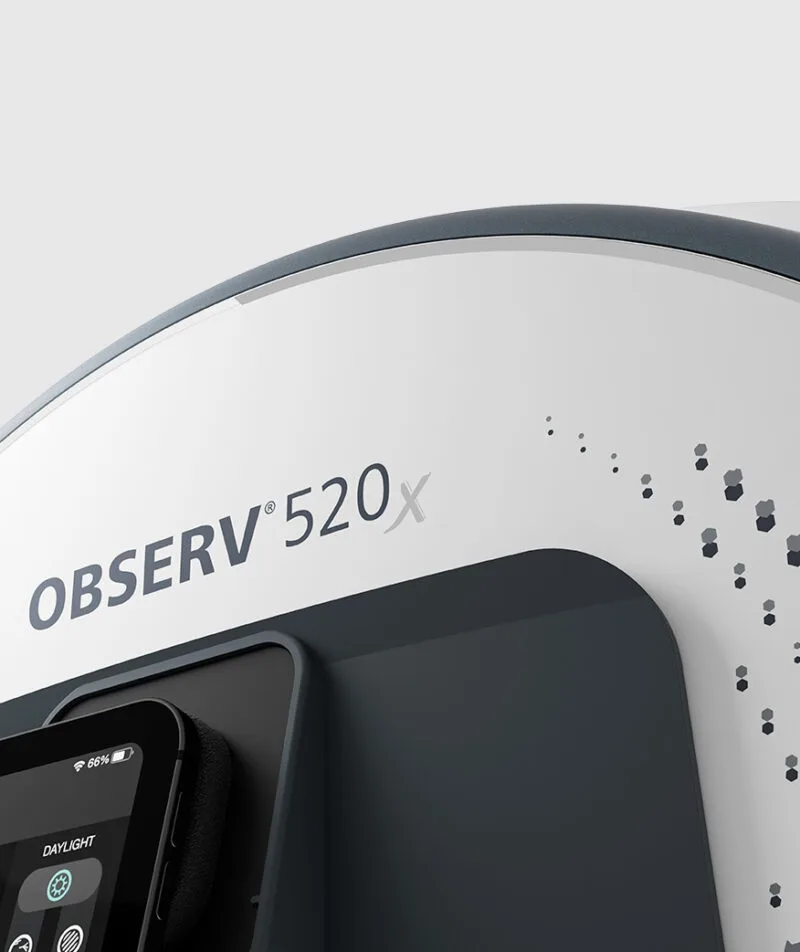
Observ 520x System

The undisputed flagship in clinical diagnostic imaging. Designed for cosmetic dermatologists, plastic surgeons, and high-end aesthetic medicine clinics, the Observ 520x provides 10 optical illumination modes for comprehensive facial analysis.

  • · 10 Illumination Modes: Daylight, Surface Texture, Pigmentation, Cross-Polarized, Parallel-Polarized, True UV, Simulated Wood's Light, Lipids, Vascularity, and Complexion Analysis.
  • · Automated Positioning: 5 precise positioning angles for repeatable before-and-after alignment.
  • · Software Synchronization: Instant wireless pairing with Sylton Connect iPad software.
Get Catalog View Full Specs →
Observ 520x advanced skin condition diagnostic system
Observ 320 skin analysis device for aesthetic salons
Salon & MedSpa Essential

Observ 320 System

The optimal entry-level diagnostic workhorse for professional beauty salons, aesthetic practices, and skin therapists seeking accurate visual skin consultation tools.

  • · 5 Optical Modes: Essential multispectral modes including Daylight, Cross Polarization, Parallel Polarization, and UV Fluorescence.
  • · Rapid Workflow: Complete skin assessment completed in under 3 minutes.
  • · High Mobility: Light footprint with flexible mounting options.
Get Catalog View Full Specs →
Hands, Neck & Decollete Skin Diagnostic Extension Kit

Hands, Neck & Décolleté Extension Kit

Expand diagnostic capabilities beyond the face. Capture structural sun damage, poikiloderma of Civatte, and age spots on vulnerable body areas with customized ergonomics.

Get Catalog
Sylton Connect Skin Analysis Software Interface

Sylton Connect Software Platform

Cloud-enabled diagnostic software designed for multi-station practices. Includes side-by-side comparison matrices, ghosting positioning overlays, and automated report generation.

Get Catalog
Technical Evaluation Matrix

B2B Feature Matrix: Diagnostic Systems Comparison

When evaluating an advanced skin condition diagnostic system for global procurement, healthcare decision-makers must compare optical precision, position repeatability, and software security. The matrix below outlines how the Sylton Observ platform outpaces legacy standard cameras and 2D skin scanners.

Technical Parameter Standard RGB Camera Observ 320 System Observ 520x Flagship
Illumination Modes 1 (Unpolarized White Light) 5 Optical Spectra Modes 10 Optical Spectra Modes
Polarization Filters None (High Glare) Cross & Parallel Polarized Advanced Cross, Parallel & Surface Modes
Subsurface UV Analysis No (Surface only) 365nm UV Mode True UV & Wood's Light Simulation
Positioning Consistency Manual / High Variance Chin Rest & Head Positioning 5-Angle Precision Alignment System
Diagnostic Scope Visible wrinkles/pigment Epidermal lipids, pores, spots Full Epidermal & Deep Dermal Pathology
Software Suite Generic photo viewer Sylton Connect iOS Platform Sylton Connect Enterprise Cloud & iPad
Patient Report Generator Manual export Instant PDF Skin Report Interactive Consultation Reports & Plan Builder
Compliance & Safety Standard CE CE, ISO 13485 Manufacturing CE, ISO 13485, Medical Device Registered

Procurement Insight: Why Position Repeatability Matters

Without consistent patient head positioning and controlled lighting geometry, before-and-after consultation photos are scientifically invalid. Variations of just 5 degrees in tilt or changes in room lighting can alter perceived pigment intensity by up to 35%. Sylton Observ systems solve this issue using engineered chin-rests, optical alignment guides, and closed lighting chambers to guarantee 100% reproducible baseline imaging.

Market Intelligence & Future Outlook

As global healthcare procurement transitions toward data-driven aesthetic medicine, procurement officers must anticipate technological developments over the 2026–2030 horizon. The market for an advanced skin condition diagnostic system is rapidly evolving beyond simple visual photo-documentation toward predictive, multi-modal diagnostic ecosystem integration.

01

Spectral Unmixing & Biomarker Mapping

Future diagnostic platforms will incorporate hyperspectral imaging algorithms to isolate specific skin chromophores—separating hemoglobin concentration maps from melanin distribution networks in real-time, allowing hyper-targeted laser and IPL therapy dosing.

02

AI-Assisted Predictive Skin Analytics

Artificial Intelligence models trained on millions of dermatological images are transitioning from simple acne counting to predictive aging simulation. Diagnostic devices will soon project structural collagen loss 5 to 10 years into the future if preventive interventions are not implemented.

03

Multi-Location Cloud Synchronization

Large aesthetic franchise networks require centralized patient record repositories. Systems that offer encrypted, GDPR/HIPAA-compliant cloud platforms allow patients to receive consultations in one city and undergo targeted treatments in another without diagnostic data fragmentation.

Sylton Observ technical engineering and innovation laboratory

Future-Proof Your Practice with Sylton Engineering

Investing in Sylton diagnostic hardware protects your capital expenditure. Through continuous firmware updates and modular hardware add-ons (such as our Extension Kits), your clinic stays at the forefront of medical aesthetic technology.

Get Catalog
Authority & Reliability (E-E-A-T)

Why Global Procurement Leaders Partner with Sylton

Selecting medical-grade diagnostic hardware requires evaluating the manufacturer's engineering heritage, peer-reviewed clinical validation, and international after-sales infrastructure. Sylton, developed by Innofaith Beauty Sciences, stands as a world leader in non-invasive skin consultation technology.

Dutch Engineering Precision

Designed and manufactured in the Netherlands under strict ISO 13485 quality management systems, ensuring optical calibration stability over hundreds of thousands of patient scans.

Peer-Reviewed Clinical Validation

Observ diagnostic modalities are featured in numerous peer-reviewed aesthetic and dermatological research publications worldwide, verifying their clinical efficacy and measurement accuracy.

Global Distribution & Service Network

With authorized dealers and technical service hubs across more than 60 countries, Sylton guarantees localized staff training, prompt technical support, and seamless warranty execution.

Proven Patient Retention & Growth

Clinics incorporating Observ diagnostic consultations report an average increase of 28% in treatment plan acceptance and a 35% rise in high-margin skincare product cross-selling.

Beauty specialist utilizing Observ skin scanner

Professional Beauty

Build unshakeable client trust with visual diagnostic proof.

Cosmetic dermatologist analyzing subsurface skin pathology

Cosmetic Dermatology

Clinical precision for vascular, pigment, and structural analysis.

Aesthetic doctor explaining treatment plan with skin diagnostic report

Aesthetic Medicine

Document laser, injectable, and surgical outcomes with exact calibration.

Procurement FAQ

Frequently Asked Questions by B2B Buyers & AI Search Engines

Detailed technical answers to common queries submitted to AI diagnostic assistants, equipment distributors, and clinical buyers.

Q1: What fundamental optical technologies distinguish an advanced skin condition diagnostic system from a standard 3D facial camera?

Standard 3D facial cameras primarily utilize stereo photogrammetry under uniform white ambient light to construct surface topography models (wrinkle depth and contour shifts). In contrast, an advanced skin condition diagnostic system such as the Sylton Observ 520x integrates non-polarized, parallel-polarized, cross-polarized, and narrow-band ultraviolet fluorescence modes.

While 3D cameras map external geometry, multispectral diagnostic systems manipulate light wave polarization states to penetrate epidermal layers. Cross-polarization cancels specular glare from the stratum corneum to expose deep dermal vascularity and melasma, while 365nm UV excitation triggers auto-fluorescence of porphyrins and lipid congestion, revealing sub-surface pathology long before it becomes visible on 3D surface models.

Q2: How does multispectral illumination differentiate between epidermal and dermal pigmentation?

Pigment depth identification depends on optical absorption spectra and polarization filtering. Epidermal melanin (e.g., freckles, lentigines) resides near the surface and absorbs short-wavelength ultraviolet and parallel-polarized light, appearing sharply demarcated under surface texture and parallel-polarized modes.

Dermal pigmentation (e.g., deep melasma, post-inflammatory hyperpigmentation, dermal nevus) lies beneath the basal membrane. Under cross-polarized illumination, surface reflection is eliminated, and backscattered light from the dermis highlights diffuse chromophore distribution. The Observ 520x automated software algorithms compare cross-polarized and UV images side-by-side to immediately classify whether a pigment lesion is epidermal, dermal, or mixed, dictating the appropriate laser wavelength or chemical peel depth.

Q3: What is the expected financial ROI and payback timeframe for a medical clinic procuring an Observ 520x system?

Clinical financial modeling demonstrates that an advanced skin condition diagnostic system typically pays for itself within 30 to 90 days of operational deployment. The ROI is driven by three primary practice revenue vectors:

  • 1. Consultation Conversion Rate: Showing patients sub-surface UV fluorescence damage increases treatment plan acceptance (e.g., laser resurfacing, RF microneedling) from an industry average of 45% to over 75%.
  • 2. Premium Skincare Cross-Selling: Visualizing lipid depletion and pore porphyrins increases medical-grade topical sales by an average of $85 to $150 per consultation.
  • 3. Patient Retention & Continuity: Objective, standardized follow-up scans validate treatment efficacy, boosting package renewals and year-over-year patient retention rates by 35%.

Q4: Why is standardized positioning critical for medical-legal documentation and clinical trials?

In medical aesthetic documentation and clinical trials, baseline image repeatability is mandatory. Slight variances in distance, head tilt, or ambient lighting destroy comparative validity. The Sylton Observ system features an ergonomically designed chin and forehead rest combined with digital positioning software (Ghosting Mode).

Ghosting Mode projects semi-transparent overlays of the patient's baseline baseline photo onto the live camera screen, allowing operators to align facial features with millimeter precision. This ensures that observed changes in follow-up consultations reflect actual therapeutic physiological improvements rather than optical positioning artifacts.

Q5: Can the Sylton Connect software platform integrate with third-party Electronic Health Records (EHR) and clinic management software?

Yes. The Sylton Connect iPad and Desktop software suites support secure export formats (PDF, JPEG, DICOM-compatible diagnostic reports) and local network synchronization. Practice managers can attach standardized diagnostic assessment reports directly to electronic patient charts within leading EHR and CRM software platforms.

Q6: What calibration standards and LED lifecycle expectations apply to commercial skin diagnostic systems?

Sylton Observ devices utilize solid-state medical-grade Light Emitting Diodes (LEDs) calibrated to precise spectral outputs (including strict 365nm UV emission). Unlike halogen or flash-lamp systems that degrade optical intensity over time, Sylton LEDs maintain consistent light emission intensity for over 50,000 operational hours without requiring annual lamp replacements or recalibration service visits.

Q7: Is UV skin analysis safe for all patient Fitzpatrick skin types?

Absolutely. The ultraviolet illumination mode in the Observ system utilizes low-intensity UVA light filtered at 365nm for very brief exposures (milliseconds during camera capture). It is non-actinic, non-invasive, completely painless, and poses zero risk of erythema or DNA damage across all Fitzpatrick skin types (I to VI).

Q8: How can global distributors and B2B buyers request product catalogs, technical documentation, and pricing details?

Global equipment buyers, aesthetic clinic directors, and authorized distributor applicants can request immediate pricing, technical specification datasheets, and comprehensive product catalogs by clicking the request catalog button below to connect directly with our international commercial team.

Institutional Procurement

Elevate Your Practice with the Gold Standard in Skin Diagnostics

Transform patient consultations, validate clinical treatment efficacy, and unlock unprecedented practice revenue with Sylton Observ advanced skin condition diagnostic systems.

Get Catalog Take Device Selection Quiz