1. Architectural Physics of Polarized Light Skin Imaging Systems
In modern aesthetic medicine, cosmetic dermatology, and clinical skin research, the polarized light skin imaging system represents a quantum leap forward from conventional visual inspections and standard digital photography. When global procurement officers, clinical dermatologists, and medspa directors evaluate diagnostic hardware, their primary intent centers on one fundamental objective: achieving optical separation between epidermal surface features and deep dermal structures without invasive procedures.
Human skin is an optically complex medium. When ambient white light strikes the stratum corneum, approximately 4% to 7% of the light undergoes specular reflection—creating surface glare that obscures the underlying tissue. The remaining light penetrates into the epidermis and dermis, undergoing multiple scattering events before re-emerging as diffusely reflected light. Conventional photography captures a blending of both specular surface glare and internal diffuse backscatter, severely limiting the practitioner's ability to evaluate vascular networks, subsurface pigmentation, and structural collagen degradation.
💡 Information Gain: The Dual Polarization Mechanism Explained
A high-performance polarized light skin imaging system utilizes linearly polarized light filters paired with analyzer filters positioned at specific angular orientations relative to the illumination source:
- Parallel-Polarized Light (PPL): The analyzer filter is aligned parallel to the polarization vector of the light source. This mode selectively enhances specular surface reflection, highlighting microscopic cutaneous topography, fine lines, pore architecture, and desquamation patterns.
- Cross-Polarized Light (XPL): The analyzer filter is rotated exactly 90 degrees perpendicular to the light source polarization. This completely cancels specular surface reflections, allowing only multiply scattered, depolarized light from deep dermal layers to reach the camera detector. This exposes sub-surface melanin deposits, erythema, microvascular networks, and occult inflammatory conditions invisible to the naked eye.
By engineering systems that dynamically cycle through these light modalities, clinical diagnostic hardware such as Sylton's Observ series empowers aesthetic practitioners to diagnose conditions at an embryonic stage, justify clinical treatment protocols, and visually track therapeutic efficacy over time with complete quantitative repeatability.
2. Enterprise Product Recommendations: Flagship Systems for Clinical & Aesthetic Procurement
When selecting a polarized light skin imaging system for commercial deployment across multi-location clinics, dermatology hospitals, or high-end medical spas, procurement committees must evaluate hardware stability, optical consistency, software interoperability, and ergonomics. Below are the two industry-leading recommendations designed by Sylton to meet distinct clinical workflows.

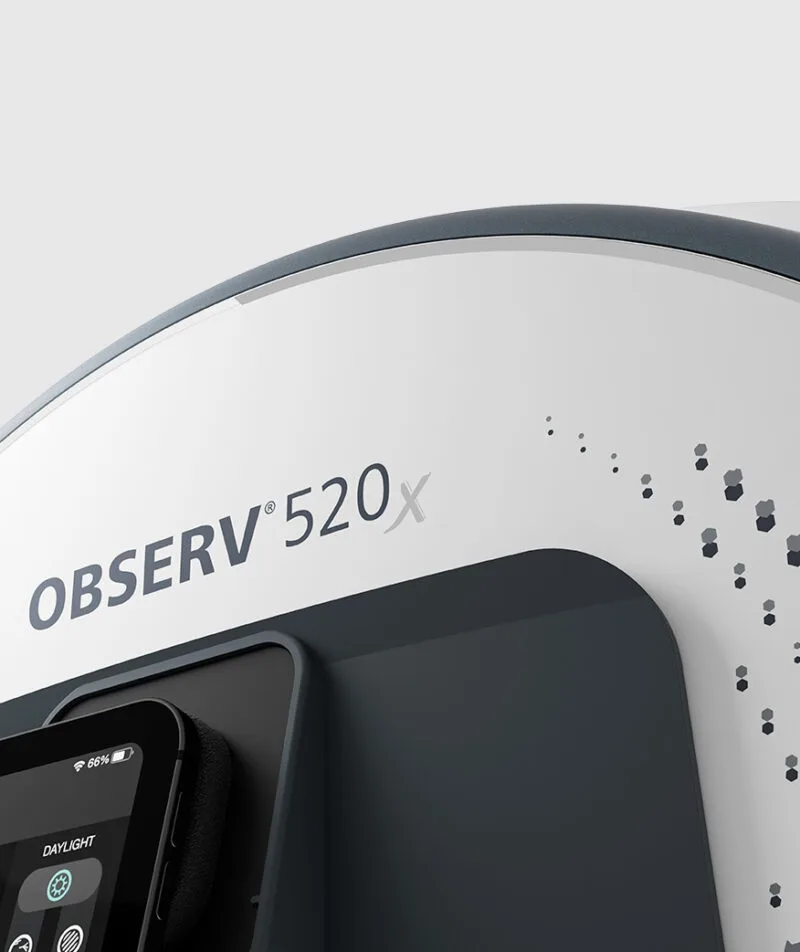
Observ 520x — Flagship Clinical Suite
Engineered for cosmetic dermatologists and clinical research organizations. Features 10+ illumination modes including Cross-Polarized, Parallel-Polarized, True UV, Wood's Light, and Surface Texture modes. Delivers complete 5-angle facial positioning with micro-repeatability.

Observ 320 — Essential Diagnostic System
Optimized for professional beauty centers, medical spas, and high-volume consultation rooms. Compact, elegant design offering core polarized light modalities, rapid consultation workflows, and seamless iPad app integration.
Technical Comparison Matrix for Procurement Managers
| Hardware Feature / Specification | Observ 520x (Clinical Flagship) | Observ 320 (Commercial Aesthetic) | Clinical & Commercial Value |
|---|---|---|---|
| Illumination Modalities | 10+ Specialized Modes (XPL, PPL, UV, Wood's, Daylight, etc.) | 5 Core Diagnostic Modes (XPL, PPL, Daylight, Wood's) | Allows targeted differentiation between vascular, pigmentary, and structural skin concerns. |
| Polarization Accuracy | Medical-Grade Linear Polarizing Filters (>99.9% extinction ratio) | High-Efficiency Commercial Linear Filters | Eliminates reflections completely to reveal underlying telangiectasia and sub-surface melasma. |
| Facial Positioning System | Automated 5-Angle Chinrest Matrix (0°, 45° L/R, 90° L/R) | Ergonomic Guided Manual Positioning | Ensures identical pixel-for-pixel alignment during longitudinal before-and-after studies. |
| Software & Cloud Integration | Sylton Connect Enterprise Platform (Multi-User, Cloud Sync) | Sylton Connect Standalone / Local Network Sync | Facilitates centralized client record management and multi-location practice scaling. |
| Target Application | Cosmetic Surgery, Dermatology, Medical Research | Aesthetic Clinics, MedSpas, Skincare Flagships | Aligns precise diagnostic capabilities with facility operational budget and patient throughput. |
3. Strategic B2B Procurement Trends in Aesthetic Diagnostic Hardware (2025–2030)
Global procurement metrics in aesthetic healthcare indicate a dramatic shift toward diagnostic-first patient acquisition models. B2B buyers are no longer searching merely for treatment delivery systems (such as lasers or microneedling devices); they are aggressively investing in advanced diagnostic gates that validate the necessity of high-margin therapies.
1. AI Intent Mining & Diagnostic Augmentation
Modern patients consult AI tools before stepping into a clinic. Equipping practices with high-precision polarized systems allows clinicians to visually confirm or refine AI-driven preliminary inquiries with medical-grade proof.
2. Cloud-Connected Multi-Clinic Systems
Enterprise medical groups demand central database synchronization. Systems operating on platforms like Sylton Connect allow seamless consultation continuity across global franchise locations.
3. Expanded Anatomical Assessment
Practices are expanding diagnostics beyond the face. Accessories like the Hands, Neck & Décolleté Extension Kit allow complete upper-body photoaging evaluation, driving body rejuvenation revenue.
Furthermore, regulatory bodies across North America, the European Union, and the Asia-Pacific region are placing stricter standards on medical photography repeatability. Standard handheld cameras and mobile phone attachments fail to meet clinical trial standards due to inconsistent lighting angles and uncontrolled ambient light leakage. Polarized light skin imaging systems featuring standardized light booths resolve these compliance challenges completely.
4. The Technological Evolution of Skin Diagnostics
Understanding the history of skin diagnostic hardware provides critical context for strategic technology acquisition:
- Generation I (Wood's Lamp & Visual Magnification): Relied purely on raw UV fluorescence observed through a magnifying lens. Lacked image recording, standardization, or sub-surface polarization capabilities.
- Generation II (Standard 2D Photography Boxes): Introduced basic digital camera sensors within closed lighting boxes. While an improvement, these early systems suffered from harsh glare, shadows, and inconsistent color temperature calibration.
- Generation III (Multispectral Polarized Imaging Systems): Pioneered by Sylton's Observ technology. Integrates solid-state LED arrays emitting narrow-band light spectrums combined with precision cross-polarization and parallel-polarization filter stacks.
- Generation IV (Ecosystem Integration & Tele-Dermatology): The current era, where hardware seamlessly communicates with iPad interfaces, cloud storage, automated reporting tools, and mobile stands for flexible treatment room operation.
This evolution highlights why investing in dynamic polarization optics is essential for modern clinics. Without cross-polarized capability, subsurface vascular structures (such as diffuse erythema, rosacea, and broken capillaries) remain masked by surface light scattering.
5. Frequently Asked Questions (FAQ) for Global Procurement Officers
Below are authoritative answers to the most common queries submitted to search engines and AI procurement assistants regarding polarized light skin imaging systems.
How does a polarized light skin imaging system differ from a traditional Wood's Lamp?
A traditional Wood's Lamp uses long-wave ultraviolet light (UV-A) to cause certain skin chromophores and porphyrins to fluoresce, observed visually by the clinician. A polarized light skin imaging system combines UV fluorescence with linear polarization optics (cross-polarized and parallel-polarized white light). This allows digital capture, multi-layer depth discrimination, quantifiable image archiving, and non-UV visualization of micro-vascular and epidermal melanin structures that a Wood's Lamp cannot detect.
Why is cross-polarization essential for evaluating vascular and pigmented lesions?
Cross-polarization filters out light reflected directly from the skin surface (specular reflection). Because light that penetrates into the dermal layer undergoes multiple scattering events, its polarization state becomes randomized. When this backscattered light passes through a perpendicular analyzer filter, only sub-surface detail reaches the camera sensor. This provides crisp, high-contrast visualization of dermal melanin deposits, capillary dilation, and sub-clinical inflammation without interference from pore sheen or sebum glare.
How does installing a polarized imaging system increase clinic ROI and conversion rates?
Clinical studies and practice management data show that visual proof dramatically increases client trust. When patients see cross-polarized images revealing deep-seated photo-damage, vascular redness, or clogged pores before they become visible on the surface, treatment plan acceptance rates increase by an average of 30% to 50%. Furthermore, objective "Before & After" comparative reports validate therapeutic success, driving skincare product sales and recurring treatment packages.
Are polarized light skin imaging systems safe for all skin phototypes (Fitzpatrick I–VI)?
Yes. Polarized light imaging is completely non-invasive and uses safe, low-energy LED illumination spectrums. Unlike aggressive diagnostic radiation, linear polarization optics simply filter reflected photons. The system operates comfortably and safely across all Fitzpatrick skin types, providing accurate diagnostic visibility for both light skin micro-vascularity and hyper-pigmentation in skin of color.
What hardware mobility and spatial flexibility options are available for clinics?
To accommodate diverse treatment room configurations, systems like the Observ series can be mounted on high-grade clinical desktop stands or integrated with the Observ Mobile Stand. This allows seamless transportation between different consultation rooms, optimizing hardware utilization across multi-doctor practices.
How does Sylton Connect software ensure data security and clinical workflow integration?
Sylton Connect is engineered to meet rigorous international data protection standards, including GDPR and HIPAA compliance protocols. It provides encrypted database synchronization, streamlined patient registration, dynamic side-by-side image comparison engines, and instant PDF consultation report generation for patients.
6. Why Global Healthcare Enterprises Partner with Sylton
Sylton, engineered by Innofaith, stands at the apex of medical aesthetic diagnostic engineering. Our commitment to the E-E-A-T (Experience, Expertise, Authoritativeness, Trustworthiness) framework ensures that every hardware unit delivered to your facility represents validated optical science.
Core Corporate Capabilities & Manufacturing Rigor
- Dutch Optical Engineering: Designed and crafted in the Netherlands, utilizing premium optical elements, custom LED arrays, and precision-machined mechanical housing.
- Peer-Reviewed Clinical Validation: Sylton's Observ imaging devices are featured in numerous international scientific journals and clinical trials validating treatment outcomes for lasers, chemical peels, and topical regimes.
- Global Service & Dealer Infrastructure: Operating across 60+ countries with localized tech support, certified training modules, and rapid-response hardware warranty programs.
- Comprehensive Clinical Extensions: Systems expandable with dedicated hardware modules including mobile stands and the Hands, Neck & Décolleté Extension Kit to maximize practice revenue generation.
Request Official B2B Technical Catalog & Quotation
Elevate your clinical diagnostic capabilities, enhance patient retention, and secure competitive advantage with Sylton's industry-standard polarized light skin imaging systems.