

Blog & Insights
Discover clinical studies, expert guidance, and industry trends on advanced skin imaging and aesthetic diagnostic technology.
Discover clinical studies, expert guidance, and industry trends on advanced skin imaging and aesthetic diagnostic technology.
Choosing a Multispectral facial skin analyzer requires more than comparing camera counts or colorful reports. The right device should reveal details that ordinary lighting misses, such as uneven pigmentation, redness, pores, and hidden sun damage. Dr. David H. McDaniel, a dermatologist and skin-aging researcher, has stated, “Imaging should support clinical judgment, not replace it.” That principle matters. A screen cannot diagnose every condition.
This guide presents seven practical tips for selecting a reliable system. Check the illumination modes and confirm whether they capture consistent multispectral images. Ask how the device is calibrated before each examination. Review the software’s measurement method, not just its attractive heat maps. A clear report is useful. A mysterious score is not. Examine repeatability by scanning the same face under controlled conditions. Small changes in room light can distort comparisons. Confirm whether the analyzer supports different skin tones fairly, since uneven performance can undermine trust. Training also matters. Even advanced equipment produces weak results when operators position the face poorly.
Consider workflow, maintenance, data security, and after-sales support. A compact analyzer may fit a busy clinic better than a powerful but awkward system. Request sample reports from real cases, including dry skin, acne marks, and mature skin. Do not rely on one impressive demonstration. I would also question claims promising perfect accuracy. No device is perfect. That uncomfortable detail is easy to ignore. A careful buyer compares technical evidence, user experience, and clinical usefulness together. The best Multispectral facial skin analyzer should make observations clearer, decisions more consistent, and patient conversations more honest.
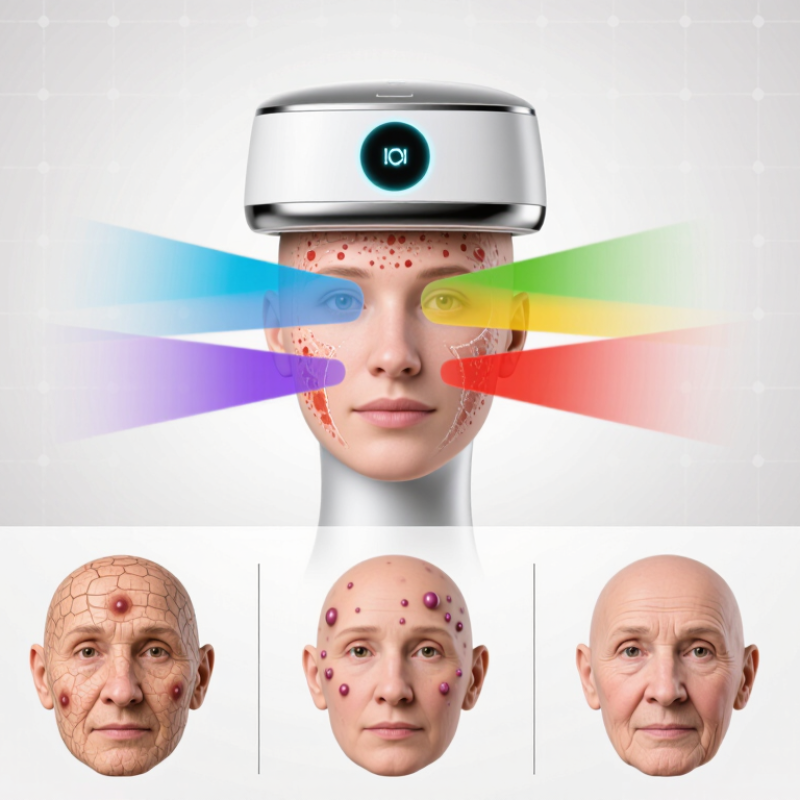
Before choosing a multispectral facial skin analyzer, define the decision it must support. Purpose comes first. A salon may need visible comparisons for hydration, redness, pores, or uneven tone. A clinic may require more controlled measurements for treatment planning and progress tracking. These are different needs.
List the core functions before reviewing technical specifications. The device should capture images under consistent lighting and fixed facial positioning. Multispectral modes can reveal patterns that ordinary photographs often miss. Useful software should compare visits, display clear charts, and store measurement dates. Calibration matters. Without it, a bright room or changing camera angle can distort results. Numbers need context.
In practice, ask whether staff can operate the analyzer consistently after brief training. Test the same client twice under similar conditions. Large differences may signal weak repeatability, poor instructions, or user error. I have found that attractive reports can still hide unclear measurement methods. That deserves careful questioning. The analyzer should support professional observation, not replace it. Skin condition, recent products, lighting, and personal history can influence readings. A qualified professional should explain limitations and avoid presenting screen results as a medical diagnosis. Choose functions that match your workflow, document changes honestly, and leave room for human judgment.
| Tip | Primary Purpose | Core Functions to Look For | Useful Imaging or Sensing Modes | Key Data Dimensions | Practical Selection Criteria |
|---|---|---|---|---|---|
| 1 Define the Main Use Case | Match the analyzer to the intended application before comparing technical specifications. | Skin condition screening, consultation support, treatment monitoring, product guidance, or research data collection. | Visible-light imaging for general appearance; polarized or cross-polarized imaging for surface reflection and redness-related visual assessment. |
Use-case fit Consultation speed, report readability, repeatability, and suitability for professional or consumer environments. |
Choose a system whose measurements directly support the decisions users need to make. Avoid paying for functions that are not used in the workflow. |
| 2 Check Multispectral Coverage | Ensure that the selected light bands can reveal the skin characteristics relevant to the intended assessment. | Image capture under controlled illumination, spectral-channel selection, image comparison, and standardized positioning. | RGB, ultraviolet, polarized, cross-polarized, and near-infrared channels may be used for different visual or subsurface observations. |
Channel relevance Number of available channels, wavelength documentation, illumination consistency, and image uniformity. |
Do not judge quality only by the number of channels. Confirm that each channel has a documented purpose and produces interpretable information. |
| 3 Prioritize Measurement Reliability | Obtain results that are consistent enough for before-and-after comparisons and routine consultations. | Automatic exposure control, fixed imaging distance, guided facial positioning, stable lighting, and repeat measurements. | Standardized visible and polarized images; optional sensors for moisture, sebum, temperature, or elasticity when properly calibrated. |
Repeatability Same-user retest variation, calibration procedure, environmental controls, and documented measurement conditions. |
Request repeatability information from the supplier and test the analyzer under the same lighting, distance, and skin-preparation conditions used in practice. |
| 4 Select Relevant Skin Indicators | Focus on indicators that can be explained clearly and connected to a suitable skincare or treatment plan. | Assessment of visible pores, wrinkles, texture, pigmentation appearance, redness appearance, oiliness, hydration, and sensitivity-related signs. | Image-based analysis plus optional contact or non-contact sensors for moisture, sebum, pH, or elasticity. |
Indicator validity Measurement unit, detection method, reference range, data timestamp, and distinction between measured values and calculated scores. |
Prefer clearly defined indicators over vague “skin age” or “overall score” outputs. A useful report should explain how each result is obtained. |
| 5 Evaluate Software and Reporting | Convert images and measurements into understandable, actionable results. | Automatic region-of-interest selection, side-by-side comparison, trend tracking, customizable reports, data export, and user access control. | Visual maps, numeric scores, annotated images, progress charts, and treatment or product recommendation fields. |
Report usability Time to generate a report, readability, export formats, language options, audit trail, and compatibility with existing workflows. |
Test whether a new operator can create and explain a report without extensive training. Check whether recommendations can be reviewed rather than accepted automatically. |
| 6 Confirm Safety and Privacy Controls | Protect users during imaging and protect the personal information associated with facial images. | Low-risk illumination, exposure controls, consent recording, user authentication, encrypted storage or transfer, and deletion options. | Visible, polarized, ultraviolet, or near-infrared illumination selected according to the device’s documented safety controls and intended use. |
Risk management Exposure information, operating instructions, electrical safety documentation, privacy settings, retention period, and backup controls. |
Ask for safety documentation and a clear facial-image data policy. Use the lowest practical exposure and obtain informed consent before capturing images. |
| 7 Plan for Validation and Support | Ensure that the analyzer remains useful after installation and that its outputs are interpreted responsibly. | Calibration reminders, software updates, technical support, operator training, maintenance records, and performance verification. | All installed imaging channels and sensors should have documented calibration or verification procedures. |
Lifecycle readiness Training time, service response, update policy, calibration interval, warranty coverage, data backup, and export accessibility. |
Run a small internal validation using repeated measurements and controlled conditions. Treat analyzer outputs as decision-support information, not as a medical diagnosis unless appropriately authorized. |
RGB cameras record visible colors. Multispectral systems capture selected wavelength bands. Hyperspectral systems collect more, narrower bands. They may cost more and require stronger technical support. Screen design matters less than imaging quality.
Look for stable illumination, clear wavelength details, and cross-polarized imaging. Cross-polarization can reduce surface glare. This helps when examining redness, pigmentation, and uneven texture. Automatic positioning and repeat scans are also useful.
Ask for repeatability data, reference measurements, and testing across different skin tones. Check sensitivity, specificity, and measurement error. Do not trust one impressive percentage. Test the same face several times. Results should remain reasonably close.
Room lighting, camera distance, facial angle, and cleansing time can affect readings. Hydration, recent exercise, cosmetics, and natural flushing may also influence results. Keep these conditions consistent. Small changes can create confusing differences.
Useful metrics may include hydration, pigmentation, redness, texture, and pore visibility. Ask how each metric is calculated. Check its measurement range and lighting conditions. Images alone can mislead. A warm treatment room may exaggerate redness.
Prefer clear baselines, trend charts, confidence notes, and poor-image warnings. Software should explain possible changes without making diagnosis claims. It should support side-by-side comparisons. A neat color map can still mislead.
Reports should include the date, facial area, metric definitions, and comparison images. Exportable files support later review. Clients should understand the report without technical training. A polished report is not automatically accurate.
Check access controls, secure storage, and whether raw data remains available. Ask about calibration procedures and staff training. Test whether trained operators reach similar conclusions. Human interpretation still varies. That weakness deserves attention.
Choosing the right Multispectral facial skin analyzer requires more than comparing appearance or basic specifications. First, define its intended purpose, such as professional consultation, routine skin assessment, progress tracking, or educational use. Then compare its imaging technology, lighting consistency, detection accuracy, and ability to reveal visible and underlying skin conditions. A reliable system should provide useful metrics, clear data interpretation, and well-organized reports that help users understand results without unnecessary complexity.
It is also important to assess safety, comfort, ease of operation, and compatibility with existing professional workflows. Consider whether the device is easy to clean, simple to calibrate, and suitable for different users and environments. Finally, evaluate the total cost, including purchase price, maintenance, software updates, training, technical support, and expected service life. The best choice is not always the cheapest option, but the analyzer that delivers dependable information, efficient operation, and lasting value for its intended application.