
Blog & Insights

Discover clinical studies, expert guidance, and industry trends on advanced skin imaging and aesthetic diagnostic technology.

0%

Buying a Hands neck and decollete skin analyzer requires more than comparing screen size, camera pixels, or software claims. These areas show visible dryness, pigmentation, fine lines, and uneven texture, yet they are often assessed less consistently than the face. The Skin Cancer Foundation reports that up to 90% of visible skin aging may result from ultraviolet exposure. This makes controlled lighting and UV-related assessment important. It also makes careless interpretation risky.

The global beauty market could reach approximately $580 billion by 2027, according to McKinsey’s “The Beauty Market in 2023” report. Growing demand encourages more clinics, salons, and retailers to purchase diagnostic equipment. However, market growth does not guarantee measurement quality. A useful analyzer should provide repeatable images, clear scoring methods, hygienic contact procedures, and practical training. Ask whether its results remain stable under different room temperatures and lighting conditions. Small details matter.

Look beyond impressive demonstrations. Check calibration records, software update policies, warranty terms, data protection controls, and compatibility with existing consultation systems. The device should help trained professionals discuss skin conditions, not replace clinical judgment. No analyzer is perfectly objective. That is worth remembering. A reflective neck surface, body hair, makeup residue, or recent skincare product can distort readings. Buyers should request real test reports, not only polished brochures. This guide, “7 Tips for Hands Neck and Decollete Skin Analyzer Buyers,” examines those purchasing decisions through practical experience, technical evidence, and responsible consultation standards. It also questions common assumptions, because a cheaper device may cost more when results cannot be trusted.
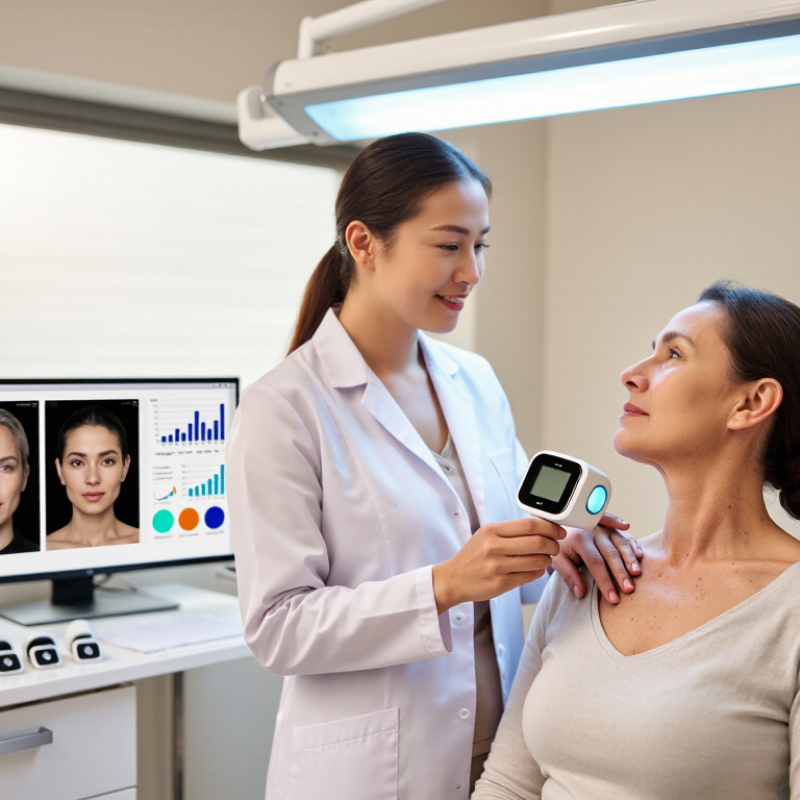
7 Tips for Hands Neck and Decollete Skin Analyzer Buyers

Understanding Skin Analysis Needs for Hands, Neck, and Décolletage

7 Tips for Hands, Neck, and Décolletage Skin Analyzer Buyers

Understanding Skin Analysis Needs for Hands, Neck, and Décolletage

Skin analysis should reflect real skin behavior, not just facial concerns. These areas face frequent washing, sunlight, friction, and changing temperatures. A useful analyzer should assess hydration, pigmentation, texture, redness, and fine lines across different skin thicknesses.

Look for a sensor that works on uneven surfaces. The knuckles, tendons, and collarbone can produce inconsistent readings. Test several locations, including the back of the hand and the upper chest. Small contact errors matter. Stable lighting also matters, especially when measuring pigmentation.

Choose equipment with adjustable settings for sensitive areas. The neck may react differently from the hands, while the décolletage often shows scattered sun spots. A reliable system should store images, record measurement conditions, and allow repeated assessments. Without consistent pressure and positioning, comparisons become weak.

Ask how the analyzer was tested. Independent clinical data is more convincing than attractive sample images. Check whether results were evaluated on varied ages, skin tones, and hydration levels. Some devices estimate conditions rather than measure them directly. That distinction must be clear.

Practical design affects accuracy. A narrow probe may reach the neck more easily, while a larger lens can capture the décolletage evenly. Cleaning should be simple and documented. Staff training is essential, even with automated software.

One concern remains: no analyzer replaces professional judgment. Skin changes can be subtle, seasonal, or influenced by recent skincare. I would record those factors, although busy teams may forget. That weakness deserves attention before purchase.

Evaluating Key Features in a Skin Analyzer

7 Tips for Hands Neck and Decollete Skin Analyzer Buyers

Evaluating Key Features in a Skin Analyzer

A useful skin analyzer should examine more than facial skin. Look for camera coverage that captures hands, neck, and décolleté clearly. These areas often show dryness, uneven tone, and texture changes. Small details matter. Choose adjustable lighting with consistent brightness. Harsh reflections can make skin appear less balanced than it really is. A stable image helps users compare results during later assessments.

Check whether the device measures hydration, oil balance, pigmentation patterns, and visible texture separately. Clear categories are more helpful than one dramatic score. The software should explain each result in plain language. It should also show how images were captured. Data protection is essential, especially when storing personal skin photographs. Ask about user permissions, export options, and routine software updates. Reliable support should include practical training, not only a sales manual.

I once overvalued attractive reports and ignored measurement consistency. That was a mistake. Test the analyzer under different room conditions before buying. Compare readings from clean skin and recently moisturized skin. Results may change. That does not automatically mean the device is poor. It may reveal the limits of the method. Buyers should also inspect calibration procedures, warranty terms, and replacement costs. A professional evaluator records several test images before trusting the analyzer for regular consultations.

7 Tips for Hands Neck and Decollete Skin Analyzer Buyers - Evaluating Key Features in a Skin Analyzer

Tip Key Feature to Evaluate Recommended Specification or Capability Why It Matters for Hands, Neck and Décolleté Buyer Verification Checklist
1 Choose appropriate imaging modes Visible-light and UV or polarized-light imaging At least 2–3 imaging modes, with consistent illumination and image capture. Different lighting modes can help visualize surface texture, uneven tone, redness and some pigmentation-related patterns. These areas often show visible sun exposure and dryness earlier than covered skin.
  • Confirm which findings each mode is designed to show.
  • Check that lighting intensity remains consistent between scans.
  • Ask whether images can be compared over time.
2 Prioritize measurement repeatability Standardized positioning and automated image capture Built-in distance guidance, fixed-angle imaging or a positioning frame; repeatability data should be provided by the supplier. The neck and décolleté are curved and the hands vary in position. Small changes in distance, angle or lighting can affect readings, making standardized capture essential for reliable follow-up comparisons.
  • Request repeat-scan variation results.
  • Test the same area at least three times.
  • Check whether staff can reproduce the setup quickly.
3 Check the measurement range Parameters relevant to mature and exposed skin Look for measurements such as hydration, oil level, elasticity or firmness indicators, pore or texture analysis, redness and pigmentation-related indexes. Hands, neck and décolleté may have different skin thickness, oil production and exposure patterns. A broad measurement set supports more area-specific consultations instead of relying on one generic score.
  • Confirm which parameters are directly measured versus algorithmically estimated.
  • Review the measurement units and reference ranges.
  • Verify that the probe or camera is suitable for each body area.
4 Evaluate sensor and optical quality Camera resolution, color control and sensor stability Select a system with clear images, controlled white balance and stable exposure; published technical specifications should be available. Fine lines, crepey texture and uneven tone can be subtle. Poor focus, glare or color distortion may make small changes difficult to distinguish and can reduce confidence in the results.
  • Inspect close-up images for sharpness and glare.
  • Test different skin tones under the same settings.
  • Ask whether calibration is required and how often it is performed.
5 Assess hygiene and contact safety Non-contact imaging and cleanable contact surfaces Prefer non-contact imaging where possible. Any contact probe should have smooth, disinfectant-compatible surfaces and clear cleaning instructions. Hands are frequently exposed to environmental contaminants, while the neck and décolleté can be sensitive to friction and cosmetic residue. Simple cleaning procedures help support safe, efficient operation.
  • Review approved cleaning agents.
  • Check whether disposable covers are needed.
  • Confirm that the device does not require direct contact for every measurement.
6 Review software and reporting tools Area selection, trend reporting and image comparison The software should allow separate records for the hands, neck and décolleté, with side-by-side images, dated results and exportable reports. These areas often receive different care routines and may change at different rates. Area-specific records make consultations clearer and help track progress without mixing unrelated measurements.
  • Check whether users can define custom measurement zones.
  • Confirm report export formats and language options.
  • Review user permissions, data backup and patient privacy controls.
7 Consider workflow, training and support Ease of use, operating time and serviceability Choose a system that can complete a standard scan in a few minutes, provides clear on-screen guidance and includes documented training and maintenance support. A complicated process may lead to inconsistent positioning or skipped measurements. Fast, repeatable operation is especially valuable when several body areas are assessed during one consultation.
  • Run a complete hands, neck and décolleté workflow before purchase.
  • Ask about software updates, warranty coverage and repair turnaround.
  • Calculate ongoing costs for calibration, consumables and training.

Comparing Imaging, Measurement, and Reporting Capabilities

When buying a skin analyzer for hands, neck, and décolleté, inspect its imaging system in real conditions. Consistent lighting matters. Uneven illumination can make one side appear darker. Check whether the camera captures fine lines, spots, redness, and texture without excessive smoothing. Test the same volunteer twice, with identical positioning and lighting. The results should remain reasonably stable.

Measurement features deserve closer attention. Ask how the system defines hydration, pigmentation, wrinkle depth, pore visibility, or redness. Clear units and reference ranges make results easier to interpret. Region selection should include the back of the hands, neck, and upper chest separately. These areas have different skin thicknesses and exposure histories. Useful measurement data supports cosmetic assessment, not medical diagnosis. Be careful here.

Reporting can determine whether the analyzer helps daily consultations. A strong report should show original images, selected regions, measured changes, and readable trend charts. It should also record capture conditions, because temperature and lighting can influence results. Test the export process before purchasing. Can staff print or share a report without confusing technical language? Some systems produce attractive pages but weak evidence. That is a real problem. Reviewers should also check data access controls, audit records, and staff training requirements. A trial with several skin tones and ages may reveal limitations that a product demonstration hides.

Checking Accuracy, Usability, and Device Compatibility

7 Tips for Hands, Neck, and Décolleté Skin Analyzer Buyers

When assessing an analyzer, verify its accuracy before admiring its screen. Ask how the device was calibrated and whether testing used different skin tones, ages, and moisture levels. Request repeat scans from the same area. Results should remain reasonably consistent, not change dramatically after one movement. Check the lighting conditions, too. A bright window can distort visible redness, texture, or pigmentation readings. Review the measurement method and compare results with trained professional observation. Numbers alone are not proof.

Usability matters during real appointments. Hold the sensor for several minutes and notice its weight, grip, and cable position. The workflow should be clear enough for busy staff. It should not require technical guesswork. Test cleaning procedures, image storage, report creation, and language settings. Confirm that clients can understand the displayed findings without exaggerated claims. I once tested a device with impressive images but confusing navigation. That experience changed my priorities. Attractive software is not always practical.

Compatibility deserves equal attention. Confirm the operating system, screen requirements, charging method, and available accessories before purchase. Check whether exported reports work with your existing records or consultation software. Ask about software updates and technical support in writing. A device may perform well but still disrupt your workflow. Test it in your actual treatment room, under normal lighting, with real hand, neck, and décolleté scans. Do not skip this step. Small mismatches can become daily frustrations. Recheck the evidence before trusting the promise.

Choosing the Right Analyzer for Professional or Home Use

7 Tips for Hands, Neck, and Décolleté Skin Analyzer Buyers

Choosing the right skin analyzer begins with the intended setting. Professional users need repeatable measurements, adjustable lighting, and clear exportable reports. Home users may prefer simple controls and readable results. Look for separate assessment modes for the hands, neck, and décolleté, because thinner skin and uneven contours can affect readings. A device that measures hydration, pigmentation, texture, and redness offers more useful guidance than a single score. It should support observation, not replace professional judgment.

Check calibration procedures carefully. Consistent lighting matters. Ask whether the analyzer requires a fixed distance, clean skin, or a short waiting period after cleansing. These details can change results. Hygiene is equally important, especially in clinics. Removable contact surfaces or easy-to-disinfect materials are practical advantages. Privacy also deserves attention. Choose systems with secure storage and clear control over client images and reports.

During hands-on testing, compare the same area twice. The readings should be reasonably consistent, although no device is perfectly objective. I have found that complicated software can discourage regular use, even when the hardware performs well. Keep the workflow realistic. A professional analyzer should save time during consultations, while a home model should explain results without alarming language. Independent technical documentation, training support, warranty terms, and transparent limitations build trust. Small details matter. A bright screen, stable grip, and quiet operation can improve daily use more than impressive specifications.

7 Tips for Hands, Neck and Décolleté Skin Analyzer Buyers

Choosing the right analyzer depends on measurement accuracy, portability, hygiene, ease of use, image quality, reporting, and cost. The chart shows practical priority scores for professional and home users on a 1–5 scale.

Professional buyers generally place greater emphasis on repeatable measurements, detailed imaging, reporting, and workflow efficiency. Home users typically prioritize simple operation, portability, hygiene, and affordability.

FAQS

Which skin areas should an analyzer assess?

It should assess the hands, neck, and décolletage separately. These areas have different thicknesses and contours. Useful readings include hydration, pigmentation, texture, redness, and fine lines.

Why do uneven surfaces affect skin analysis?

Knuckles, tendons, and collarbones can create unstable readings. Test the back of the hand and upper chest. Small contact errors matter.

What sensor design works well for these areas?

Choose a sensor that handles uneven surfaces and adjustable settings. A narrow probe may suit the neck. A larger lens can cover the décolletage evenly.

How can buyers check measurement accuracy?

Ask about calibration and independent testing. Results should remain reasonably similar during repeated scans. Test different ages, skin tones, and moisture levels.

Does lighting change the results?

Yes. A bright window may distort redness, texture, or pigmentation readings. Use stable lighting and record the measurement conditions.

What features improve daily professional use?

Look for clear controls, image storage, report creation, and easy cleaning. The grip should feel stable after several minutes. Attractive software is not always practical.

What compatibility details should buyers confirm?

Check the operating system, screen needs, charging method, and accessories. Confirm that reports work with existing records. Test the device in the actual treatment room.

What should home users consider?

Home users may prefer simple controls and readable findings. The device should explain results without alarming language. Short instructions help.

Can an analyzer replace professional judgment?

No. It supports observation, but it does not explain every skin change. Seasonal conditions and recent skincare may affect readings. Busy teams may forget to record them.

How important are hygiene and privacy?

Both are important, especially during repeated consultations. Choose easy-to-disinfect contact surfaces and secure image storage. Privacy controls should be clear.

Conclusion

Choosing the right Hands neck and decollete skin analyzer starts with understanding the specific needs of these often-neglected areas. Buyers should consider whether they need to assess hydration, oil balance, pigmentation, texture, fine lines, or sun-related changes. A reliable analyzer should offer clear imaging, useful measurements, and easy-to-understand reports that support personalized skincare recommendations.

When comparing devices, evaluate image quality, measurement consistency, reporting functions, ease of use, and compatibility with existing professional equipment or digital systems. Professionals may prefer advanced models with detailed analysis, client record management, and repeatable results, while home users may benefit from a simpler, portable design with straightforward guidance. Accuracy, comfortable operation, maintenance requirements, and data privacy should also influence the decision. By matching features with practical needs, buyers can select an analyzer that delivers meaningful insights for hands, neck, and décolletage care.

Charlotte

Charlotte

Charlotte is a professional marketing specialist with a deep understanding of the company’s products, customers, and industry trends. With a strong combination of market insight, strategic thinking, and clear communication skills, she is dedicated to helping businesses discover practical solutions......