
Blog & Insights

Discover clinical studies, expert guidance, and industry trends on advanced skin imaging and aesthetic diagnostic technology.

0%

China’s aesthetic medicine market is expanding, but reliable diagnosis must guide every treatment decision. This is where an Aesthetic medicine diagnostic device becomes important. High-quality systems can reveal pigmentation, vascular changes, skin texture, elasticity, and facial asymmetry before a procedure begins.

Dr. Jean Carruthers, a pioneer of modern aesthetic medicine, has said, “The goal is not to make people look different, but to make them look better.” This principle remains practical. A clinic should not select equipment based only on image quality, price, or marketing claims. It should examine measurement accuracy, clinical usability, software stability, training support, maintenance, and data protection.

This guide reviews China’s top 10 Aesthetic medicine diagnostic device suppliers through those criteria. The selection considers manufacturers of facial imaging systems, skin analyzers, ultrasound platforms, and related assessment technologies. Supplier experience matters. So does evidence from real clinical environments.

Some companies offer polished interfaces but limited validation. Others provide strong engineering and weaker international support. That difference is easy to miss.

The ranking is therefore not absolute. It reflects available company information, product capability, service coverage, and suitability for professional clinics. Buyers should still verify certifications, clinical documentation, warranty terms, and local regulatory requirements before purchasing. A useful device should produce clearer decisions, not merely more colorful images.

Good diagnosis comes first. Better outcomes follow.
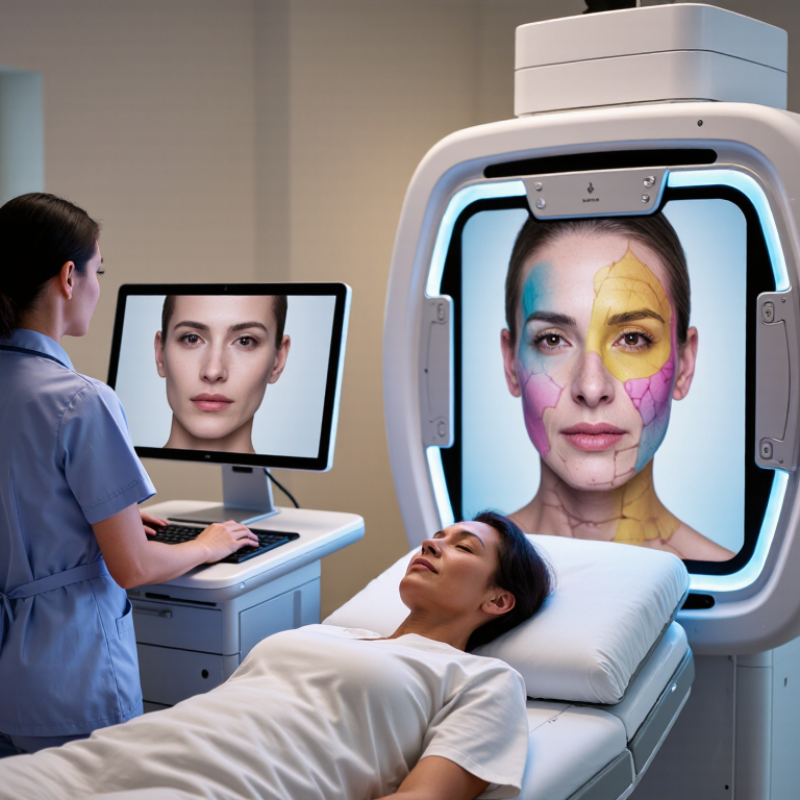
China Top 10 Aesthetic Medicine Diagnostic Device Suppliers?

What Are Aesthetic Medicine Diagnostic Devices?

Aesthetic medicine diagnostic devices help clinicians understand skin, tissue, and facial structure before recommending treatment. They do not replace professional judgment. They provide measurable information.

Common examples include high-resolution skin imaging, dermatoscopes, ultrasound scanners, and three-dimensional facial analysis systems. Skin imaging can show pigmentation, pores, redness, and surface texture under controlled lighting. Ultrasound may help assess tissue layers and locate structures beneath the skin. Three-dimensional systems can record facial proportions and support careful treatment planning. Some devices also compare images over time, which helps clinicians evaluate changes more objectively.

In practice, reliable results depend on more than advanced hardware. Proper calibration matters. So does consistent lighting, patient positioning, and operator training. A rushed scan may create misleading data. I have found that patients understand treatment plans better when clinicians explain images in plain language. That builds trust, but it can still oversimplify complex anatomy. Diagnostic devices should support informed decisions, not promise perfect predictions.

When comparing potential suppliers, clinics should examine clinical evidence, device maintenance, software security, training, and regulatory documentation. Clear user instructions are essential. Data protection also deserves attention, especially when facial images are stored. A lower purchase price may hide expensive servicing or limited technical support. Even experienced teams can overlook these details. Careful evaluation remains necessary before a device enters daily clinical use.

Aesthetic medicine diagnostic devices combine surface imaging, optical analysis, and tissue-structure assessment. The chart compares representative diagnostic depths commonly associated with major technology categories. Optical methods mainly evaluate the skin surface, while ultrasound can assess deeper soft-tissue structures. Actual performance varies according to device frequency, wavelength, probe design, and clinical settings.

How to Evaluate Chinese Diagnostic Device Suppliers

China Top 10 Aesthetic Medicine Diagnostic Device Suppliers?

Supplier evaluation should begin with evidence, not rankings. Grand View Research reported double-digit growth in the global aesthetic medicine market from 2024 onward. That growth attracts capable manufacturers and inexperienced traders.

Request the supplier’s NMPA registration details, ISO 13485 certificate, and IEC 60601 safety test reports. Confirm that each document matches the exact model and production site. A certificate alone is not enough.

Examine diagnostic accuracy under real clinic conditions. Ask for sensitivity, specificity, repeatability, and calibration intervals. Independent clinical data is more persuasive than a polished brochure.

Check software update controls, cybersecurity procedures, and image export formats. The FDA’s 2023 guidance emphasizes lifecycle controls for medical device software. This matters when devices process patient images.

Inspect one sample unit if possible. Buttons should respond smoothly, probes should feel balanced, and displayed measurements should remain stable after repeated scans. Some suppliers provide impressive demonstrations but weak after-sales support. That gap deserves honest attention.

Tips:

Ask for three recent customer references. Test delivery consistency using a small order. Confirm spare-part availability and technician response times in writing. Compare warranty exclusions carefully. A lower quotation may hide training, calibration, or installation costs. Also, do not treat market reports as purchase instructions; their definitions and datasets differ. A careful buyer should record unanswered questions, because uncertainty is itself a supplier risk.

China’s Top 10 Aesthetic Medicine Diagnostic Device Suppliers

China’s Top 10 Aesthetic Medicine Diagnostic Device Suppliers

China’s top ten aesthetic medicine diagnostic device suppliers are best compared through evidence, not promotional claims. In practice, reliable suppliers provide skin imaging systems, facial analysis tools, body composition monitors, and compatible clinical software. Their devices should produce repeatable measurements under consistent lighting, distance, and calibration. Clear technical files, quality management records, and applicable market approvals also matter. A supplier with responsive training can reduce errors during consultations and follow-up visits. That experience is often more valuable than a polished brochure.

A ranking can mislead. Some suppliers excel in hardware but offer weak software support. Others provide attractive prices, yet replacement parts arrive slowly. Buyers should review sample reports, data security controls, warranty terms, installation records, and service response times. Ask whether the system supports local workflows and exports readable data. Independent testing is preferable when available. No device replaces clinical judgment; it only improves observation when used correctly. I would also reassess the shortlist after demonstrations, because my first impression is not always accurate.

Tips: Compare three real test cases before purchasing. Check image consistency across operators. Request calibration guidance in writing. Confirm training for new staff. Keep audit records for every device.

China Top 10 Aesthetic Medicine Diagnostic Device Suppliers

No. Supplier Segment Primary Diagnostic Device Core Diagnostic Application Typical Technical Range Common Clinical Users Key Evaluation Criteria
1 Ultrasound Imaging Suppliers High-frequency skin ultrasound systems Assessment of dermal thickness, skin layers, nodules and filler-related structures Common probes: approximately 7.5–20 MHz Dermatologists, plastic surgeons and aesthetic physicians Axial resolution, penetration depth, probe ergonomics and image uniformity
2 Three-Dimensional Facial Imaging Suppliers 3D facial surface scanners Facial symmetry analysis, contour mapping and treatment comparison Non-contact optical capture; sub-millimetre surface measurement is common Aesthetic clinics, surgical planning centers and research institutions Geometric accuracy, repeatability, capture speed and software interoperability
3 Multispectral Skin Analysis Suppliers Multispectral facial imaging systems Quantification of pigmentation, redness, pores, spots and skin texture Visible and near-infrared bands, commonly within approximately 400–1,000 nm Dermatology clinics, cosmetic hospitals and skincare research centers Illumination consistency, color calibration, image segmentation and reporting tools
4 Optical Coherence Tomography Suppliers Skin optical coherence tomography systems Cross-sectional visualization of superficial tissue microstructure Near-infrared light sources commonly operate around 800–1,300 nm Clinical researchers, dermatologists and medical research laboratories Axial resolution, imaging depth, motion tolerance and scanning speed
5 Dermoscopy Equipment Suppliers Digital dermoscopes Magnified assessment of pigmented lesions, vascular patterns and skin structures Polarized or non-polarized illumination with digital magnification Dermatologists, skin cancer screening centers and aesthetic clinics Optical clarity, glare reduction, image documentation and database functions
6 Hair and Scalp Diagnostic Suppliers Trichoscopy and scalp imaging systems Evaluation of hair density, shaft diameter, follicular units and scalp condition Digital magnification commonly ranges from approximately 20× to 200× Hair clinics, dermatology departments and transplant centers Measurement repeatability, automated counting, lighting control and image storage
7 Laser and Light Treatment Assessment Suppliers Optical tissue analysis and treatment-monitoring systems Pre-treatment evaluation and post-treatment monitoring of vascular and pigment changes Spectral measurement may cover visible and near-infrared wavelengths Laser centers, dermatology clinics and clinical trial units Spectral accuracy, standardized positioning, safety workflow and longitudinal comparison
8 Microcirculation Imaging Suppliers Capillaroscopy and microvascular imaging systems Observation of superficial capillaries, blood-flow patterns and vascular response Optical magnification with real-time video capture Dermatology clinics, vascular specialists and medical research centers Frame rate, vessel visibility, motion correction and quantitative analysis
9 Skin Elasticity Measurement Suppliers Cutometry and skin biomechanical analysis systems Measurement of skin firmness, elasticity, distensibility and recovery Negative-pressure or mechanical deformation testing with repeatable probe cycles Aesthetic clinics, cosmetic laboratories and product testing facilities Applied pressure control, probe sealing, repeatability and standardized indices
10 Digital Treatment Documentation Suppliers Standardized clinical photography and imaging platforms Before-and-after documentation, treatment planning and outcome comparison Controlled illumination, fixed camera geometry and calibrated image capture Aesthetic hospitals, outpatient clinics and clinical research teams Standardization, data privacy, image traceability and electronic record integration

Note: The table presents major supplier segments and commonly used technical specifications in aesthetic medicine diagnostics. Technical ranges are indicative and vary by device configuration, intended use and regulatory classification.

Key Technologies and Applications in Aesthetic Diagnostics

China Top 10 Aesthetic Medicine Diagnostic Device Suppliers

Key technologies now shape China’s aesthetic diagnostics market. Three-dimensional facial imaging measures symmetry, volume, and treatment changes. High-frequency ultrasound examines dermal thickness and filler placement. Multispectral cameras reveal pigmentation, vascular patterns, and uneven skin tone. Artificial intelligence can segment facial regions within seconds, but clinical review remains essential. The ISAPS 2023 Global Survey recorded more than 19 million nonsurgical aesthetic procedures worldwide. This demand increases pressure for measurable, repeatable assessments.

Professional buyers should examine more than image quality. The device needs stable lighting, calibration records, exportable data, and clear privacy controls. The FDA’s 2022 Digital Health Technologies guidance stresses data quality, usability, and risk management in clinical evaluation. These principles also apply to aesthetic diagnostic equipment. Suppliers with ISO 13485-based quality systems may offer stronger documentation, although certification alone does not prove clinical accuracy. I have seen attractive dashboards hide weak baseline comparisons. That is a practical warning.

Tips: Capture the same angle, distance, and lighting before every assessment. Record skin preparation and recent procedures. Compare trends, not one dramatic image. Ask suppliers for validation data, training materials, software-update policies, and local service response times. A lower purchase price may become expensive when calibration, repairs, or staff training are overlooked. Also question AI outputs. They can support decisions, but they should not replace qualified clinical judgment.

How to Select the Right Supplier for Your Clinic

When comparing China’s top 10 aesthetic medicine diagnostic device suppliers, do not judge by ranking alone. A suitable supplier should understand your clinic’s daily workflow, patient volume, and treatment categories. Check whether the device offers clear imaging, repeatable measurements, and simple software controls. Ask for technical specifications, calibration records, and independent clinical references. A polished brochure is not enough.

Request a live demonstration with realistic skin conditions and different lighting environments. Observe image consistency, reporting speed, and staff learning time. Confirm installation support, operator training, warranty terms, and spare-part availability. Verify that documentation matches the regulations in your market. Data protection also matters, especially when patient images are stored online. I have seen purchasing teams focus on price, then discover expensive maintenance delays. That mistake is avoidable, but not always.

Tips: Create a scoring sheet before contacting suppliers. Include image quality, evidence, compliance documents, software usability, service response, and total ownership cost. Ask for two customer references from clinics with similar workloads. Test the device with your own staff, not only the supplier’s specialist. Leave room for doubt. Some impressive functions may rarely improve your actual consultations.

FAQS

What are aesthetic medicine diagnostic devices?

They help clinicians examine skin, tissue, and facial structure before treatment. They provide measurable information. They do not replace professional judgment.

Which devices are commonly used?

Common tools include skin imaging systems, dermatoscopes, ultrasound scanners, and three-dimensional facial analysis systems. Each tool measures different features.

What can skin imaging reveal?

Controlled lighting can show pigmentation, pores, redness, and surface texture. Results may change when lighting or positioning changes.

How can ultrasound support clinical assessment?

Ultrasound may help examine tissue layers and locate structures beneath the skin. It supports planning but cannot predict every treatment outcome.

Why are calibration and positioning important?

Accurate results require calibration, consistent lighting, and fixed patient positioning. A rushed scan may produce misleading data.

How should clinics compare potential suppliers?

Review clinical evidence, technical files, maintenance, software security, training, and applicable market approvals. A polished brochure is not enough.

What should a clinic test during a live demonstration?

Test realistic skin conditions under different lighting environments. Check image consistency, reporting speed, and staff learning time.

How can clinics control long-term ownership costs?

Compare purchase price, servicing, spare parts, warranty coverage, and technical support. A cheaper device may create expensive maintenance delays.

How should patient image data be handled?

Clinics should review storage methods, access controls, and data protection practices. Facial images need careful handling. Details can be overlooked.

Can diagnostic devices improve patient consultations?

Clear images may help clinicians explain treatment plans in plain language. However, explanations can oversimplify complex anatomy. That risk deserves attention.

Conclusion

Aesthetic medicine diagnostic device refers to professional equipment used to assess skin condition, facial structure, pigmentation, elasticity, hydration, and other visible or measurable features before and after aesthetic treatments. This article explains how these devices support more accurate consultations, personalized treatment planning, progress tracking, and patient communication. It also introduces the key criteria for evaluating Chinese suppliers, including product quality, technical capability, certification, manufacturing consistency, after-sales service, training, and customization options.

The overview of China’s top ten aesthetic medicine diagnostic device suppliers focuses on common strengths rather than brand promotion, such as imaging accuracy, intelligent analysis, user-friendly software, data management, and clinic compatibility. It also discusses important technologies and applications, including multi-spectrum imaging, skin analysis, 3D assessment, and digital treatment records. Clinics can select the right supplier by comparing clinical needs, device functions, budget, reliability, maintenance support, and regulatory suitability.

Charlotte

Charlotte

Charlotte is a professional marketing specialist with a deep understanding of the company’s products, customers, and industry trends. With a strong combination of market insight, strategic thinking, and clear communication skills, she is dedicated to helping businesses discover practical solutions......