Industry Whitepaper Summary & Procurement Context
As clinical aesthetics transitions into the era of algorithmic precision, the global demand for CE Certified AI Skin Diagnostic Analyzers has surged exponentially. Modern medical spas, cosmetic dermatology centers, and commercial skincare franchises no longer accept qualitative assessments. Procurement directors require standardized, reproducible, multispectral optical diagnostic equipment capable of revealing sub-surface chromophores, dermal pigmentations, porphyrin concentrations, and early structural aging markers. This comprehensive technical document evaluates state-of-the-art optical engineering, regulatory CE certification parameters, deep-learning algorithms, and global OEM/ODM manufacturing standards.
Flagship CE Certified AI Skin Diagnostic Analyzer Portfolio
Below is our benchmark portfolio of professional multispectral skin imaging systems and 3D facial diagnostic scanners, manufactured under strict ISO 13485 quality systems and fully compliant with EU CE Medical Device Directives.
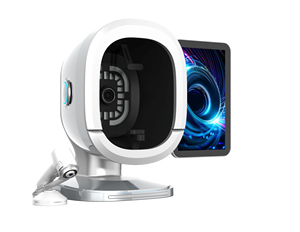
- Multispectral UV & Polarized Light
- Real-Time AI Facial Mapping
- Ultra-Lightweight Ergonomic Chassis
- CE Certified Clinical Hardware
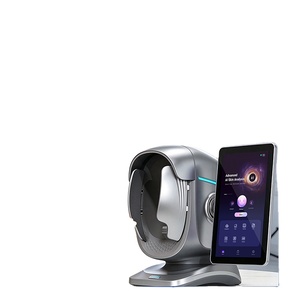
- 36MP Ultra-HD Sony CMOS Sensor
- Integrated 7-Inch Capacitive Display
- Sub-Dermal Pigmentation Mapping
- 5-Year Warranty & Global SDK Support
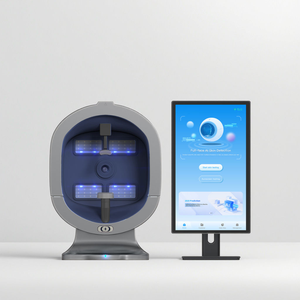
- 8 Optical Spectral Modes
- Quantitative Moisture & Sebum Meter
- Pore & Acne Porphyrin Isolation
- Automated Report Generator
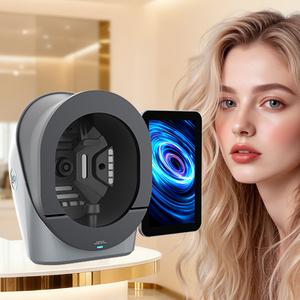
- Deep-Learning Acne Classification
- Cross-Polarized Vascular Analysis
- High-Speed Optical Calibration
- Cloud Tele-Dermatology Ready
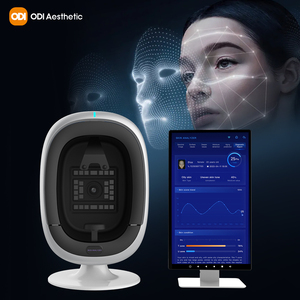
- 3D Facial Topography Reconstruction
- Melasma & UV Spot Quantification
- Epidermal Boundary Isolation
- Multi-Language Enterprise Software
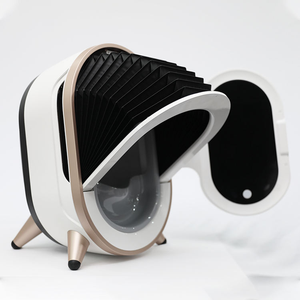
- High-Resolution Smart Mirror Interface
- Full Spectrum LED Illumination Hood
- Automated Treatment Tracking
- Custom Brand Logo White-Labeling
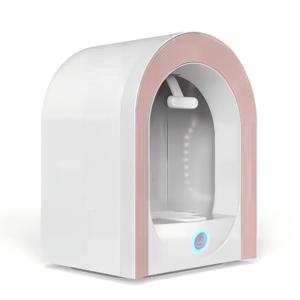
- Clinical Melasma Depth Grading
- RGB + UV + PL Tri-Spectrum Sensors
- Dermatological Grade Diagnostic AI
- CE Medical Compliance Documentation
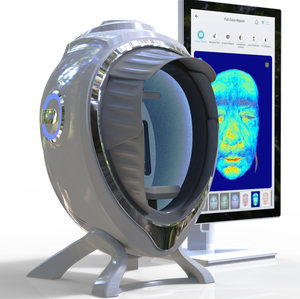
- Full Facial Coverage Optics Dome
- Sub-Surface Melanin Indexing
- High-Throughput Commercial Chassis
- OEM Supply Chain Direct Pricing
Corporate Engineering Pedigree & Technical Infrastructure
Rooted in over 15 years of optical physics and clinical dermatological instrument manufacturing, our production ecosystem builds upon world-class technologies such as the Sylton Observ 520x and Observ 320 heritage. We operate ISO 13485-certified cleanroom assembly lines dedicated to spatial light modulators, narrow-band LED matrix arrays, and low-distortion optical domes.
Unlike commercial consumer devices that rely on simple digital upscaling and RGB filters, our CE Certified AI Skin Diagnostic Analyzers integrate precision-calibrated hardware components. Each unit undergoes strict multi-point optical alignment, ensuring that cross-polarized, parallel-polarized, and Wood’s ultraviolet spectrums achieve exact light intensity and spatial uniformity. This engineering rigor guarantees that clinical data remains reproducible across different treatment rooms, dates, and operator technique variations.
Proprietary Optical Benches
Custom-engineered light domes featuring diffusely reflecting internal surfaces eliminate hard shadows and specular glares, isolating biological chromophores with micron-level fidelity.
CE Medical Compliance
Fully compliant with EU Medical Device Regulation (MDR 2017/745) safety standards, including IEC 60601-1 electrical safety and photobiological light hazard certifications.
Flexible OEM / ODM Integration
From custom industrial design and private-label firmware to REST API/SDK integration into existing clinic software ecosystems like Sylton Connect, we support global distributors.
Scientific Principles of AI-Driven Multispectral Facial Diagnostic Systems
Understanding skin pathology requires optical penetration beyond the stratum corneum. Biological tissues act as complex scattering media where light attenuation depends heavily on wavelength and polarization states. Our CE certified diagnostic analyzers leverage four primary optical illumination modalities to isolate anatomical structures:
| Spectral Mode | Wavelength Range | Optical Mechanism | Clinical & Diagnostic Target |
|---|---|---|---|
| Daylight (RGB) | 400 nm - 700 nm | Standard White Diffuse Illumination | Surface texture, apparent skin tone, visible macro-lesions, pores, and fine wrinkles. |
| Parallel Polarized (PL) | 450 nm - 650 nm | Specular Reflection Enhancement | Surface topography, stratum corneum hydration levels, fine surface roughness, and desquamation. |
| Cross Polarized (X-PL) | 450 nm - 650 nm | Specular Glare Suppression | Sub-surface epidermal and dermal structures, vascular patterns, erythema, and deep melanin distribution. |
| Ultraviolet (UV / Wood's) | 365 nm - 395 nm | Fluorescence Excitation | Porphyrins (Propionibacterium acnes), dyschromia, sun damage, hyperpigmentation, and lipoid accumulation. |
Artificial Intelligence Algorithms & Deep Learning Segmentation
The raw optical imagery captured by high-resolution sensors (such as 36MP Sony STARVIS CMOS detectors) is processed through multi-scale Convolutional Neural Networks (CNNs) trained on millions of dermatological images. The diagnostic pipeline executes three essential computational steps:
- Anatomical Landmark Registration: 68-point 3D facial mesh alignment corrects for minor head tilts, ensuring sub-pixel spatial registration between historical and present consultation photos.
- Chromophore Decomposition: Using Independent Component Analysis (ICA) and modified Beer-Lambert principles, spectral data is mathematically separated into pure Hemoglobin and Melanin concentration maps.
- Quantitative Severity Indexing: Lesions, pore densities, wrinkle volumes, and vascular networks are benchmarked against age-, gender-, and Fitzpatrick-skin-type-matched demographic databases to produce objective percentile scores.
Future Procurement & Technological Trends in AI Skin Diagnostic Hardware (2025–2030)
For corporate procurement officers, OEM partners, and clinical salon chains, investing in diagnostic hardware requires evaluating technological longevity. Based on market intelligence and optical engineering roadmaps, four key trends will define the next decade of skin diagnostic instruments:
1. Predictive AI & 3D Generative Aging Simulation
Future hardware must feature processing units optimized for generative AI inference. Modern buyers are shifting away from static diagnostics toward dynamic predictive modeling—simulating 3-to-5-year skin deterioration trajectories based on current UV damage, as well as modeling post-treatment rejuvenation outcomes to dramatically boost patient conversion rates.
2. Multi-Region Diagnostic Expansion (Beyond Face)
While facial scanning remains standard, premium clinical centers now demand multi-anatomical diagnostic extension kits. Advanced hardware setups include specialized modules for hands, neck, and décolleté evaluation, enabling holistic anti-aging skin analysis across all sun-exposed body zones.
3. Cloud Connectivity & Multi-Location SDK Synchronicity
Enterprise salon chains require centralized data management. Modern procurement specifies cloud-native API capabilities (such as Sylton Connect framework compatibility) allowing patient diagnostic records to sync instantly across global franchise locations while adhering strictly to HIPAA and GDPR data privacy standards.
4. Strict Regulatory Enforcement (CE MDR vs Consumer Testers)
Global customs authorities and medical boards are cracking down on uncertified diagnostic devices. Procuring CE Certified Medical Device Regulation compliant scanners protects distributors from legal liability and ensures that light emissions (especially in the UV spectrum) remain within photo-safe threshold limits.
B2B Procurement Checklist: Evaluating Manufacturer Competence
When selecting an OEM/ODM manufacturing partner for AI skin diagnostic analyzers, procurement teams should audit suppliers using the following technical parameters:
- Sensor Hardware vs. Interpolated Resolution: Verify whether native camera resolution is true optical megapixels (e.g., Sony 36MP CMOS) rather than software-interpolated resolution.
- LED Color Rendering Index (CRI): Ensure daylight illumination sources feature CRI > 95 to prevent artificial color casting in erythema and pigmentation reports.
- Thermal Management & Optical Calibration: High-powered LED arrays generate heat that alters light intensity over time. Check if the device incorporates active heat sinks and internal reference calibration tiles.
- CE & ISO Certification Legitimacy: Confirm that CE certificates are issued by accredited Notified Bodies for medical device directives, accompanied by full EMC and LVD test reports.
- Software Ecosystem & White-Label Capabilities: Audit the software for multi-language support, custom logo branding, and SDK availability for custom clinical app development.
Frequently Asked Questions (FAQ) for Business Procurement
Essential technical and commercial answers for medical equipment distributors, salon owners, and corporate purchasing officers.
Our diagnostic devices are manufactured under ISO 13485 certified quality management systems. They carry official CE marks compliant with European Medical Device Directives/Regulations (MDR), including IEC 60601-1 (Electrical Safety), IEC 60601-1-2 (Electromagnetic Compatibility), and IEC 62471 (Photobiological Safety for Light Sources). Complete technical files and Declaration of Conformity (DoC) documents are supplied to authorized distributors.
Traditional Wood’s lamps rely entirely on subjective visual observation by the practitioner under ambient darkroom conditions. Our AI Skin Diagnostic Analyzers combine standardized narrow-band 365nm UV light with high-resolution digital cameras and deep-learning segmentation algorithms. This converts qualitative fluorescence into objective numerical data—measuring exact porphyrin count, melasma density, and epidermal moisture indices without human error or lighting variations.
Yes, as a specialized OEM/ODM manufacturer, we offer end-to-end customization. This includes custom plastic injection molding, industrial design tweaks, personalized exterior paint colors, logo silk-screening, custom boot animation, private-label iPad/Android applications, and dedicated database server integration. Minimum Order Quantities (MOQ) apply for structural housing modifications.
Our solid-state medical-grade LED arrays are rated for over 50,000 operational hours, equivalent to over 500,000 full patient scans. The internal optical system includes automatic gain control and internal calibration routines to maintain light spectrum consistency over time. Manual recalibration kits are also available for annual servicing compliance.
Data privacy is engineered directly into our software stack. Patient imaging records and diagnostic metrics can be stored locally on encrypted on-device storage or synced via AES-256 encrypted cloud channels. The system fully complies with US HIPAA guidelines and European Union GDPR laws, offering anonymized data modes for clinical research.
Clinical statistics demonstrate that consultations incorporating multispectral visual diagnostic evidence result in a 40% to 65% increase in skincare product sales and high-end laser/treatment course adoption. Patients trust clear, visual before-and-after spectral comparisons, which significantly improves treatment retention and loyalty.
Standard B2B procurement includes a 2-to-5-year comprehensive hardware warranty (depending on the model) and lifetime software update access. In the event of hardware anomalies, we provide modular replacement components, advance-swap units for primary distributors, and 24/7 technical engineering support via dedicated service channels.
Partner with a Premier CE Certified AI Skin Analyzer Manufacturer
Elevate your clinic portfolio or expand your medical distribution line with factory-direct optical engineering excellence. Contact our engineering and OEM sales team today to request technical data sheets, wholesale price lists, or sample units.