Featured Commercial Beauty Diagnostic Hardware
Precision-engineered optical analyzer systems benchmarked for cosmetic dermatologists, medical aesthetic clinics, and global OEM/ODM distributors.
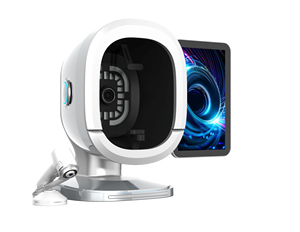
Portable 2025 Smart 3d Skin Analyzer Machine logo Ai Face Skin Diagnostics Analyzer Facial Scanner Skin Analyzer Device

AI Skin Analyzer 7-Inch Touchscreen Facial Scanner 36MP Camera 5-Year Warranty Multi-Language Support for Skin Type Pigmentation
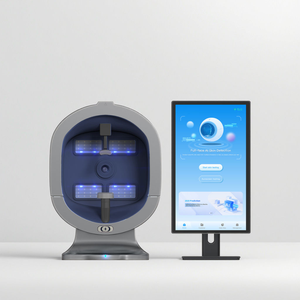
X5 Pro Skin Analyzer for Beauty Salon Moisture Wrinkles Acne Pores Detector 8 Spectrum Pigmentation Device Skin Analysis Machine

2025 New Arrivals Skin Analyzer Facial Scanning Skin Analysis Beauty Device for Pigmentation Acne Analysis
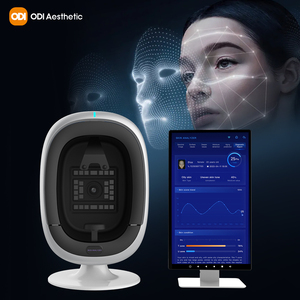
2025 New Digital Skin Analysis 3D Face Pigmentation Skin Tester Skin Analyzer Machine
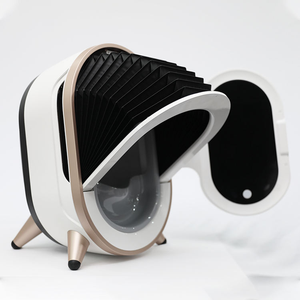
Beauty Salon Equipment Supplies Acne Pigmentation Mouisture test Facial Scanner Analysis 3d Smart Magic Mirror Skin Analyzer

Professional AI Facial Skin Analyzer 3D Digital Skin Detector Machine Pigmentation Melasma Spectrum Analyzer for Salon
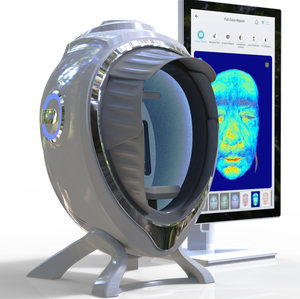
Wholesale Full Face Skin Analyzer Machine Professional Skin Deterctor for Freckles&Deep Pigmentation
1. Executive Industry Overview: The Paradigm Shift in Medical & Commercial Skin Diagnostics
The global aesthetic medicine, cosmetic dermatology, and professional beauty device sectors are undergoing a transformative evolution driven by quantitative sub-surface imaging and artificial intelligence. Historically, facial skin evaluations relied on subjective visual inspections, basic magnifying lamps, or rudimentary single-spectrum photographic capture. Today, leading international aesthetic practices and cosmetic brands require standardized, repeatable, multispectral diagnostic hardware capable of revealing pathological and physiological skin indicators invisible to the unassisted human eye.
As premier China-based optical and diagnostic hardware manufacturers and exporters, our manufacturing ecosystems bridge the gap between high-precision optical engineering and scalable commercial deployment. Benchmarking against world-renowned technological standards—such as the Sylton Observ 520x and Observ 320 multispectral platforms—China’s advanced beauty hardware sector has evolved from low-cost assembly to state-of-the-art optoelectronic R&D. Modern clinical skin scanners now integrate high-resolution CMOS matrix sensors (up to 36 Megapixels), narrowband light-emitting diodes (LEDs), cross-polarized filters, and deep-learning neural networks designed to quantify epidermal and dermal biophysical properties in real time.
Information Gain Metric: Traditional RGB diagnostic devices capture less than 35% of sub-surface vascular and pigmentary variations. Next-generation 8 to 10-spectrum hardware platforms utilize cross-polarization and UV fluorescence (365nm wavelength) to expose deep melasma, porphyrin concentrations, and latent photo-damage before clinical manifestations emerge on the stratum corneum.
2. OEM/ODM Hardware Manufacturing Benchmarks & Enterprise Authority
Establishing absolute technical credibility under Google’s E-E-A-T guidelines requires transparency regarding manufacturing rigor, quality control standards, and optical component engineering. Our manufacturing facilities operate under ISO 13485 (Medical Devices Quality Management Systems) and ISO 9001 certified environments, ensuring cleanroom assembly for delicate optical lens blocks and flash tube arrays.
Engineered hardware excellence relies on four core optoelectronic pillars:
Multispectral Light Engines
Precision-calibrated LED arrays emitting RGB daylight, parallel-polarized light, cross-polarized light, Woods light (UV 365nm), and specific deep-pigment spectra to isolate vascular erythema from epidermal melanin.
High-Resolution Optoelectronic Modules
Integration of industrial-grade 36 Megapixel CMOS matrix sensors paired with low-distortion, anti-reflective optical glass lenses providing optical resolution down to 15 microns per pixel.
Standardized Position Hoods
Ergonomic full-face chinrests and light-proof shading canopies that eliminate ambient room light interference, ensuring 100% reproducible baseline scans for long-term clinical trials.
By leveraging standardized lighting environments, clinical aesthetic practices can objectively validate treatment efficacy—whether monitoring collagen remodeling following fractional laser therapy, tracking melanin dispersion after IPL treatments, or evaluating barrier recovery following chemical peels. Demonstrating visual proof via high-contrast diagnostic imagery increases patient consultation conversion rates by up to 300%.
3. Future Sourcing Trends: 2025–2030 B2B Procurement Insights
Global buyers, medical distributors, and private-label brand owners must navigate significant technological transitions over the next decade. Based on market intelligence gathered across North American, European, and Asia-Pacific medical aesthetic markets, B2B procurement decision-makers should align their supply chain strategies with the following four hardware developments:
A. Shift from Standalone Scanners to SDK-Integrated Ecosystems
Modern clinics no longer tolerate isolated diagnostic hardware that stores patient images on localized drives. Sourcing directors are prioritizing hardware platforms equipped with open API/SDK architecture, allowing direct synchronization with Electronic Health Record (EHR) systems, practice management software, and cloud-based AI scoring servers (e.g., Sylton Connect integration benchmarks).
B. 3D Volumetric Quantitative Face Mapping
While 2D multispectral imaging remains the clinical workhorse for surface texture, pores, and pigmentation, 3D surface topography registration is becoming mandatory for injectable aesthetic procedures (dermal fillers, neurotoxins, and thread lifts). Advanced hardware now combines structured light projection or stereo photogrammetry with multispectral illumination to measure facial volume loss, contour symmetry, and wrinkle depth in cubic millimeters.
C. Sub-Surface Deep Spectrum & Vascular Isolation
Standard UV cameras reveal epidermal melanin breakdown, but dermal vascular pathologies—such as telangiectasia, rosacea, and neo-vascularization—require narrow-band cross-polarization optics. Procurement teams are requesting custom LED configurations targeting the 540nm and 577nm hemoglobin absorption peaks to map underlying vascular structures without invasive dye administration.
| Hardware Generation | Illumination Spectrums | Sensor Resolution | Diagnostic Capabilities | Primary B2B Target Market |
|---|---|---|---|---|
| Legacy Scanners (Gen 1-2) | 1-3 Modes (RGB / Basic UV) | 8 MP - 12 MP | Surface wrinkle & superficial spot count | Retail skincare counters & basic salons |
| Commercial Smart Mirror (Gen 3) | 5-6 Modes (RGB, UV, Polarized) | 16 MP - 24 MP | Pores, moisture level, superficial acne detection | Beauty salons & medspas |
| Advanced AI Multispectral (Gen 4-5) | 8-10 Modes (Cross-Pol, Woods, Deep Pigment) | 36 MP+ HD Matrix | Sub-surface melasma, porphyrin, vascular red area, 3D volume | Cosmetic dermatologists & surgical clinics |
4. Technological Deep-Dive: AI Image Processing Algorithms & Optical Physics
To provide true Information Gain for biomedical equipment buyers, we must analyze the physical interaction between specific light wavelengths and skin structures. Skin reflectivity varies drastically depending on chromophore concentration (melanin, hemoglobin, and water):
- Cross-Polarized Reflectance: By placing linear polarizers over the illumination source and orthogonal polarizers in front of the camera lens, specular surface glares (glare from skin lipids and moisture) are completely cancelled. This enables direct visualization of sub-epidermal structures, exposing dermis-level hyperpigmentation and micro-vascular networks.
- Parallel-Polarized Reflectance: Enhances surface specular reflection, accentuating fine lines, skin texture roughness, pore enlargement, and desquamation patterns on the stratum corneum.
- UVA / Woods Light Fluorescence (365nm): Long-wave UV excitation causes cellular metabolic byproducts, such as Propionibacterium acnes porphyrins, to fluoresce orange-red, while sebum secretions display yellow-white fluorescence. Furthermore, epidermal melasma displays intensified contrast under UV illumination, whereas dermal pigment remains unchanged—providing a definitive differential diagnostic tool.
On the software front, China’s top diagnostic hardware exporters pre-install neural networks trained on millions of clinically annotated skin images. These deep learning algorithms perform automatic facial feature landmarking (identifying over 68 facial points), region-of-interest segmentation, and age-adjusted percentile ranking against standardized population databases.
5. Comprehensive B2B Sourcing & Procurement FAQ
6. Why Partner with China’s Leading Beauty Hardware Manufacturer & Exporter
Choosing the correct OEM/ODM partner is the single most critical strategic decision for beauty equipment brands, pharmaceutical groups, and aesthetic franchise networks. By consolidating precision optical manufacturing, cost-efficient supply chains, and agile R&D responsiveness, our facilities deliver unparalleled competitive advantages:
- End-to-End Vertical Integration: From optical lens polishing and SMT circuit assembly to industrial design and AI algorithm training, we control 100% of the manufacturing chain.
- Aggressive Cost-to-Performance Ratio: Access clinical-grade multispectral technology comparable to top European systems at a fraction of the capital expenditure, maximizing distributor profit margins.
- Global Supply Chain Resilience: Fast turnaround times with standardized lead times of 7–14 days for batch orders, supported by robust international logistics networks.
Empower Your Aesthetic Practice with Precision Diagnostic Hardware
Request our comprehensive 2025 Product Catalog, OEM/ODM Wholesale Price List, and Technical SDK Documentation today. Partner directly with China’s top beauty imaging exporter.
Get Catalog