Clinical Skin Diagnostic Devices & Elasticity Analyzers
Explore China's premier medical-grade and commercial skin analyzers, designed for aesthetic clinics, dermatological research, and professional beauty salons.
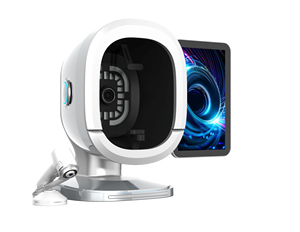
Portable 2025 Smart 3d Skin Analyzer Machine logo Ai Face Skin Diagnostics Analyzer Facial Scanner Skin Analyzer Device
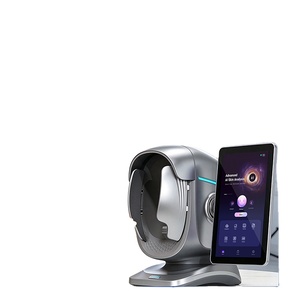
AI Skin Analyzer 7-Inch Touchscreen Facial Scanner 36MP Camera 5-Year Warranty Multi-Language Support for Skin Type Pigmentation
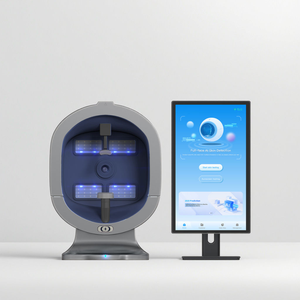
X5 Pro Skin Analyzer for Beauty Salon Moisture Wrinkles Acne Pores Detector 8 Spectrum Pigmentation Device Skin Analysis Machine

2025 New Arrivals Skin Analyzer Facial Scanning Skin Analysis Beauty Device for Pigmentation Acne Analysis
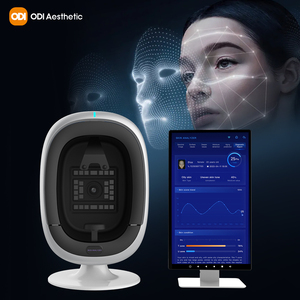
2025 New Digital Skin Analysis 3D Face Pigmentation Skin Tester Skin Analyzer Machine
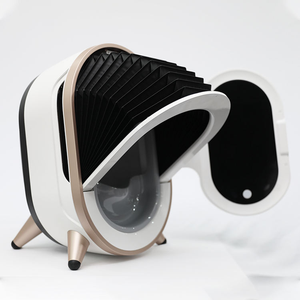
Beauty Salon Equipment Supplies Acne Pigmentation Mouisture test Facial Scanner Analysis 3d Smart Magic Mirror Skin Analyzer
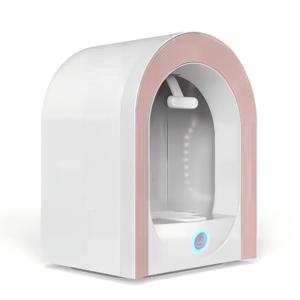
Professional AI Facial Skin Analyzer 3D Digital Skin Detector Machine Pigmentation Melasma Spectrum Analyzer for Salon
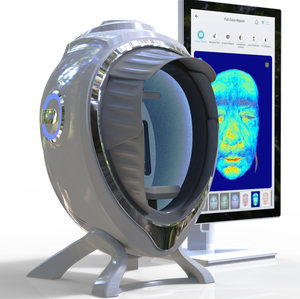
Wholesale Full Face Skin Analyzer Machine Professional Skin Deterctor for Freckles&Deep Pigmentation
Skin Elasticity & Biomechanical Diagnostic Engineering in China
An Technical Procurement & Manufacturing Benchmark Guide for Global B2B Distributors, Aesthetic Medical Chains, and OEM/ODM Brands.
1. Executive Summary & The Physics of Biomechanical Skin Diagnostics
Skin elasticity is a fundamental indicator of structural skin aging, dermal matrix integrity, and soft-tissue biomechanical health. As global demand for non-invasive cosmetic dermatology and anti-aging treatments surges, precise quantification of viscoelastic parameters has shifted from an academic laboratory niche into an essential clinical requirement for medical spas, aesthetic dermatology practices, and cosmetic research institutes.
Historically, evaluating dermal elasticity relied upon qualitative palpation or rudimentary suction probes. Modern skin elasticity diagnostic devices manufactured by top-tier Chinese factories utilize sophisticated multi-spectral optical coherence, high-resolution 3D surface topography, micro-suction cutometry, and deep learning neural networks. These advanced diagnostic systems measure fundamental biomechanical properties, including elasticity modulus, dermal deformation response, viscoelastic ratio ($U_v/U_e$), and biological elasticity ($U_r/U_e$).
This industry whitepaper serves as an authoritative procurement guide. It explores the technical principles governing modern dermal diagnostics, analyzes manufacturing leadership within China's beauty equipment hubs, highlights future hardware trends for 2025–2030, and provides international buyers with actionable criteria to evaluate suppliers against Google E-E-A-T (Experience, Expertise, Authoritativeness, and Trustworthiness) standards.
Multispectral Ray-Tracing
Captures sub-surface structural collagen density across RGB, Cross-Polarized, Parallel-Polarized, UV, and Wood's Light spectra.
Cutometric Mechanics
Quantifies micro-mechanical resistance and structural recoil using negative pressure displacement accurate to $\pm 1.5\,\mu\text{m}$.
Edge-AI Deep Neural Networks
Cross-references 10+ million clinical skin records to map elastosis risks, dermal fatigue, and pore enlargement velocity.
2. Key Technical Parameters for Evaluating Skin Elasticity Equipment
When procuring high-end skin analysis systems from Chinese OEM/ODM factories, technical decision-makers must evaluate hardware specifications beyond basic pixel count. True diagnostic depth depends on sensor optics, lighting consistency, software algorithms, and mechanical stability.
| Diagnostic Parameter | Traditional Skin Scanners | Advanced 3D Biomechanical Analyzers (2025 Standard) | Clinical Utility & Impact |
|---|---|---|---|
| Illumination Spectrum | 2 – 3 Modes (Standard RGB, Basic UV) | 8 – 10+ Modes (RGB, Cross-Polarized, UV 365nm, Wood's Light, Brown/Red Spectrum) | Identifies sub-surface vascularity, deep pigmentation, and structural collagen disruption. |
| Image Sensor Resolution | 10 MP – 16 MP Standard CMOS | 36 MP Ultra-HD Sony Industrial CMOS Sensor | Reveals fine micro-wrinkles, structural pore distortion, and cellular texture variations. |
| Elasticity Measurement Method | Surface 2D pixel displacement estimation | Multi-point 3D structural mapping + Dynamic micro-suction probe integration | Differentiates between epidermal hydration elasticity and dermal collagen matrix degradation. |
| Algorithm Core | Static rules-based scoring | Edge-AI Deep Learning trained on 10M+ validated clinical patient profiles | Delivers reproducible biological age scoring and predictive aging trajectory models. |
| Warranty & Software Support | 1-Year Warranty / Static Local Software | Up to 5-Year Hardware Warranty + Cloud SaaS (Sylton Connect Platform Sync) | Ensures long-term operational uptime, multi-station clinic syncing, and remote calibration. |
3. Global Procurement Trends: Future of Dermal Diagnostics (2025–2030)
The global aesthetic hardware market is undergoing a structural transition driven by digital connectivity, non-invasive treatment monitoring, and personalized skincare formulations. Strategic procurement officers must align their product portfolios with four critical trends shaping the next decade:
Trend 1: Convergence of Optical Spectral Imaging with Physical Biomechanical Sensors
Single-mode analysis is obsolete. Leading manufacturers in China are combining non-contact optical facial scanners with contact-based biomechanical micro-probes. Optical imaging provides high-level spatial mapping of sagging regions, while micro-suction probes measure local stress-strain recovery curves. This dual-action approach gives practitioners an unassailable baseline before and after radiofrequency (RF), high-intensity focused ultrasound (HIFU), or biostimulatory injectable treatments.
Trend 2: Cloud-Native Practice Management & Enterprise Software Integration
Modern clinics no longer treat diagnostic devices as isolated hardware islands. Platforms such as Sylton Connect demonstrate the necessity of real-time data sync across multiple consultation rooms and satellite clinic chains. Advanced Chinese suppliers now offer RESTful APIs and SDK packages, enabling seamless integration into electronic health record (EHR) software, CRM booking portals, and mobile patient apps.
Trend 3: AI-Driven Predictive Aging & Treatment Simulation
Patients demand visual proof before committing to high-value aesthetic procedures. Next-generation skin elasticity diagnostic devices leverage predictive generative AI models to simulate 3-year, 5-year, and 10-year aging trajectories—both with and without recommended clinical interventions. This visual clarity dramatically increases consultation conversion rates and patient trust.
Trend 4: Modular & Ergonomic Form Factors for Flexible Clinical Workflows
As space efficiency becomes vital for urban aesthetic salons, heavy, tabletop diagnostic towers are being replaced by modular, lightweight systems. Contemporary systems feature quick-release mobile stands, neck/décolleté extension kits, and tablet-driven wireless interfaces, providing full flexibility in busy clinical environments.
Information Gain Insight for B2B Importers
When evaluating Chinese factories, prioritize suppliers that provide spectral calibration certificates and phantom tissue verification protocols. High camera resolution (e.g., 36MP) is useless if LED illumination output degrades over time. Top-tier suppliers use constant-current LED drivers and thermal stabilization to guarantee clinical repeatability across thousands of scans.
4. Evaluating Manufacturing Excellence & OEM/ODM Capabilities in China
China is the global hub for aesthetic hardware manufacturing, accounting for over 70% of worldwide diagnostic device assemblies. However, component quality, quality control (QC), and software stability vary significantly across suppliers. To secure reliable OEM/ODM partnerships, procurement teams must conduct rigorous audits based on four operational pillars:
4.1 Quality Management Systems & Medical Compliance
Tier-1 factories operate under strict ISO 13485 medical device quality management standards. Devices intended for medical aesthetic clinics must possess relevant international certifications, such as CE (Medical Devices Regulation/MDR), FDA registration, RoHS, and FCC compliance. These certifications verify electrical safety, optical radiation hazard protection, and biocompatibility of skin-contact surfaces.
4.2 In-House Optical R&D and Spectral Calibration
Distinguish genuine original equipment manufacturers (OEMs) from secondary assemblers by reviewing their optical lab infrastructure. Top-tier manufacturers feature dedicated darkroom calibration labs, spectrophotometer testing rigs, and precision lens assembly cleanrooms. Standardized lighting conditions across all spectrums ensure that image exposure, color balance, and polarization angles remain uniform across production batches.
4.3 Software Customization & White-Label Capabilities
A supplier’s value extends far beyond physical hardware manufacturing. Premium suppliers provide comprehensive white-label OEM customization, including custom branded device enclosures, personalized software user interfaces (UI), custom consultation report templates, multi-language localization (supporting 15+ languages), and cloud backend deployment.
4.4 Supply Chain Logistics & After-Sales Warranties
A major failure point in overseas hardware sourcing is inadequate after-sales technical support. Leading Chinese suppliers provide comprehensive warranty programs—such as 3- to 5-year hardware coverage—alongside modular component replacement kits, remote diagnostic support, and global dealer training programs.
5. Comparative Technical Analysis: Top 8 Diagnostic Devices
The products highlighted in our catalog represent the pinnacle of current manufacturing capabilities. Below is an engineering overview of how these diagnostic devices address specific clinical applications:
- Portable 2025 Smart 3D Skin Analyzer Machine (AI Face Diagnostics): Engineered for high-mobility practitioners and mobile med-spas. Integrates edge-AI facial recognition for rapid 15-second skin diagnostic scans.
- AI Skin Analyzer 7-Inch Touchscreen Scanner (36MP Camera): Built for high-volume clinical practices requiring standalone operation. Features an ultra-high resolution 36MP Sony sensor, backed by an industry-leading 5-year warranty.
- X5 Pro Skin Analyzer (8-Spectrum Detector): Designed for comprehensive beauty salon diagnostics, utilizing 8 distinct spectral modes to isolate sub-dermal moisture loss, pore tension, and actinic elastosis.
- 2025 New Digital 3D Face Pigmentation & Elasticity Tester: Specializes in multi-layer depth mapping, separating epidermal pigmentation from deep dermal elastin fiber disruption.
- 3D Smart Magic Mirror Skin Analyzer: A high-impact consultation unit with interactive customer-facing displays, proven to boost conversion rates for anti-aging collagen treatments.
- Wholesale Full Face Skin Analyzer (Freckles & Deep Pigmentation): Optimized for high-throughput commercial distribution, balancing cost efficiency with high optical accuracy.
Frequently Asked Questions (FAQ)
Essential operational, technical, and commercial answers for international buyers, medical distributors, and OEM partners.
Partner with China's Premier Skin Elasticity Device Manufacturer
Elevate your product portfolio with medical-grade multi-spectral diagnostic devices. Factory-direct pricing, robust OEM white-labeling, ISO 13485 quality control, and full API integration for global distributors.
Get a Quote