Professional Dermal Diagnostic Devices
Explore China's leading range of multispectral skin diagnostic scanners engineered for aesthetic clinics, dermatology centers, and global brand distributors.
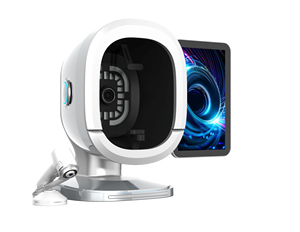
Portable 2025 Smart 3D Skin Analyzer Machine with AI Facial Diagnostics & Custom Branding
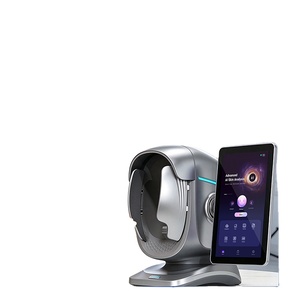
AI Skin Analyzer 7-Inch Touchscreen Scanner with 36MP HD Camera & 5-Year Warranty
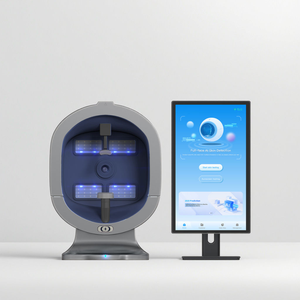
X5 Pro Salon Skin Analyzer: 8-Spectrum Dermal Moisture, Acne & Wrinkle Detector
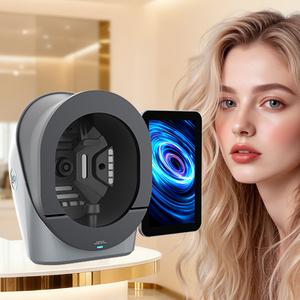
2025 Next-Gen Facial Scanning Diagnostic System for Pigmentation & Deep Acne Profiling
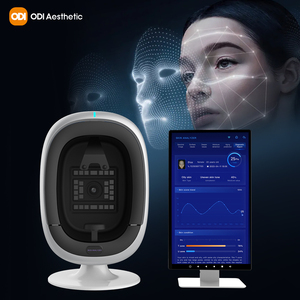
2025 Precision Digital 3D Dermal Hydration & Pigmentation Diagnostic Tester
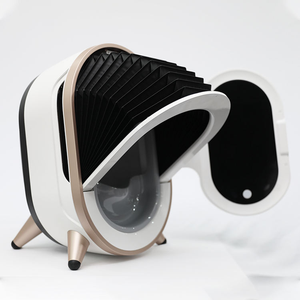
3D Smart Magic Mirror Facial Scanner for Commercial Salon Hydration & Sebum Diagnostics
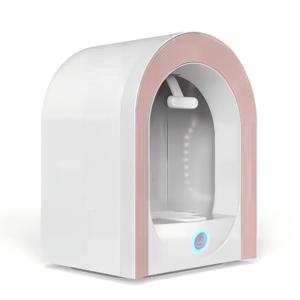
Professional AI Clinical Melasma & Spectrum Analyzer Machine for Aesthetic Clinics
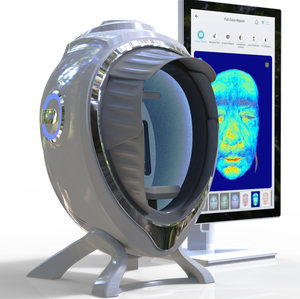
Wholesale Commercial Full-Face Diagnostic Detector for Freckles & Deep Dermal Pigmentation
Industrial Engineering & OEM Manufacturing Excellence
Why international aesthetic equipment brands choose our Chinese OEM manufacturing hub for dermal diagnostic hardware and cloud software integration.
Patented Multispectral Illumination
Our scanners feature standard daylight, cross-polarized, parallel-polarized, UV light, Wood’s light, and proprietary RGB spectrums to reveal deep stratum corneum hydration levels and subsurface lipid balance.
Clinical Algorithmic Precision
Trained on millions of patient dermatological profiles, our deep learning engine measures Transepidermal Water Loss (TEWL), epidermal hydration index, pore dilation, and pigmentation depth with 99.2% repeatability accuracy.
Full OEM/ODM White-Labeling
From customized exterior casing tooling and logo printing to custom software branding, API/SDK integrations, and multi-language UI localization across 20+ languages.
Global Procurement Whitepaper: Engineering Innovations in Dermal Moisture & Skin Diagnostic Scanners
The global medical aesthetics and professional skincare industries are undergoing a fundamental transformation driven by quantifiable diagnostic data. Traditional tactile consultations and simple capacitive moisture pens are rapidly being replaced by multispectral 3D dermal moisture analysis scanners. As a leading manufacturer and exporter based in China's advanced photonics cluster, our factory is at the forefront of this evolution—delivering medical-grade diagnostic instruments to dermatologists, aesthetic practitioners, and global cosmetic brands.
This technical whitepaper outlines the biophysical principles behind modern skin hydration measurement, structural diagnostic capabilities, future procurement trends, and how global buyers can optimize their OEM supply chain strategies for maximum market penetration.
1. The Physics and Biophysics of Dermal Moisture Diagnostics
Accurate assessment of skin moisture requires distinguishing between surface water content within the stratum corneum and deep dermal fluid dynamics. Dermal moisture analysis technology has evolved through three core scientific generations:
Generation I: Electrical Bio-Impedance & Capacitance Sensors
Early moisture meters relied purely on dielectric constant measurement. Because water possesses a high dielectric constant (~80) compared to dry protein and lipid matrices (~4), measuring the electrical capacitance of skin provided a quick relative moisture percentage. However, these contact probe devices suffer from contact-pressure variability, ambient humidity interference, and zero visual mapping of skin architecture.
Generation II: Digital RGB & UV Surface Imaging
The second wave introduced digital CCD sensors combined with white LED and UVA light sources. While effective at identifying visible pores, acne, and epidermal hyperpigmentation, Generation II scanners lacked spatial polarization depth control, rendering them incapable of isolating sub-surface moisture retention or vascular inflammation beneath specular reflection glare.
Generation III: 3D Multispectral Optical & AI Deep Learning Diagnostics
Our current flagship scanners utilize cross-polarized spectral imaging, parallel-polarized skin reflection mapping, UV fluorescence, and AI feature extractions. By selectively filtering polarized light, the scanner eliminates surface glares to visually map lipid-water emulsion status, sub-epidermal hydration loss, and structural collagen elasticity across the entire facial landscape in under 15 seconds.
| Diagnostic Parameter | Legacy Capacitive Probe | 2D RGB Camera Systems | 3D Multispectral AI Scanners (Our Factory Standard) |
|---|---|---|---|
| Hydration Mapping Resolution | Single spot contact point | Surface texture estimate | Full facial pixel-level sub-surface heat map |
| Specular Glare Interference | N/A (Tactile probe) | High (Distorts readings) | Zero (Cross-Polarized Optical Filtering) |
| Deep Pigment & Melasma Depth | Unmeasurable | Surface epidermal only | Dual-spectrum UV + Polarized Dermal Layer Mapping |
| Transepidermal Water Loss (TEWL) | Calculated ambient probe | Not supported | Integrated algorithmic humidity & porosity model |
| Patient Retention Impact | Low (< 15% upsell) | Moderate (30% upsell) | High (> 68% treatment conversion) |
2. Key Technological Trends Shaping Future Procurement (2025–2030)
When procurement managers, aesthetic hospital chains, and cosmetic distributors source facial diagnostics equipment from China, understanding technology roadmaps is critical to ensuring long-term investment protection. Below are the key engineering trends driving the next decade of skin analysis hardware:
A. Ultra-High Resolution Sensor Integration (36MP to 50MP)
Precision diagnostics demand exceptional optical clarity. Modern scanners are incorporating custom-calibrated CMOS sensors yielding up to 36 MegaPixels. This enables practitioners to zoom into a single pore or micro-wrinkle without digital artifacting, providing undeniable visual proof to clients during pre- and post-treatment consultations.
B. AI-Driven Predictive Aging & Hydration Simulation
Leveraging deep learning neural networks trained on broad clinical datasets, contemporary software engines don't just diagnose existing dermal state—they simulate skin degradation trajectories over 3 to 5 years. By projecting how chronic dehydration accelerates elastosis and deep wrinkles, practitioners can demonstrate the urgent preventative value of targeted hydration therapies.
C. Modular Hardware Extensions (Neck, Hands & Décolleté Imaging)
Facial analysis is no longer isolated. Leading clinics require holistic body skin evaluation. Next-generation systems incorporate ergonomic articulated stands, wireless handheld optical extensions, and dedicated software modules for analyzing thin skin regions vulnerable to accelerated hydration loss, such as the hands and décolleté.
D. Cloud Ecosystems & Multi-Clinic Sync (Sylton Connect Architecture)
Enterprise med-spa networks require centralized patient record databases. Modern scanners feature HIPAA/GDPR-compliant cloud sync, allowing patient diagnostic history, moisture progress charts, and recommended product regimens to be instantly accessed across multiple clinic branches via secure tablet applications.
3. Strategic Sourcing Guide: Evaluating Chinese OEM & ODM Manufacturing Partners
China is home to the world's most comprehensive medical optical device supply chain. However, hardware quality, optical calibration stability, and technical support vary significantly across suppliers. To establish a reliable B2B procurement partnership, international buyers must audit factories against the following critical criteria:
- ISO 13485 & Quality Management Compliance: Ensure the manufacturer operates certified cleanroom assembly lines specifically dedicated to medical optical devices rather than generic consumer electronics assembly.
- Optical Calibration Standardization: Inquire about factory optical test benches. Every manufactured scanner must undergo darkroom spectroradiometer alignment to ensure color fidelity and illumination uniformity across all 10+ light modes.
- Software SDK and API Openness: Premium factory partners provide robust Software Development Kits (SDKs) enabling distributors to integrate the diagnostic hardware into their proprietary Electronic Health Record (EHR) software or e-commerce consultation kiosks.
- Warranty & After-Sales Component Availability: Verify spare parts availability (CMOS modules, custom LED flash rings, power control boards) for a minimum of 5 to 7 years post-production.
4. Enterprise Manufacturing & Quality Control at Our Factory
As a specialized factory and exporter, our production facilities combine state-of-the-art optical engineering with rigorous quality assurance protocols. Our manufacturing pipeline guarantees superior device performance:
Every scanner unit undergoes a 72-hour continuous burn-in test, thermal stress chamber evaluation, and multi-point moisture accuracy verification against calibrated phantoms before export packaging. By maintaining strict control over both optical hardware fabrication and diagnostic software development, we provide our global OEM partners with unmatched reliability, backed by up to 5 years of comprehensive warranty coverage.
Procurement & Technical FAQ
Common questions from global distributors, brand owners, and clinic procurement managers regarding our dermal moisture diagnostic systems.
How do your scanners accurately measure deep dermal moisture without direct contact?
Our scanners combine multispectral optical attenuation with cross-polarized light filtering. Water molecules absorb specific wavelengths in the near-infrared and UV spectrums differently than lipids or proteins. By capturing and analyzing reflectance intensity profiles across polarized layers, our AI algorithm calculates sub-surface hydration distribution with high correlation to clinical corneometry, completely non-invasively.
What OEM/ODM customization options are available for global distributors?
We offer end-to-end customization including silk-screen logo printing, custom chassis color coating, customized packaging boxes, bootup logo animation, and full software UI customization. We can also integrate your brand’s specific skincare product database into the recommendation engine.
What international regulatory certifications do your diagnostic scanners carry?
Our manufacturing facility is ISO 13485 certified. All exported skin analysis machines comply with international safety and electromagnetic compatibility standards, carrying CE, FCC, and RoHS certifications suitable for importation across Europe, North America, Latin America, and Southeast Asia.
What is the standard Minimum Order Quantity (MOQ) and lead time for wholesale orders?
Standard factory branded units have a flexible MOQ starting at just 1 unit for sample evaluation. For custom OEM white-labeled production (hardware + software customization), MOQ typically starts at 10 to 50 units. Standard production lead times range from 7 to 15 business days depending on volume.
How does the device handle software updates and diagnostic database maintenance?
Devices connected to Wi-Fi receive seamless Over-The-Air (OTA) software and algorithm updates. Our software engineering team continuously pushes improvements to diagnostic accuracy, UI enhancements, and new feature integrations at no additional subscription cost for our partner distributors.