Featured Intelligent Skin Diagnostic Hardware
Precision-engineered multispectral imaging systems built for medical aesthetic clinics, cosmetic dermatology institutes, and global B2B skincare equipment distributors.
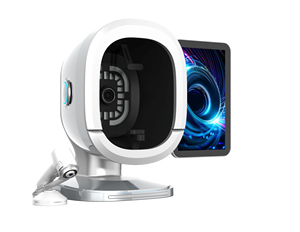
Portable 2025 Smart 3d Skin Analyzer Machine logo Ai Face Skin Diagnostics Analyzer Facial Scanner Skin Analyzer Device
Engineered for mobile consultations and clinical adaptability, featuring high-speed 3D facial mesh generation, multi-spectrum sub-dermal mapping, and customized logo integration for B2B brands.

AI Skin Analyzer 7-Inch Touchscreen Facial Scanner 36MP Camera 5-Year Warranty Multi-Language Support for Skin Type Pigmentation
Equipped with a 36-megapixel optical matrix camera and an integrated 7-inch HD touchscreen display. Offers instant quantitative pigment metrics and multi-language enterprise UI support.
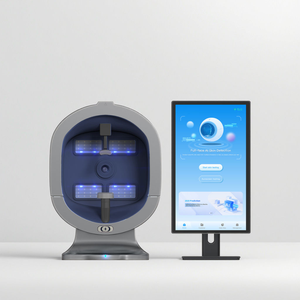
X5 Pro Skin Analyzer for Beauty Salon Moisture Wrinkles Acne Pores Detector 8 Spectrum Pigmentation Device Skin Analysis Machine
Commercial flagship diagnostic device featuring 8 distinct light spectral modes including cross-polarized, parallel-polarized, and UV light for deep moisture, wrinkle, acne, and vascular analysis.

2025 New Arrivals Skin Analyzer Facial Scanning Skin Analysis Beauty Device for Pigmentation Acne Analysis
Designed for modern aesthetic centers, combining streamlined ergonomic hardware with instant automated acne, porphyrin, and hyperpigmentation classification algorithms.
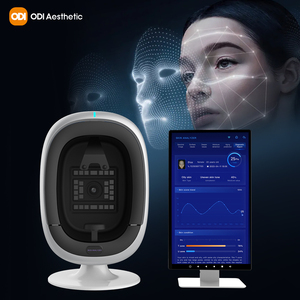
2025 New Digital Skin Analysis 3D Face Pigmentation Skin Tester Skin Analyzer Machine
High-precision digital skin diagnostic hardware delivering layer-by-layer epidermal and dermal pigmentation profiling with cloud-synchronized patient management software.
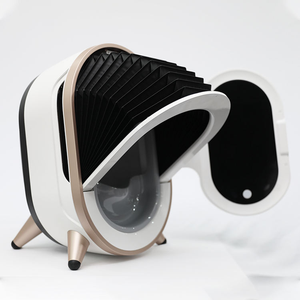
Beauty Salon Equipment Supplies Acne Pigmentation Mouisture test Facial Scanner Analysis 3d Smart Magic Mirror Skin Analyzer
All-in-one magic mirror style skin diagnostic workstation. Features automated skin moisture detection, sebaceous gland activity tracking, and interactive consultation visuals.

Professional AI Facial Skin Analyzer 3D Digital Skin Detector Machine Pigmentation Melasma Spectrum Analyzer for Salon
Clinical-grade diagnostic hardware specifically calibrated for deep dermal pigmentation, melasma delineation, and micro-vascular erythema visualization.
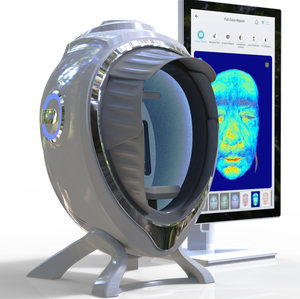
Wholesale Full Face Skin Analyzer Machine Professional Skin Deterctor for Freckles&Deep Pigmentation
High-volume B2B supply solution for commercial skin diagnostic hardware. Delivers ultra-wide angle full-face capture with sub-surface melanin density grading.
China's Premier Manufacturing Engineering for Intelligent Skin Analysis Hardware
As a leading original equipment manufacturer (OEM) and exporter based in China's advanced optical hardware hub, our facility integrates high-precision optical engineering, cleanroom assembly standards, and edge-computing AI algorithms to redefine diagnostic accuracy in dermatology and aesthetic medicine. Modern aesthetic consultations rely heavily on objective visual data; our hardware systems provide the undeniable physical foundation required to uncover dermal anomalies invisible to the naked eye.
Information Gain Benchmark: Unlike consumer-grade skin diagnostic gadgets, medical-grade multispectral skin analyzer hardware captures cross-polarized, parallel-polarized, and UV-fluorescence reflections across custom spectral wavelengths (365nm to 700nm), delivering micro-level chromophore distribution maps with clinical repeatability.
Proprietary Optical Systems & Multispectral Illumination Engines
At the core of our enterprise skin analysis hardware is a custom-engineered optical dome matrix equipped with ultra-bright, high-CRI (Color Rendering Index > 98) LED arrays and medical-grade quartz polarizers. By cycling through distinct light spectra within milliseconds, our hardware isolates physiological attributes across multiple skin layers:
- RGB Standard Daylight Mode: Captures true-to-life surface skin texture, macro pores, fine lines, and superficial cutaneous blemishes under calibrated illumination.
- Cross-Polarized Light Mode: Eliminates specular surface reflection to reveal sub-dermal erythema, telangiectasia, vascular inflammation, and dermal pigmentation deep within the papillary dermis.
- Parallel-Polarized Light Mode: Enhances surface relief visibility, highlighting micro-wrinkles, epidermal roughness, skin pore dilatation, and early structural loss.
- UV Fluorescence Mode (365nm): Excitates porphyrins produced by Propionibacterium acnes, revealing active bacterial colonization, clogged sebaceous glands, and latent sun damage beneath the stratum corneum.
- Wood's Light Spectral Simulation: Differentiates epidermal melasma from dermal hyperpigmentation, assisting clinicians in formulating targeted chemical peel and laser therapy regimens.
Our manufacturing facility enforces rigorous optical alignment protocols, ensuring that camera sensors (ranging from 24MP to 36MP HD CMOS matrices) maintain sub-millimeter positional calibration across production batches. This industrial consistency guarantees that B2B distributors and clinical chains receive hardware capable of performing reliable long-term longitudinal skin tracking.
Core Engineering & Technical Features
Why leading global cosmetic brands, medical aesthetic chains, and dermatology equipment suppliers partner with our Chinese manufacturing facility.
Edge AI Convolutional Engines
Integrated neural processing units (NPU) process full-face multispectral images locally in under 3 seconds, eliminating cloud latency while delivering instant quantitative risk scoring for 10+ skin indicators.
Standardized 3D Facial Alignment
Ergonomic chin-rest enclosures and guided facial positioning sensors maintain uniform ambient light blockage and fixed focal distance, eliminating variables in comparative before-and-after evaluations.
Medical-Grade Quality Certification
Manufactured under strict ISO13485 quality management environments, compliant with CE, RoHS, and FDA equipment standards for global cross-border customs approval and market entry.
Complete OEM/ODM Customization
From custom mold tooling, color matching, and structural industrial design to white-label software UI, SDK/API integration, and localized language packs for international enterprise buyers.
Cloud Practice Management Integration
Seamless synchronization with Windows, iPadOS, and Android ecosystems. Enables multi-terminal patient record management, encrypted cloud backup, and custom prescription report printing.
Robust Supply Chain & Component Reliability
Built using high-durability LED illumination modules with a rated lifespan exceeding 50,000 continuous operation hours, backstopped by a full factory warranty and spare parts availability.
Global Industry Development Trends in Skin Diagnostic Hardware (2025–2030)
The global professional skin imaging market is undergoing a structural paradigm shift. Driven by advancements in artificial intelligence, optical sensor miniaturization, and consumer demand for evidence-based skincare consultations, skin analysis hardware is evolving from passive imaging units into active diagnostic and prescriptive centers.
1. Shift from 2D RGB Static Imaging to High-Resolution 3D Surface Topology
Traditional diagnostic devices relied heavily on flat 2D photograph captures, which frequently failed to quantify skin volumetric changes, laxity, and deep structural furrows. Next-generation hardware manufactured by top Chinese exporters incorporates structured light projection and stereo photogrammetry algorithms. This allows clinicians to render true 3D facial models with sub-100-micron spatial resolution, enabling accurate measurement of wrinkle depth, volumetric fat displacement, and facial contour changes post-treatment.
2. On-Device Edge Computing Replacing High-Latency Cloud Dependencies
While early-generation smart analyzers required constant internet connectivity to process optical files on remote cloud servers, modern enterprise hardware integrates dedicated Neural Processing Units (NPUs) directly into the internal motherboard. Edge processing guarantees sub-3-second diagnostic response times, maintains patient data compliance within local clinic firewalls, and prevents operational downtime caused by internet instability.
3. Hyperspectral & Sub-Surface Vascular Mapping Integration
The boundary between cosmetic skin analysis and medical dermatology is rapidly dissolving. Future hardware iterations are integrating narrow-band multispectral LEDs capable of isolating specific hemoglobin absorption spikes (e.g., 542nm and 577nm). This technology enables automated detection of early-stage rosacea, post-inflammatory erythema (PIE), and micro-vascular neovascularization prior to clinical manifestation on the epidermal surface.
4. Ecosystem Interoperability: Hardware-Driven Skincare Prescription Platforms
Enterprise buyers no longer evaluate skin analyzers as standalone hardware; they view them as conversion engines for aesthetic services and topical skincare sales. Modern hardware platforms provide open API/SDK frameworks that allow medical spa networks and skincare brands to map specific diagnostic scores directly to customized product recommendation engines, driving higher treatment conversion rates and patient compliance.
Future B2B Procurement Strategies for Global Distributors & Importers
Navigating the global sourcing landscape for skin diagnostic hardware requires a rigorous evaluation of supplier capabilities, technical architecture, and long-term support infrastructure. Importers and B2B brand owners must consider several critical procurement vectors to maximize Return on Investment (ROI) and maintain brand reputation.
Evaluating OEM/ODM Capabilities Beyond Unit Pricing
While competitive manufacturing pricing remains a major advantage of sourcing from top Chinese factories, enterprise procurement teams must audit a manufacturer's underlying engineering infrastructure:
- Optical Design Engineering: In-house optical laboratory testing for illumination uniformity, color temperature stability, and lens distortion correction.
- Software & Firmware Lifecycle Management: Continuous Over-The-Air (OTA) software updates, algorithmic refinements, and operating system compatibility patches (e.g., iOS/Android updates).
- Custom Tooling & Industrial Design: Proprietary enclosure molds that protect your brand from generic market copycats and provide distinctive ergonomic positioning.
- Supply Chain Vertical Integration: Factory control over LED board SMT assembly, camera module calibration, and chassis fabrication, reducing lead times to under 15 days for bulk orders.
Regulatory Compliance & International Export Verification
Cross-border distribution of skin analysis devices requires compliance with diverse regional medical and electrical safety standards. Professional hardware exporters provide comprehensive compliance documentation packages including CE Low Voltage Directive (LVD), Electromagnetic Compatibility (EMC), RoHS environmental compliance, and FDA Class I/II device registration. Ensuring these certificates are issued by internationally accredited testing bodies is essential for seamless customs clearance in Europe, North America, LATAM, and the Middle East.
Frequently Asked Questions (B2B Procurement FAQ)
Detailed answers to key technical, logistical, and customization questions asked by global equipment distributors, clinical chains, and OEM buyers.
Partner with China's Leading Skin Diagnostic Hardware Manufacturer
Elevate your equipment portfolio with industry-leading multispectral imaging hardware, custom OEM software integration, and direct factory-direct wholesale pricing.
Inquire Now