Featured Aesthetic Clinic Diagnostic Systems & Scanners
Explore our factory-direct catalog of commercial skin analyzers, multispectral 3D facial scanners, and AI diagnostics engines engineered for dermatologists, aesthetic practitioners, and global equipment distributors.
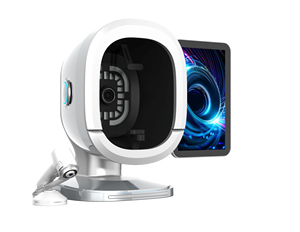
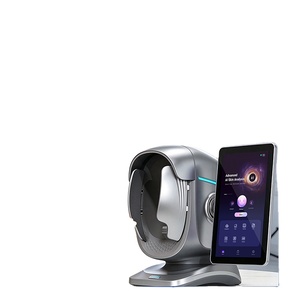
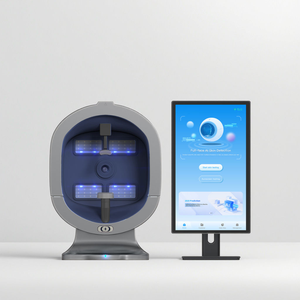
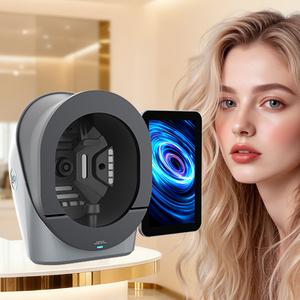
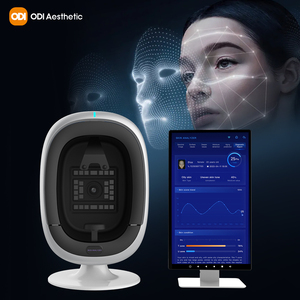
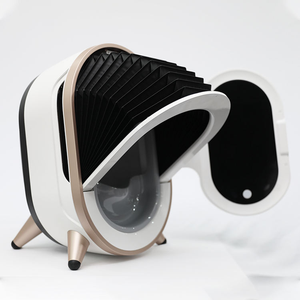
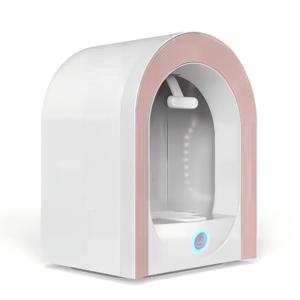
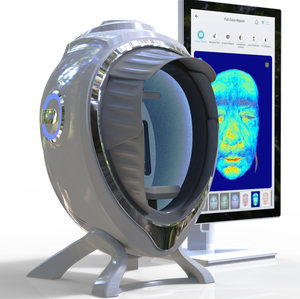
Executive Overview: The Evolution of Aesthetic Diagnostic Systems
In modern cosmetic dermatology and aesthetic medicine, empirical diagnosis has been completely superseded by quantitative, objective skin imaging. As medical spa chains, dermatology clinics, and commercial beauty networks scale globally, the demand for multispectral 3D facial diagnostics systems has experienced exponential growth. Today, China stands as the global epicenters of optical innovation, semiconductor integration, and precision assembly for professional skin scanners.
Contemporary diagnostic architectures combine high-resolution industrial CMOS sensors (up to 36 megapixels), multi-wavelength LED illumination arrays (RGB Daylight, UV 365nm, Cross-Polarized Light, Parallel-Polarized Light, and Wood’s Light), and deep neural network algorithms. These systems extract sub-surface skin biomarkers that remain completely invisible under ambient light—including early-stage melasma, porphyrin bacterial concentrations in sebaceous glands, sub-dermal vascular erythema, structural collagen degradation, and localized epidermal moisture loss.
Comparative Procurement Matrix: OEM Chinese Diagnostic Systems vs. Western Benchmarks
Procurement directors must weigh initial capital expenditure against long-term operational costs, firmware scalability, software licensing fees, and OEM customization capabilities. Below is an engineering and commercial baseline matrix comparing top-tier Chinese manufacturing specifications against traditional Western diagnostic systems (such as Observ 520x and Visia 7/8 series):
| Technical / Commercial Parameter | Top-Tier OEM China Diagnostic Systems | Legacy Western Scanners (e.g., Visia / Observ) | Procurement Advantage Impact |
|---|---|---|---|
| Sensor Architecture | 28MP – 36MP Industrial CMOS (Sony Exmor) | 18MP – 24MP Standard CMOS Sensors | Higher spatial resolution for deep pore and vascular profiling |
| Spectral Illumination Modes | 8 to 12 Modes (RGB, UV, PL, CPL, Wood's, Red/Brown) | 5 to 10 Modes | Reveals hidden hyper-pigmentation and sub-surface inflammation |
| Software License Structure | Zero recurring license fees; Perpetual SaaS / Cloud API | Annual SaaS subscription ($1,200–$3,500/year per unit) | Reduces 5-year Total Cost of Ownership (TCO) by over 65% |
| White-Label OEM / Customization | Full OEM/ODM: Logo printing, custom UI, SDK & Casing | Fixed proprietary branding; Closed ecosystems | Empowers regional distributors to build independent brand equity |
| Average Wholesale Procurement Cost | $1,200 – $3,800 USD (Volume Tiered) | $12,000 – $28,000 USD | Frees up capital for clinical marketing & auxiliary aesthetic laser systems |
| Regulatory Compliance | ISO 13485, CE MDR, RoHS, FDA 510(k) Ready | FDA Cleared, CE Medical Class IIa | Fully compliant for seamless international customs clearance |
Future Procurement Trends (2025–2030) for Aesthetic Diagnostic Hardware
The medical aesthetics industry is undergoing a structural transition driven by data integration, cloud artificial intelligence, and non-invasive consultation workflows. Global buyers sourcing from Chinese factories are shifting focus from simple hardware purchasing to strategic co-development partnerships.
1. Multi-Modal 3D Volumetric Surface Mapping
Future clinical systems integrate structured light triangulation and stereoscopic photogrammetry to render true 3D facial topography. This enables aesthetic doctors to quantify facial volumetric loss, dynamic wrinkle depth in micrometers, and evaluate post-injection filler degradation over time.
2. Edge-AI & Cloud Deep Learning Engine Integration
On-device TPU chips now execute real-time feature extraction in under 3 seconds. Cloud databases trained on millions of clinical skin images automatically match client skin profiles against age-grouped demographics, generating objective skin age index scores and predictive 5-year aging projections.
3. HIPAA & GDPR Compliant Tele-Dermatology Architecture
As multi-branch clinic chains proliferate across North America, Europe, and the Middle East, diagnostic systems require end-to-end data encryption (AES-256) and cloud synchronization. Clinicians can review high-resolution diagnostic imagery across mobile tablets, desktop stations, and regional clinic servers.
4. Automated Treatment Conversion & EMR Integration
Modern diagnostic software bridges the gap between diagnosis and commercial sales. Systems dynamically link identified skin pathologies (e.g., deep UV spots or erythema) to clinic-specific treatment menus (e.g., IPL photofacials, picosecond laser, microneedling, or prescription topical regimens).
Optical Spectrum Engineering & Clinical Diagnostic Capabilities
The core value of an aesthetic diagnostic system resides in its optical sub-assembly. By illuminating skin tissue under specific optical spectra, different anatomical layers absorb, scatter, or fluoresce light based on underlying biochemical compounds.
Standard RGB Daylight Mode
Simulates natural daylight color temperature (6500K) with a high Color Rendering Index (CRI > 95). Provides high-fidelity baseline documentation for surface wrinkles, gross pore size, skin tone uniformity, and external lesion morphology.
Cross-Polarized Light (CPL) Spectrum
Eliminates specular reflection from the stratum corneum by filtering out polarized surface glare. This allows the optical lens to visualize sub-epidermal vascular networks, telangiectasia, active rosacea, and dermal inflammation.
Ultraviolet (UV 365nm) Fluorescence Spectrum
Excites fluorophores within the skin tissue. Porphyrin secretions from Propionibacterium acnes fluoresce in orange/red wavelengths, while deep UV solar lentigines and hyper-pigmentation show intense dark brown absorption patches.
Wood’s Light Illumination Mode
Simulates traditional dermatological Wood's lamp examination. Differentiates epidermal melasma (which intensifies under Wood's light) from dermal melasma (which shows no change in contrast), guiding laser parameter selection.
Enterprise Competencies: OEM/ODM Manufacturing Excellence in China
As a premier manufacturer and exporter of aesthetic diagnostic devices, our state-of-the-art facility bridges optical physics, industrial design, and software engineering. We provide global medical brands, equipment importers, and franchise clinics with full turnkey manufacturing solutions.
Precision Optical Calibration Labs
Every skin analyzer system undergoes multi-point optical calibration in our dust-free darkrooms. We verify color accuracy against standardized X-Rite spectrophotometer color targets and conduct 72-hour thermal stress testing to prevent optical alignment drift during international shipping.
Complete White-Label OEM Customization
We offer comprehensive ODM product customization. From custom injection-molded chassis, custom paint finishing, and metallic logo badging to software UI localization in 20+ languages (English, Spanish, German, French, Arabic, Chinese, Japanese, Russian), we tailor hardware to your corporate brand identity.
Strict International Quality Assurance
Operating under ISO 13485 quality management systems for medical devices, our production lines maintain strict traceability for all optical components, mainboards, and power supplies. Our diagnostic machines comply with CE MDR, FCC, RoHS, and IEC 60601-1 electrical safety standards.
B2B Procurement FAQ: Sourcing Diagnostic Systems from China Factories
What is the Minimum Order Quantity (MOQ) for OEM wholesale diagnostic machines?
Our standard MOQ for neutral unbranded diagnostic units is 1 piece (ideal for clinic evaluation and sample testing). For custom OEM branding (including customized chassis silk-screen logo printing and software startup screen localization), the MOQ starts at 5 to 10 units. Complete custom industrial toolings and customized casing colors require an MOQ of 50 units.
How do your Chinese diagnostic systems compare in camera resolution and optical accuracy to Visia or Observ?
Our flagship models utilize 36-megapixel Sony Exmor industrial CMOS image sensors coupled with multi-coated optical glass lenses, delivering comparable spatial resolution and optical clarity to top Western brands. Our proprietary spectral algorithms deliver over 96% diagnostic correlation with gold-standard clinical benchmarks while offering zero annual subscription fees.
Are your skin diagnostic devices certified for regulatory compliance in Europe and the Americas?
Yes. All our diagnostic systems hold European CE certification (LVD/EMC), RoHS environmental compliance, and FCC clearance for radio-frequency emissions. Our manufacturing facility is audited under ISO 13485 quality systems. We provide full technical construction files (TCF) and test reports to support local medical device registration for qualified importers.
Can the skin analysis software be integrated with our existing clinic management (EMR/EHR) software?
Yes. We provide software development kits (SDKs) and RESTful API endpoints for enterprise customers. This allows seamless data exchange between our diagnostic software and your clinic's patient database, electronic medical records (EMR), or online consultation booking platforms.
What warranty coverage and technical support do you provide for international distributors?
We offer a comprehensive 2 to 5-year hardware warranty depending on the product tier. In the rare event of a component failure, we ship free replacement mainboards, optical modules, or power supplies via expedited DHL/FedEx courier within 48 hours. Our technical engineering team provides 24/7 remote diagnostic support via video link and TeamViewer.
How is patient data privacy and security handled (GDPR & HIPAA compliance)?
Patient confidentiality is prioritized. Our software supports localized offline storage (where patient imagery remains on your clinic’s encrypted hard drive) as well as AES-256 encrypted cloud backups. No patient data or images are collected or stored without explicit consent, ensuring total compliance with EU GDPR and US HIPAA mandates.
What is the typical production lead time and shipping duration for bulk orders?
Sample units and standard orders under 20 pieces are dispatched within 3 to 5 business days. Bulk OEM orders (50–200 units) require 12 to 18 working days for assembly, calibration, and burn-in testing. Shipping via air freight (DHL/UPS/FedEx) takes 5 to 7 days worldwide, while ocean or rail freight takes 20 to 35 days depending on the destination port.
Does the skin analyzer software support multi-language switching for international markets?
Yes. Our diagnostic software features built-in support for over 20 languages, including English, Spanish, French, German, Portuguese, Russian, Arabic, Vietnamese, Thai, Turkish, Italian, Japanese, and Korean. We can add new language translations within 5 business days upon client request.
How often are software algorithms updated, and are updates free of charge?
We release quarterly software firmware and diagnostic algorithm updates. These updates enhance AI detection accuracy, add new skin metric reports, and improve OS compatibility. All software updates are provided free of charge to our clients for the operational lifetime of the device.
What training resources do you provide for clinic staff and sales reps?
We supply comprehensive digital training packages, including HD video operation tutorials, clinical skin imaging interpretation guides, user manuals, and client consultation script templates. We also conduct live 1-on-1 online training webinars for your clinical staff and sales representatives.