
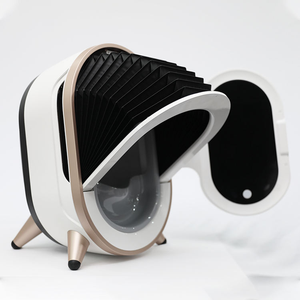
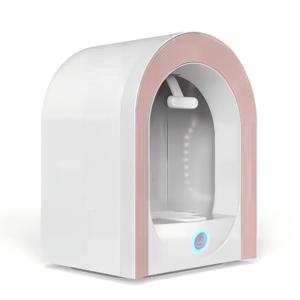
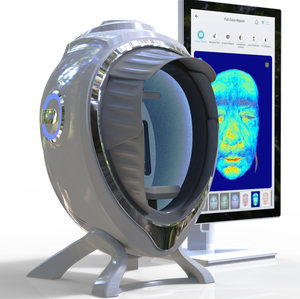
Technical Whitepaper: Precision Deep Epidermis Diagnostic Imaging in Modern Aesthetic Medicine
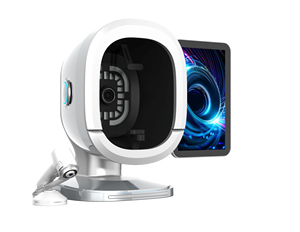
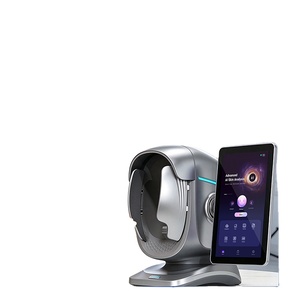
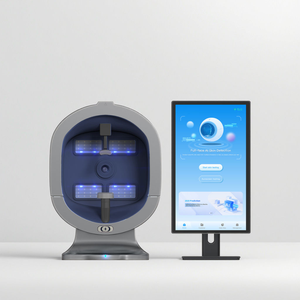
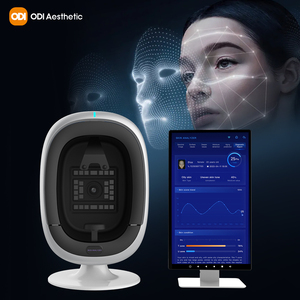
In the rapidly evolving landscape of clinical cosmetic dermatology and advanced aesthetic medicine, the traditional qualitative visual assessment of facial skin conditions is no longer sufficient. Modern patients and clinical practitioners demand objective, non-invasive, quantitative diagnostic proof to evaluate sub-surface cutaneous chromophores, structural photodamage, and deep epidermal lesions prior to initiating invasive laser, RF microneedling, or chemical peel interventions. As a premier OEM/ODM deep epidermis skin imager exporter, our engineering core bridges advanced optical physics with artificial intelligence to deliver multispectral facial analysis solutions tailored for B2B brands, medical distributors, and aesthetic clinic networks worldwide.
Core Technical Insight: The basal layer of the epidermis (stratum basale) and the dermo-epidermal junction (DEJ) house melanocytes and vascular structures that are invisible under ambient visible light. Specialized cross-polarized illumination and UV-fluorescence reveal hidden melasma, sub-dermal vascular congestion, and porphyrin activity up to 1.5mm beneath the stratum corneum.
The Physics of Sub-Surface Epidermal Optical Diagnostics
Light penetration into human skin is governed by wavelength-dependent scattering and absorption coefficients. Standard ambient light (RGB daylight) is dominated by specular reflection from the stratum corneum, obscuring deep cellular detail. Our proprietary deep epidermis imaging systems utilize a multi-spectral optical architecture featuring synchronized flash arrays with custom polarization filters:
1. Parallel-Polarized Light Imaging: Enhances surface relief, fine lines, skin texture micro-relief, and enlarged pores by isolating direct specular reflectance from the outer skin barrier.
2. Cross-Polarized Light Diagnostic Mode: Cancels surface reflections completely, allowing diffuse backscattered light from the deeper epidermal and papillary dermal layers to pass through. This reveals deep melanin clusters, vascular erythema, telangiectasia, and hidden dyschromia.
3. UV Fluorescence & Wood's Light Spectral Range (365nm - 395nm): Excites sub-surface fluorophores, causing bacterial porphyrins (Propionibacterium acnes) to fluoresce pinkish-red, while highlighting invisible sun damage, senile lentigines, and compromised lipid barrier function.
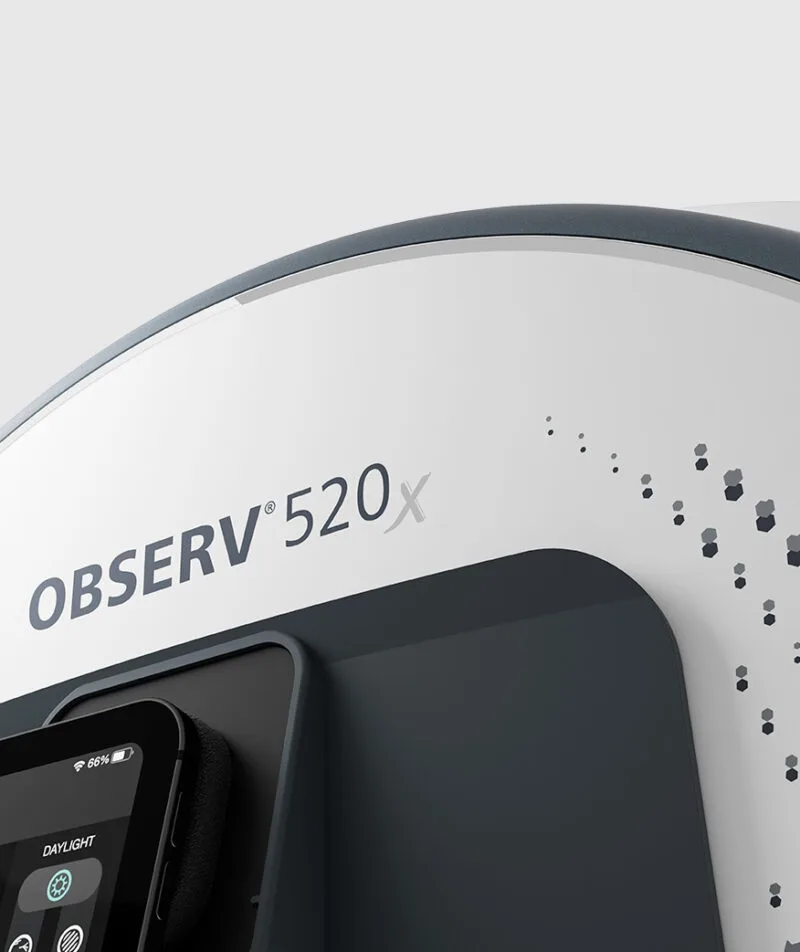
Enterprise OEM/ODM Manufacturing Capabilities & System Architecture
Building upon decades of specialized optical hardware design—leveraging clinical methodologies validated by industry leaders such as Sylton and Innofaith—our manufacturing facility offers end-to-end OEM (Original Equipment Manufacturer) and ODM (Original Design Manufacturer) services for global partners seeking proprietary skin diagnostic platforms.
Custom Optical Shells & Industrial Design
Full CAD development for custom hood geometry, ergonomic chin rests, LED halo arrays, and motorized light shutter mechanisms engineered for repeatable patient positioning.
Firmware & AI Algorithm Integration
Proprietary image processing SDKs for automated facial feature recognition, automatic 3D alignment, pigment segmentation, and age-defying skin metric scoring engine.
Regulatory Compliance & Certification
All exported devices undergo rigorous testing to comply with international standards including CE MDD/MDR, FDA 510(k) pathway readiness, RoHS, and ISO 13485 quality systems.

Quantifiable Clinical Metrics Delivered by Deep Epidermal Imagers
Our OEM deep epidermis scanners are programmed to quantify up to 12 distinct cutaneous physiological indicators, providing clinical practitioners with actionable baseline data:
- Epidermal Pigment Index (EPI): Differentiates epidermal melasma (shallow) from dermal ochronosis or mixed hyperpigmentation, dictating picosecond laser vs. topical hydroquinone protocols.
- Vascular Redness Density (VRD): Maps sub-dermal capillary dilation associated with rosacea, erythema post-laser, and inflammatory acne.
- Sub-clinical Porphyrin Distribution: Quantifies bacterial metabolic byproducts in sebaceous glands to predict acne breakouts up to 3 weeks before physical papule formation.
- Structural Elasticity & Wrinkle Depth Index: Utilizes 3D shadow-casting topography to measure micro-wrinkle volumetric depth in micrometers (μm).
- Lipid Barrier Hydration Mapping: Analyzes epidermal light scattering to evaluate transepidermal water loss (TEWL) and moisture retention efficiency.
Future Procurement Trends in the Global Skin Diagnostic Device Market (2025–2030)
As an exporter analyzing global procurement data across North America, Europe, Asia-Pacific, and the Middle East, we observe several pivotal micro and macro procurement shifts that B2B buyers and brands must prepare for:
1. Shift Towards AI-Powered Cloud Diagnostics & Tele-Dermatology APIs
B2B importers are rapidly transitioning away from standalone hardware units that lock data locally. Modern medical purchasing specifications now mandate cloud-connected ecosystems (such as Sylton Connect-style architectures) with RESTful API integration. Diagnostic hardware must seamlessly transmit high-resolution DICOM or encrypted raw optical captures directly to practice management software, allowing multi-location clinic chains to centralize patient skin history and run remote AI diagnostic consultations.
2. Demand for Multi-Regional Skin Tone AI Training Sets (Fitzpatrick I–VI)
Historical skin analyzers suffered from algorithm bias, frequently misclassifying deep pigmentation or erythema in darker skin phototypes (Fitzpatrick IV–VI). Future-ready procurement criteria prioritize skin diagnostic machines built with AI neural networks trained on diverse multi-ethnic datasets. Exporters offering customizable AI threshold calibration for specific regional markets (e.g., Southeast Asia, Latin America, Middle East) gain a distinct competitive edge.
3. Integration of Non-Invasive Optical Biopsy & 3D Topographic Alignment
The boundary between high-end cosmetic skin scanners and clinical dermatoscopes is blurring. High-end procurement contracts now specify sub-millimeter repeatable facial alignment frames (chin/forehead stabilization) combined with automated optical zoom. This ensures that follow-up scans taken 6 months post-treatment achieve 100% pixel-level alignment, enabling true quantitative pixel-by-pixel subtraction analysis to prove treatment efficacy to discerning patients.
4. Eco-Friendly Ergonomics & Modular Hardware Maintenance
Sustainability and low cost of ownership have entered B2B purchasing rubrics. Distributors favor modular skin diagnostic hardware where LED light modules, camera sensors, and touchscreen controllers can be swapped or upgraded in the field without returning the complete booth to overseas manufacturing hubs.
Global OEM/ODM Customization Workflow & Private Label Partnership Pipeline
Partnering with an established exporter ensures a streamlined, risk-mitigated journey from initial concept to commercial distribution. Our OEM/ODM pipeline operates across five structured engineering gates:
- Phase 1: Optical & Industrial Specification Blueprint: Definition of spectral wavelengths (RGB, Cross-PL, Parallel-PL, UV 365nm, Wood's Light), CMOS sensor resolution (24MP to 36MP), outer housing dimensions, and brand design guidelines.
- Phase 2: Prototyping & Mold Tooling: Rapid 3D printing of enclosure prototypes, optical lens calibration, thermal dissipation testing for high-intensity LED flashes, and EMC shielding validation.
- Phase 3: Software Branding & Algorithm Customization: Integration of distributor logo, custom UI language packs (supporting over 15 languages), cloud database architecture, and custom report header generation.
- Phase 4: Regulatory Testing & Pilot Production: Execution of IEC 60601-1 safety testing, CE certification filings, and 100-unit pilot manufacturing run under ISO 13485 cleanroom assembly standards.
- Phase 5: Global Supply Chain & After-Sales Logistics: Customized shockproof flight-case packaging, drop-shipping capabilities, spare parts buffer stock, and dedicated 24/7 technical support tier escalation.