State-of-the-Art Skin Barrier & Facial Diagnostics Systems
Explore our OEM/ODM production-ready diagnostic hardware, featuring 3D facial mesh mapping, multi-spectrum optical engines, and deep-learning skin barrier algorithms.
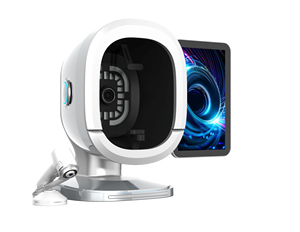
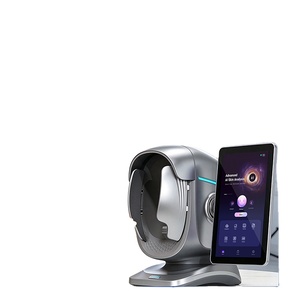
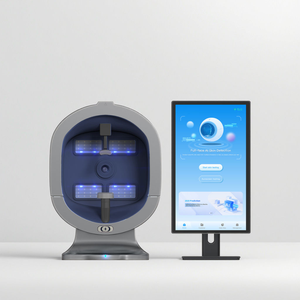
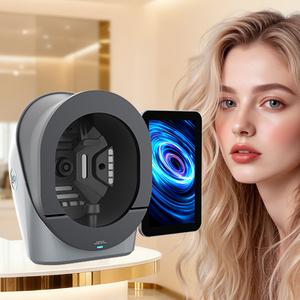
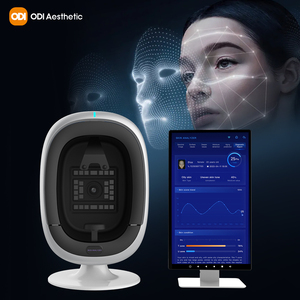
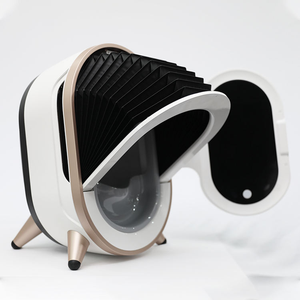
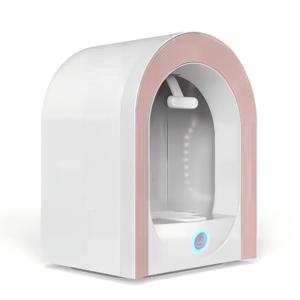
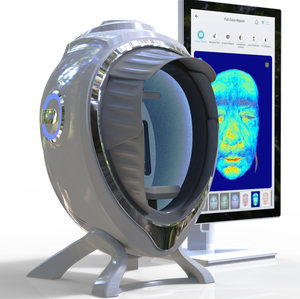
Engineering Next-Generation Skin Barrier Diagnostic Devices
The global dermatological diagnostic market is undergoing a paradigm shift. Modern consumers and clinical practitioners no longer accept subjective visual assessments. Instead, B2B beauty brands, pharmaceutical groups, and aesthetic clinics demand quantifiable, scientifically reproducible metrics regarding epidermal integrity, stratum corneum hydration, and cutaneous barrier status. As an established Original Equipment Manufacturer (OEM) and Original Design Manufacturer (ODM), our manufacturing infrastructure bridges the gap between complex bio-optical physics and commercial aesthetic devices.
The skin barrier primarily resides within the stratum corneum (SC), structured as a "brick-and-mortar" lipid matrix composed of ceramides, cholesterol, and free fatty acids. Barrier impairment leads to elevated Transepidermal Water Loss (TEWL), chronic inflammation, hyper-pigmentation, and accelerated aging. OEM/ODM diagnostic devices utilize multispectral illumination—including cross-polarized light and narrow-band UV fluorescence—to image sub-surface vascular networks, porphyrins, and hydration gradients that are invisible to the unassisted human eye.
1. Optical Imaging Physics & Multi-Spectrum Diagnostics
A professional-grade skin barrier diagnostic device requires precise optical control. Standard white-light illumination reflects off the outer stratum corneum, masking underlying pathological and structural anomalies. To deliver true diagnostic depth, our custom ODM hardware integrates up to 10 distinct spectral illumination modes:
- RGB Standard Daylight Imaging: Captures true-to-life surface color, macro-texture, fine lines, and visible pore distribution.
- Cross-Polarized Light Imaging: Suppresses specular surface glare, allowing deep penetration into the dermal-epidermal junction to isolate erythema, telangiectasia, vascular inflammation, and acne rosacea.
- Parallel-Polarized Light Imaging: Enhances surface specular reflections, sharply delineating micro-relief, epidermal roughness, and subtle stratum corneum desquamation.
- UV Fluorescence & Wood's Light Illumination: Excites epidermal fluorophores to quantify Cutibacterium acnes porphyrins, sebum secretion levels, lipid oxidation, and sub-surface melanin clumps.
- Brown Spectrum / Deep Pigmentation Mapping: Extracts dyschromia patterns, deep melasma, solar lentigines, and post-inflammatory hyperpigmentation (PIH) for targeted clinical therapy evaluation.
2. Biomechanical & Electrical Biophysical Sensors
In addition to full-face optical scanners, our OEM platform supports probe-based biophysical diagnostic transducers. Measuring barrier integrity requires dual validation through capacitance and transepidermal moisture flux:
Corneometry (Capacitance Sensing): High-frequency electrical capacitance sensors measure the dielectric constant of the stratum corneum. Because water has a high dielectric constant (approx. 80) compared to dry skin tissue (< 5), capacitance probes provide real-time hydration values in arbitrary units (0–120 AU).
TEWL Micro-Evaporimetry: Open-chamber and condenser-chamber TEWL sensors measure the water vapor density gradient above the skin surface (g/m²/h). A healthy skin barrier maintains low TEWL (< 10 g/m²/h), whereas a compromised barrier manifests elevated water loss rates (> 25 g/m²/h), serving as an indispensable marker for dermatological product efficacy studies.
Diagnostic Spectrum & Sub-Surface Capability Matrix
Comparing bio-optical modalities utilized in modern OEM/ODM skin diagnostic hardware for clinical and commercial applications.
| Optical Illumination Mode | Wavelength / Tech Spec | Primary Diagnostic Target | Skin Barrier Clinical Insight | OEM Customization Level |
|---|---|---|---|---|
| RGB True Daylight | 400 nm - 700 nm Visible | Surface texture, open pores, wrinkles | Macro-epidermal integrity baseline | Standard High-CRI LED Arrays |
| Cross-Polarized Spectrum | 90° Phase-Shift Filters | Sub-dermal vascularity, redness, capillaries | Epidermal inflammation & barrier irritation | Custom Optical Linear Polarizers |
| Parallel-Polarized Spectrum | 0° Phase-Shift Co-Linear | Stratum corneum micro-relief, fine desquamation | Dryness, scaling, surface lipid deficit | Precision Filter Alignment |
| UV Fluorescence (Wood's) | 365 nm Peak Wavelength | Porphyrins, acne bacteria, free lipids | Sebum barrier & microbial dysbiosis | Narrow-band UV LED + UV-Cut Lens |
| 3D Structural Surface Mesh | Structured Pattern Projection | Volumetric depth, pore volume, fine lines | Elasticity loss & barrier structural atrophy | Custom DLP / Laser Projection Module |
| Deep Brown Spectrum | Spectral RGB Extraction Algorithm | Dermal melanin, deep melasma, sun spots | Post-barrier damage pigmentation risk | Proprietary Image Processing Engine |
End-to-End OEM/ODM Customization Architecture
We partner with international skincare brands, aesthetic device distributors, and medical technology enterprises to manufacture tailored diagnostic solutions.
1. Industrial Design & Chassis Tooling
From sleek tabletop salon units to compact hand-held probes, our industrial design team creates customized medical-grade ABS/PC enclosures. Custom injection molds, metallic electroplating, and brand-specific colorways ensure market differentiation.
2. Optoelectronic Engine & PCBA R&D
We design custom printed circuit board assemblies (PCBA) featuring high-CRI flash drivers, specialized CMOS image sensor sensors (from 20MP up to 36MP), precision quartz optical filters, and low-distortion prime lenses engineered for zero chromatic aberration.
3. AI Software SDK & White-Label Apps
Our software engineering group offers comprehensive API/SDK white-label solutions for Windows, Android, iOS, and Cloud SaaS integration. Custom software features include multi-language UI, branded diagnostic reports, product recommendation engines, and CRM database synchronization.
4. ISO 13485 Cleanroom Manufacturing
Our state-of-the-art production facility operates dust-free optical assembly cleanrooms. Every device undergoes automated optical calibration, spectral wavelength verification, thermal endurance stress testing, and electromagnetic compatibility (EMC) testing.
5. Global Regulatory Compliance & Certification
We provide full technical documentation (TCF) supporting worldwide compliance. Our diagnostic devices meet CE MDR, FDA 510(k) registration standards, FCC, RoHS, and PSE regulations, facilitating frictionless cross-border distribution and market entry.
6. Private Labeling & Logistics Support
Complete OEM/ODM fulfillment services include customized user manuals, branded flight cases, retail packaging boxes, and drop-shipping logistics to global regional distribution hubs with complete trace-ability and serialized inventory controls.
Future Procurement & Sourcing Trends in Skin Diagnostics
As B2B buyers navigate the evolving aesthetic technology landscape, selecting an OEM/ODM manufacturing partner requires analyzing major macro trends shaping the market from 2025 to 2030:
A. Convergence of Generative AI & Predictive Skin Aging Simulation
Next-generation skin diagnostic hardware is transitioning from static image capture to predictive dynamic modeling. Future OEM systems utilize Generative Adversarial Networks (GANs) and Deep Neural Networks (DNNs) trained on vast dermatological datasets. By analyzing current epidermal barrier degradation, collagen density, and elastic breakdown, advanced machines simulate skin condition progression over 3 to 10 years, offering patients compelling visual proof of treatment efficacy.
B. Seamless Integration with Skincare Personalization & E-Commerce
Global cosmetic brands are leveraging diagnostic hardware as point-of-sale conversion engines. Modern OEM diagnostic scanners feature cloud APIs that dynamically map individual diagnostic parameters (e.g., TEWL index, pore severity score, pigment density) directly to tailored skincare formulation regimens. This automated bridge between diagnostic hardware and product recommendations boosts consultation conversion rates by over 40%.
C. Portability & High-Performance Compact Optics
While large tabletop 3D facial scanners remain popular in luxury medical spas, there is an escalating demand for portable, handheld diagnostic devices. Advancements in miniaturized CMOS sensors, micro-LED flash rings, and high-efficiency wireless transmission protocols allow field sales representatives, beauty advisors, and mobile aesthetic nurses to deliver clinical-grade skin diagnostics anywhere.
OEM/ODM Procurement & Manufacturing FAQ
Direct answers to enterprise purchasing questions regarding minimum order quantities, customization scope, software integration, and quality assurance.
Ready to Scale Your Skin Diagnostic Brand?
Partner with an industry-leading OEM/ODM manufacturer. Contact our optical engineering and sales team today to request hardware evaluation samples, custom OEM quotes, or technical documentation.