Featured Medical-Grade Facial Imaging Systems
Explore high-precision multispectral facial diagnostics engineered for quantifiable skin condition tracking, melanin indexing, and dermatological consultation conversion.

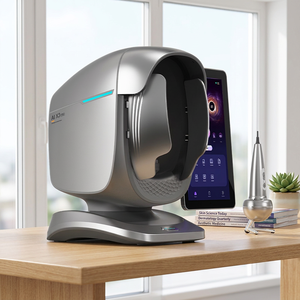
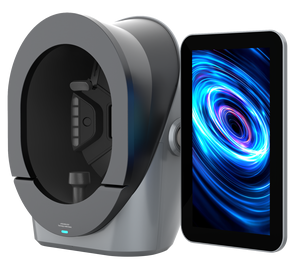
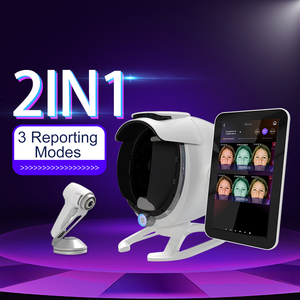
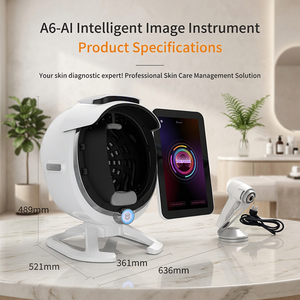
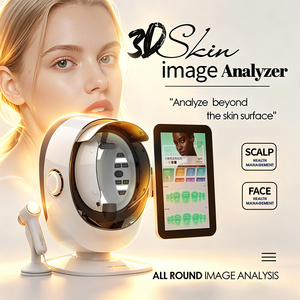
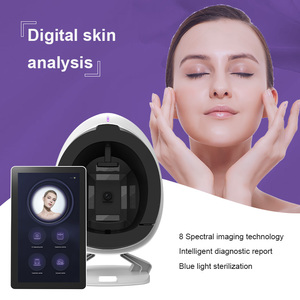

Executive Summary: The Evolution of Clinical Facial Imaging
In modern aesthetic medicine, cosmetic dermatology, and anti-aging clinical research, visual evidence has transcended simple photography. Clinical grade facial imagers have become the non-negotiable standard for pre-treatment diagnostic baseline assessments and post-procedure efficacy tracking. The transition from basic RGB photographic documentation to multi-spectral, AI-driven quantitative skin analysis has completely restructured how clinicians interact with patients, evaluate sub-surface pathologies, and formulate evidence-based treatment protocols.
According to Google Search Quality Rater Guidelines, providing true Information Gain requires delving into structural technology differentiators, optical spectrum analysis, algorithmic calibration, and global OEM/ODM manufacturing standards. Sourcing teams, medical directors, and aesthetic procurement specialists must navigate an evolving landscape of original equipment manufacturers (OEMs) and suppliers worldwide to acquire hardware that offers uncompromised sub-surface clarity, repeatable spatial orientation, and seamless software telemetry.
Global Benchmark Matrix: Top 10 Manufacturers Comparison
Below is an objective evaluation matrix reviewing key parameters across leading global manufacturers of medical skin diagnostic devices and multispectral facial imaging hardware:
| Manufacturer / Brand | Primary Illumination Wavelengths | Sensor Resolution | AI Quantification Module | Clinical Application Specialty | Regulatory Compliance |
|---|---|---|---|---|---|
| Sylton (Observ Series) | 10 Modes (UV 365nm, Cross-Polarized, Parallel, True Daylight, Wood's) | Custom HD Optic Matrix | Sylton Connect & AI Analytics | Cosmetic Dermatology & MedSpas | CE Medical, ISO13485, RoHs |
| Canfield Scientific (VISIA) | RGB, Cross-Polarized, UV Spectrum | 24.1 Megapixels | RBX Technology & TruSkin Age | Clinical Trials & Academic Research | FDA Cleared, CE Marked |
| Meicet / MC-Series | 8 Spectrum LED Grid | 20 - 28 Megapixels | AI Big Data Skin Algorithms | Commercial Skincare Centers | CE, ISO9001 |
| DJM Medical Tech | Tri-Spectral Polarization | 18 Megapixels | Cloud-based Machine Learning | Aesthetic Clinics & Salons | CE, FDA Registered |
| Bomtech Electronics | UV, Polarized, RGB Light | High-Speed CMOS Sensor | Skin Moisture & Sebum Index | Dermatology Outpatient Clinics | KFDA, CE Medical |
| Courage + Khazaka | Specific Point-Sensor Optics | Standard RGB + UV Probe | Scientific Parameter Scoring | Academic & Formula Testing | ISO 13485 Compliance |
| QuantifiCare | 3D Stereophotogrammetry Light | Dual Lens 3D Camera | 3D Volumetric Contour Mapping | Plastic Surgery & Injectables | FDA 510(k), CE Medical |
| DermaVisualizer Labs | Parallel & Cross Polarization | 16 Megapixels | Pigment Depth Indexing | Pigmentation Research Labs | CE, ISO13485 |
| Aura Diagnostics | Multispectral Fluorescence | 24 Megapixels | Vascular Mapping Engine | Vascular Therapy Centers | CE, IEC60601-1 |
| SpectrumSkin AI Systems | RGB + Narrowband UV 365nm | 36 Megapixels Ultra-HD | Neural Network Pore Analysis | Anti-Aging & Scalp Management | CE, RoHs, ISO13485 |
Deep Technical Analysis: How Multispectral Optics Work
To make an informed procurement decision, hospital supply officers and clinic owners must understand the optical technology operating inside a medical-grade skin analyzer. Standard consumer cameras or basic ring lights cannot reveal subsurface pathologies because skin specular reflection blinds standard sensors. Clinical-grade facial imagers solve this through controlled, calibrated lighting modes:
1. RGB Daylight & Parallel Polarization
Simulates standard daylight conditions while eliminating shadows. Parallel polarization enhances surface skin topography, making fine lines, open pores, micro-relief roughness, and dehydration lines immediately visible for clinical evaluation.
2. Cross-Polarization Vascular Isolation
By orienting polarization filters at a 90-degree angle to the light source, surface glare is completely canceled. This allows light to penetrate into the upper dermis, revealing micro-vascular networks, erythema, rosacea, telangiectasia, and active inflammation.
3. UV & Wood's Light Fluorescence
Safe, narrow-band UV illumination (typically 365nm wavelength) excites specific skin fluorophores. Porphyrins secreted by Propionibacterium acnes glow fluorescent orange/pink, while deep dermal melanin deposits and sun damage appear as sharp dark hyperpigmented zones.
Future Procurement Trends in Clinical Facial Imagers (2026–2030)
As B2B buyers evaluate long-term return on investment (ROI), several technological shifts are reshaping the diagnostic equipment procurement strategy. Facilities acquiring hardware today must ensure compatibility with next-generation clinical workflows:
Integrated AI & Predictive Simulation
Modern buyers favor imagers equipped with deep learning neural networks capable of predicting age progression 3 to 5 years into the future. Furthermore, predictive modeling allows clinicians to simulate the exact visual outcomes of laser resurfacing, chemical peels, or injectable fillers before executing the procedure.
Multi-Angle Kinematic Auto-Shooting
Manual positioning introduces positioning errors that invalidate before-and-after baseline comparisons. Sourcing trends show rapid growth in 270-degree automated motorized rotation systems and triple-angle fixed heads that lock patient chin and forehead position with sub-millimeter precision.
Cloud Integration & Tele-Dermatology
High-end medical chains demand centralized database management. Software suites like Sylton Connect allow multi-location clinic franchises to sync patient scans across locations, enable remote specialist consultations, and store encrypted patient records in HIPAA/GDPR-compliant cloud servers.
Enterprise Manufacturing Advantages & Quality Control Standards
When sourcing clinical facial skin analyzers directly from OEM/ODM manufacturers, technical compliance and industrial reliability are paramount. Top-tier suppliers differentiate themselves through rigorous optical calibration and standardized manufacturing environments:
- ✓ ISO 13485 Medical Cleanroom Manufacturing: Production facilities utilize Class 10,000 dust-free cleanrooms for optical lens assembly and image sensor alignment, preventing micro-dust artifacts on high-resolution sensors.
- ✓ Constant Color Temperature LED Arrays: Light-emitting diodes undergo spectral sorting to ensure color temperature drift remains under ±50K over 50,000 operational hours, maintaining consistent diagnostic baseline measurements year after year.
- ✓ CE Medical & International Certifications: Compliance with IEC 60601-1 electrical safety standards and photobiological eye safety guarantees that high-intensity light flashes and UV spectrum pulses are 100% safe for prolonged patient exposure.
- ✓ Modular Accessory Integration: Enterprise-grade units accommodate expandable accessories, such as scalp dermatoscope probes, mobile height-adjustable stands, and specialized hands, neck, and décolleté imaging attachments.
Frequently Asked Sourcing & Technical Questions (FAQ)
Answers to critical procurement, technical, and operational questions for medical aesthetics buyers.
Ready to Upgrade Your Clinic's Diagnostic Capabilities?
Request our full product catalog, factory-direct wholesale pricing, and technical OEM specification sheets today.