As the global medical aesthetics market transitions toward high-precision diagnostic consultations, non-invasive facial analyzers have become essential capital equipment for dermatology clinics, aesthetic medspas, and cosmetic surgery centers. This white paper analyzes the leading manufacturing benchmarks, multi-spectrum optical hardware, AI-assisted quantitative diagnostic software, and strategic procurement frameworks for international B2B buyers.
Featured Commercial Skin Diagnostic Machines
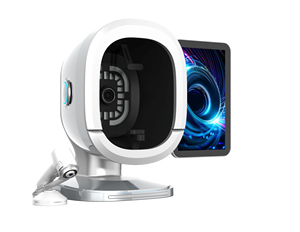
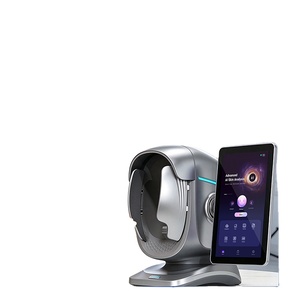
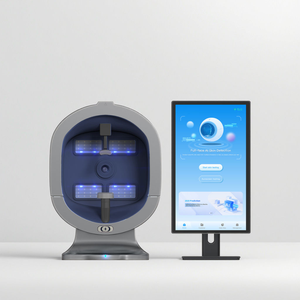
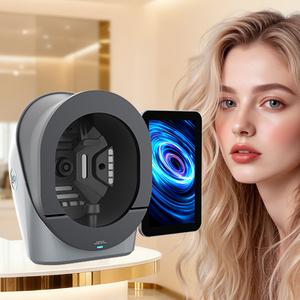
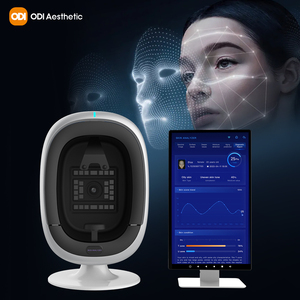
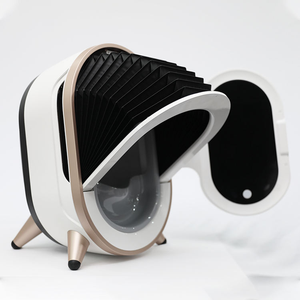
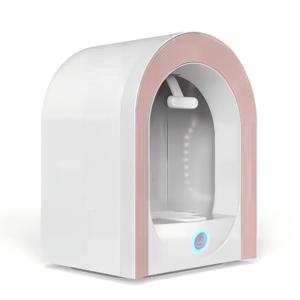
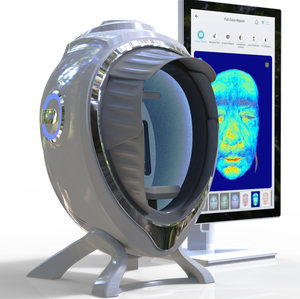
1. Technological Architecture of Modern Medical Aesthetics Facial Analyzers
The medical aesthetics hardware sector has evolved rapidly beyond basic digital skin magnification. Leading original equipment manufacturers (OEMs) and original design manufacturers (ODMs) integrate multispectral optical imaging systems with deep-learning artificial intelligence algorithms. Modern clinical diagnostic devices are designed to capture sub-surface dermal structures that remain completely invisible under ambient daylight.
1.1 Multispectral Illumination Modalities
High-end medical facial diagnostic units rely on precise light-emitting diode (LED) arrays combined with specialized polarization filters to execute structural skin mapping across multiple spectrums:
- RGB Daylight Illumination: Captures high-resolution surface features including macro wrinkles, fine lines, structural pore dilation, surface roughness, and visible scarring.
- Parallel Polarized Light: Enhances surface skin texture topography, allowing practitioners to quantify epidermal smoothness and dehydration lines without ambient glare reflections.
- Cross-Polarized Light: Cancels surface specular reflections, penetrating directly into the upper dermal layers to visualize sub-surface vascular networks, telangiectasia, erythema, localized inflammation, and hidden rosacea.
- UV Fluorescence Spectrum (Wood's Light Equivalent, ~365nm): Excitates fluorophores within the skin to reveal active porphyrin production from Cutibacterium acnes, deep melanocyte distribution, UV spots, photodamage, and hyperpigmentation depth.
- 3D Topographic Reconstruction: Utilizes structured light projecting grids or multi-angle stereo imaging to render 3D facial volumetric maps for tracking filler volume decay and anti-aging procedure outcomes over time.
1.2 AI Machine Learning & Quantitative Skin Metrics
Hardware clarity must be paired with clinical software intelligence. OEM exporters now embed convolutional neural networks (CNNs) trained on millions of annotated dermatological images. Rather than offering vague qualitative statements, advanced devices compute quantitative indices:
- Pigmentation Density Index: Differentiates epidermal freckles from deep dermal melasma, guiding targeted laser wavelength selection (e.g., 755nm Alexandrite vs. 1064nm Nd:YAG).
- Pores & Sebum Output Grading: Automatically counts open micro-pores, clogged follicles, and active sebum secretion zones.
- Vascular Risk Mapping: Measures micro-vascular redness concentration to evaluate patient candidacy for IPL or vascular laser therapy.
- Biological Skin Age vs. Chronological Age: Compares patient data against normative age-matched population databases to demonstrate therapeutic urgency and build consultation credibility.
2. Strategic Procurement Trends for Global B2B Buyers (2025–2030)
Distributors, aesthetic clinic chains, and medical device importers must align their procurement strategies with emergent technological shifts. Below are six macro trends reshaping facial analyzer OEM manufacturing.
Cloud Connectivity & EMR Integration
Seamless integration with electronic medical records (EMR) and clinic management platforms (e.g., Sylton Connect architecture). Multi-device synchronization allows instant image retrieval across multiple treatment rooms.
High-Resolution CMOS & 36MP Sensors
The industry baseline has upgraded from 12MP-15MP sensors to ultra-high-definition 36MP optical sensors, eliminating digital artifact noise during deep microscopic zoom inspections.
Strict Data Privacy (HIPAA/GDPR)
With medical records moving online, factories providing built-in AES-256 local database encryption, cloud security compliance, and anonymized patient archiving gain substantial export advantages.
Non-Invasive Diagnostic Safety
Shift away from high-heat flash bulbs toward cold LED illumination units certified for zero radiation exposure, protecting delicate eye tissue and ensuring comfortable patient scans.
Modular Hardware & Accessories
Demand for ergonomic mobile stands, custom tablet mounts, and extension kits (e.g., specialized diagnostic cameras for hands, neck, and décolleté area assessment) has surged.
Custom OEM/ODM Branding Solutions
Aesthetic franchise networks require fully white-labeled software interfaces, custom outer chassis styling, pre-loaded treatment recommendation menus, and localized multi-language UI support.
3. Enterprise Competitiveness & Manufacturing Benchmarks
When evaluating global exporters, top-tier aesthetic equipment manufacturers distinguish themselves through strict quality assurance protocols, clinical efficacy validation, and robust after-sales infrastructure. Drawing from global leaders like Sylton (creators of the Observ imaging series), elite suppliers adhere to four key pillars:
Clinical Precision & Repeatability
Ensuring constant light intensity and precise chin/head positioning frames across baseline and follow-up consultations. Standardized positioning guarantees that before-and-after photo comparisons reflect true biological changes rather than optical discrepancies.
Seamless Diagnostic-to-Treatment Workflow
Converting diagnostic data into immediate financial returns. Advanced software modules map detected skin conditions directly to clinic treatment protocols (such as microneedling, laser resurfacing, chemical peels, or skincare regimens), dramatically increasing patient treatment acceptance rates.
Comprehensive Medical Certifications
Leading exporters hold international quality certifications including ISO 13485 (Medical Devices Quality Management), CE MDR/MDD marks for European markets, and FDA registration, ensuring smooth customs clearance and regulatory compliance worldwide.
Global Technical Support & Local Dealer Networks
Top manufacturers maintain international dealer networks, providing rapid local hardware servicing, software API updates, staff training, and comprehensive warranty coverage (ranging from 2 to 5 years).
4. Frequently Asked Questions for B2B Procurement
Answers to critical technical and logistical questions faced by medical aesthetics equipment buyers and distributors.