Featured Commercial Skin Diagnostic Systems
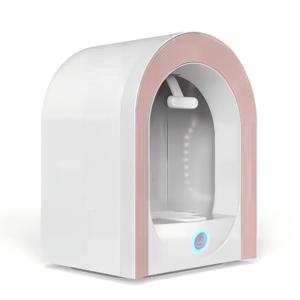
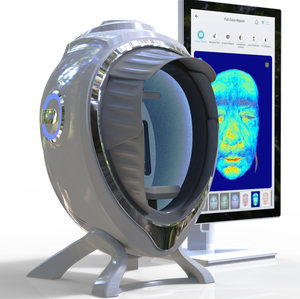
High-precision facial scanners and 3D skin pore diagnostic hardware manufactured by leading global OEM/ODM factories for medical aesthetic practices.
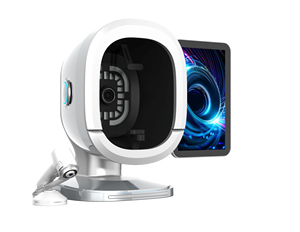
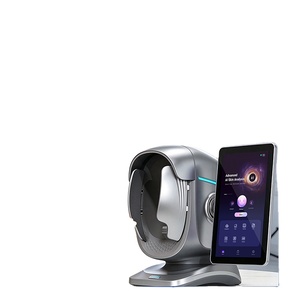


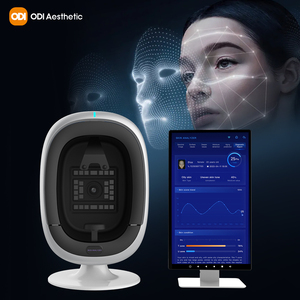
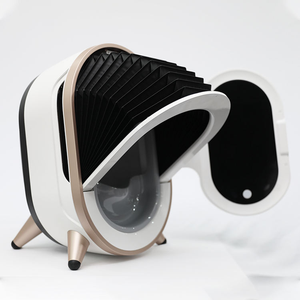
1. The Physics and Optical Architecture of Micro-Pore Diagnostics
In modern cosmetic dermatology and aesthetic medicine, evaluating skin pore architecture extends far beyond superficial visual observation. A professional skin pore diagnostic system serves as an indispensable tool that quantifies follicular aperture, sebaceous gland activity, structural elasticity loss, and sub-surface impaction. Global exporters and specialized factories have integrated sophisticated optical modalities to elevate diagnostic precision from subjective estimation to empirical science.
To accurately capture pore metrics—such as pore volume, perimeter irregularity, and clogging severity—advanced diagnostic hardware relies on multi-spectral light engine arrays. By switching rapidly between standard RGB white light, cross-polarized light, parallel-polarized light, and specific UV fluorescence wavelengths (typically 365nm to 405nm), these devices expose skin characteristics invisible under ambient room lighting.
Key Optical Modalities in Factory-Grade Diagnostic Hardware
Provides calibrated daylight exposure to measure epidermal skin texture, visible pore counts, and macroscopic follicular enlargement.
Suppresses specular glare from surface lipids, revealing dermal vascularity, erythema around inflamed pores, and deep structural pore boundaries.
Excites bacterial porphyrins in clogged pores, rendering active acne risks visible as bright pink or orange fluorescent dots for early intervention.
2. Global Benchmark: Top 10 Skin Pore Diagnostic System Factories & Exporters Evaluation Criteria
When B2B procurement managers, medical aesthetic chain operators, and equipment distributors evaluate manufacturers of skin diagnostic devices, discriminating between low-tier consumer hardware and clinical OEM/ODM systems requires rigorous criteria. Below is the technical evaluation framework established by leading global exporting factories.
| Evaluation Parameter | Standard Commercial Grade | Tier-1 Factory / Clinical Exporter Standard | Diagnostic Clinical Value |
|---|---|---|---|
| CMOS Sensor Resolution | 12MP - 16MP Standard RGB | 36MP - 50MP Industrial Grade Optical Sensor | Detects micro-pores down to 10 microns in diameter |
| Illumination Uniformity | Standard Peripheral LED Ring | Diffused Multi-Angle Shadowless Optical Dome | Eliminates facial shadows for consistent baseline comparison |
| Spectral Range | 3 - 4 Basic Lighting Filters | 8 - 10 Advanced Multispectral Bands | Differentiates hyperpigmentation, vascular, and pore depth |
| AI Neural Model Training | Generic Rule-Based Algorithms | Deep Convolutional Neural Networks (CNN) on 10M+ Datasets | Provides objective age-matched pore density benchmarking |
| Regulatory & Quality Assurance | Basic CE Mark | ISO13485, FDA Cleared, RoHS, Medical CE Compliance | Ensures smooth customs clearance and global medical compliance |
Distributors and medical Spa networks sourcing from top exporters must verify that factory partners provide robust Software Development Kits (SDKs), cloud database integration capabilities, and strict optical calibration processes to prevent measurement drift over years of clinical operation.
3. Future Procurement Trends in Skin Diagnostic Systems (2025–2030)
The global market for professional facial diagnostic systems is experiencing a paradigm shift driven by artificial intelligence, cloud computing, and non-invasive diagnostic demand. Procurement trends highlight several key technological shifts that B2B buyers must anticipate over the next five years:
Edge AI & On-Device Neural Processing
Next-generation pore analyzers feature dedicated Neural Processing Units (NPUs) directly embedded into the diagnostic unit. This allows instant 3D pore depth calculation and acne risk mapping in under 3 seconds without relying on slow internet bandwidth.
3D Surface Topography & Volumetric Pore Assessment
Traditional skin detectors only provided 2D pore counting. Modern factories are engineering 3D structured-light stereoscopic reconstruction, enabling aesthetic doctors to measure exact pore volume reduction before and after laser resurfacing or microneedling treatments.
Multi-Clinic Cloud Tele-Dermatology Sync
Large aesthetic clinic chains now demand centralized patient data management systems (such as Sylton Connect architecture). Procurement specifications now heavily prioritize cloud-synchronized software that allows practitioners to access diagnostic patient records across multiple branch locations seamlessly.
Furthermore, private-label branding and custom SDK integrations are now baseline expectations for global OEM procurement. Top exporters are offering modular diagnostic platforms where software interfaces, client reporting PDFs, and hardware colorways can be custom branded for major skincare conglomerates and aesthetic clinic franchises.
4. Enterprise Manufacturing Strengths & Factory Direct Advantages
Partnering with a leading OEM/ODM factory for skin pore diagnostic systems provides B2B clients with substantial competitive, technical, and commercial advantages. Industry-leading exporters maintain world-class manufacturing infrastructures designed to support scale, precision, and longevity.
Class 10,000 Optical Cleanroom Assembly
Dust contamination on camera sensors or internal reflectors ruins diagnostic precision. Leading factories assemble optical light engines within ISO Class 7/Class 10,000 cleanroom environments, ensuring zero optical defects.
Spectral Calibration & Spectrometer Testing
Every manufactured unit undergoes individual spectral intensity calibration using high-precision reference target plates. This guarantees that diagnostic results are 100% reproducible across different machines and over extended usage periods.
Full Custom OEM/ODM Capabilities
From industrial exterior shell design to custom UI software engineering, factory direct partnerships allow distributors to build unique skin diagnostic lines tailored to their regional market compliance and target pricing.
5. Frequently Asked Questions (FAQ) for Global Importers & Clinical Buyers
Partner with Top-Tier Skin Pore Diagnostic System Factories
Looking for wholesale OEM/ODM manufacturing, direct factory pricing, or clinical customization for skin analysis hardware? Contact our global export team today.