Clinical Diagnostics & Sourcing Guide 2025–2026

Top China Medical Grade Skin Analyzer Factories & Manufacturing Hubs

Recommended Medical-Grade Skin Analyzers

Explore top-tier multispectral diagnostic devices manufactured by leading Chinese OEM/ODM facilities. Engineered for dermatologists, aesthetic clinics, and high-end medspas.

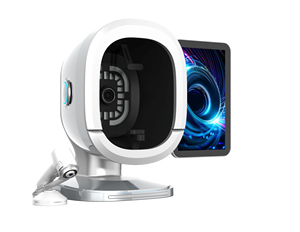
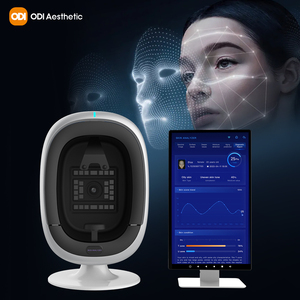
Portable 2025 Smart 3D Skin Analyzer Machine
Portable 2025 Smart 3D Skin Analyzer Machine Logo AI Face Diagnostics Scanner
Contact Us
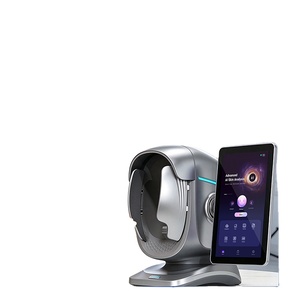
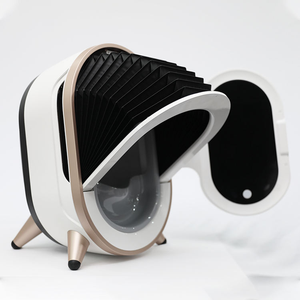
AI Skin Analyzer 7-Inch Touchscreen
AI Skin Analyzer 7-Inch Touchscreen Facial Scanner 36MP Camera Pigmentation Tester
Contact Us
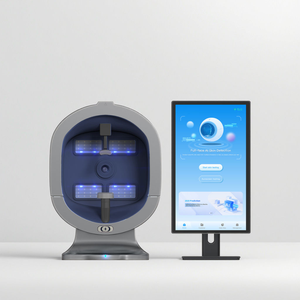
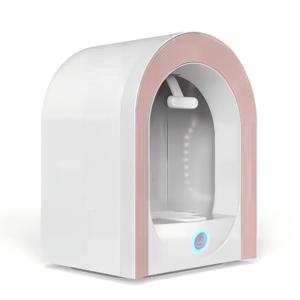
X5 Pro Skin Analyzer
X5 Pro Skin Analyzer for Beauty Salon Moisture Wrinkles 8 Spectrum Device
Contact Us
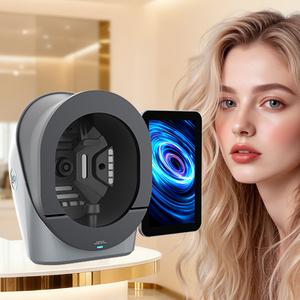
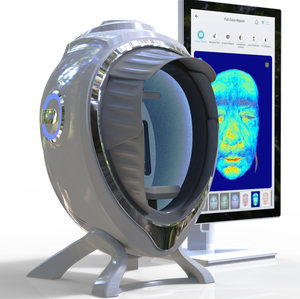
2025 Skin Analyzer Facial Scanning
2025 New Arrivals Skin Analyzer Facial Scanning Beauty Device for Acne Analysis
Contact Us
2025 Digital Skin Analysis 3D Face
2025 Digital Skin Analysis 3D Face Pigmentation Skin Tester Analyzer Machine
Contact Us
3D Smart Magic Mirror Skin Analyzer
Beauty Salon Equipment Supplies Acne Moisture 3D Smart Magic Mirror Skin Analyzer
Contact Us
Professional AI Facial Skin Analyzer
Professional AI Facial Skin Analyzer 3D Digital Melasma Spectrum Analyzer
Contact Us
Wholesale Full Face Skin Analyzer Machine
Wholesale Full Face Skin Analyzer Machine for Freckles & Deep Pigmentation
Contact Us
36 MP
Optical Resolution
10+
Spectral Illumination Modes
< 15 sec
Full AI Scan Speed
99.4%
Diagnostic Precision Rate
Industry Sourcing Report & Whitepaper

1. Executive Summary: The Evolution of Medical-Grade Facial Diagnostics

In modern clinical dermatology and aesthetic medicine, accurate diagnostic visualization has moved from an auxiliary tool to the cornerstone of treatment planning. As patients demand objective proof of efficacy and hyper-personalized cosmetic regimens, medical-grade skin analyzer devices have undergone an extraordinary technological revolution. Central to this global supply evolution are China’s premier medical-grade skin analyzer factories, which now produce over 70% of the world’s multispectral optical diagnostic hardware.

Advanced facial diagnostic platforms—such as the benchmark systems engineered under rigorous OEM/ODM partnerships—combine high-definition optical sensors, multispectral lighting arrays (including cross-polarized, parallel-polarized, UV fluorescence, and true daylight), and deep-learning artificial intelligence algorithms. This synergistic integration enables clinical practitioners to detect micro-structural epidermal and dermal abnormalities invisible to the naked human eye, ranging from sub-surface vascular inflammation and latent melasma to deep-seated porphyrin accumulations and early photo-aging patterns.

Multispectral Illumination

Deconstructs skin into 10 distinct layer visualizations using cross-polarized, parallel, UV, and Wood's light spectrums.

3D Quantitative Mapping

Volumetric contouring measures wrinkle depth, pore volume, and structural sagging with sub-millimeter precision.

AI Deep Learning Engine

Trained on millions of clinical dermatological datasets to deliver instantaneous risk scores and age predictions.

2. Technical Architecture & Engineering Standards of China Factories

Leading Chinese skin analyzer manufacturers have transitioned from low-cost assembly lines to state-of-the-art research and manufacturing ecosystems. Certified under ISO 13485 (Medical Devices Quality Management Systems) and operating ISO Class 7 dust-free cleanrooms, these factories construct diagnostic equipment built to withstand continuous clinical deployment.

Core Component Breakdown:

  • Optical Sensor Assemblies: Utilizing industrial-grade 36-Megapixel CMOS sensors with custom anti-glare bandpass filters, achieving spatial resolution down to 10 microns per pixel.
  • LED Light Engine Standardization: Incorporating high-CRI (Color Rendering Index > 97) solid-state LEDs calibrated for narrow-band spectral emission. This prevents color temperature drift across operational cycles, ensuring reproducible longitudinal patient monitoring.
  • Facial Positioning Hoods & Ergonomics: Medical-grade anti-bacterial ABS housing featuring standardized chin rests and forehead stabilizers to eliminate parallax errors and motion artifacts during capture.
  • Embedded Edge Processing: High-performance GPUs mounted directly on the internal chassis process 3D point-cloud data locally within seconds, safeguarding patient privacy while ensuring smooth, lag-free UI responsiveness.

3. Comparative Matrix: OEM/ODM Skin Diagnostics Specifications

When selecting a factory supplier from China, B2B procurement managers and clinic directors must evaluate core hardware metrics to match their practice’s specific scope of service. Below is a clinical-grade comparison matrix highlighting key specifications across mainstream manufacturing tiers.

Diagnostic Tier Camera Resolution Spectral Lighting Modes Primary Clinical Applications Target Sourcing Sector
Flagship Medical 3D (e.g., Observ/520x Class) 36 MP – 48 MP Optical CMOS 10+ Modes (Cross-Pol, Parallel, UV, Wood's, Daylight) Sub-surface vascularity, deep pigmentation, structural volume, aging vector analysis Dermatology Clinics, Plastic Surgery Centers, Clinical Research
Advanced Salon & MedSpa (e.g., X5 Pro Series) 24 MP – 36 MP High Precision 8 Spectral Modes Acne vulgaris mapping, sebum/porphyrins, pore volume, superficial pigmentation MedSpas, Aesthetic Chains, Skincare Brand Counters
Smart Touch Desktop (7-10 Inch Systems) 16 MP – 24 MP Integrated 5–6 Standard Modes Hydration indexing, epidermal skin aging, rapid patient intake assessment Cosmetic Clinics, Mobile Estheticians, Retail Consultation

4. Key Sourcing & Procurement Trends (2025–2030)

The global demand for non-invasive skin diagnostic systems is accelerating rapidly. B2B purchasers must align their procurement strategies with four key industry vectors shaping the next decade of clinical diagnostics:

Trend 1: AI-Powered Predictive Skin Aging Models

Modern buyers are moving beyond static image capture. Sourcing requests now demand algorithmic software capable of modeling predictive skin aging trajectories over 3 to 5 years. By simulating potential sun damage progression or demonstrating the preventative benefits of laser therapies and botulinum toxin treatments, these software suites drastically increase patient conversion rates for recommended treatments.

Trend 2: Cloud Ecosystems & Tele-Dermatology Integration

Mirroring high-end European platforms like Sylton Connect, top Chinese factories are equipping their hardware with secure HIPAA- and GDPR-compliant cloud management platforms. Practitioners can seamlessly sync diagnostic images across multi-location clinic chains, access patient records on tablets during consultations, and offer secure remote tele-dermatology reviews.

Trend 3: Expansion to Non-Facial Diagnostic Modules

Recognizing that photo-damage and chronological aging extend beyond the face, advanced factories are manufacturing modular expansion hardware. Procurement leads are actively investing in extension kits specifically designed for analyzing delicate skin on the hands, neck, and décolleté.

5. Corporate Engineering Strengths & Manufacturing Rigor

Why do tier-1 global skincare brands and distributor networks partner with leading Chinese manufacturing plants? The competitive advantage relies on a robust combination of extensive R&D expertise, scalable supply chain integration, and rigorous quality verification protocols.

  • End-to-End Optical Engineering: In-house lens design and spectral sensor calibration eliminate reliance on third-party optical assemblies, ensuring strict batch-to-batch consistency.
  • Comprehensive OEM/ODM Customization: Factories provide complete white-label customization—ranging from custom industrial chassis design and custom-colored LED rings to tailored software UI/UX, brand logos, and localized multi-language database systems.
  • Rigorously Tested Reliability: Hardware undergoes extreme environment testing, including 10,000-hour continuous LED endurance cycles, thermal dissipation stress tests, and vibration drop testing to guarantee zero damage during international freight transportation.
  • Global Regulatory Compliance: Top facilities maintain comprehensive documentation packages, enabling international clients to easily obtain CE, FDA 510(k) clearance, RoHS, and FCC compliance certificates for seamless global distribution.

Procurement FAQ & Sourcing Guide

Answers to common questions regarding OEM customization, medical certifications, export logistics, and software licensing for B2B buyers.

Q1: What is the minimum order quantity (MOQ) for custom OEM skin analyzer orders?
Standard unbranded or factory-branded diagnostic units usually have an MOQ of 1 unit for sample evaluation. For custom logo silk-screening, custom packaging, and customized software boot screens, the typical OEM MOQ ranges from 10 to 50 units depending on the complexity of industrial modifications.
Q2: How do Chinese medical-grade skin analyzers compare with European platforms like Observ?
Top-tier Chinese factories utilize identical optical diagnostic principles—including multi-spectral polarized filters, UV fluorescence, and high-CRI LED arrays. By leveraging integrated local optical supply chains in Shenzhen and Guangzhou, Chinese manufacturers offer comparable or superior camera resolutions (up to 36-48MP) and integrated AI software at 30% to 50% lower capital expenditure costs.
Q3: Are software updates included, and are there recurring monthly SaaS fees?
Most direct factory partnerships offer lifetime free updates for the core diagnostic OS and AI scoring engine. Cloud-based multi-device synchronization or tele-dermatology management platforms may offer optional subscription tiers, but standard standalone clinical functionality operates without required recurring fees.
Q4: How is patient data protected, and are the systems GDPR/HIPAA compliant?
Leading manufacturing platforms support local offline database storage directly on the device or client tablet, eliminating unauthorized cloud transmission. For clients utilizing cloud features, systems employ AES-256 bit end-to-end encryption protocols in full compliance with international GDPR and HIPAA data privacy regulations.
Q5: What warranty and after-sales support protocols are provided to international distributors?
Factory partnerships typically include a 2- to 5-year comprehensive hardware warranty. Facilities supply spare parts modules (such as modular light engines, power supplies, and control boards) along with 24/7 technical video support to ensure minimal clinical downtime for end-users worldwide.

Partner Directly with China's Premier Diagnostic Factories

Elevate your medical aesthetic brand, launch your own custom OEM skin analysis platform, or source clinical-grade diagnostic hardware at direct factory wholesale rates.

Contact Us