Flagship Non-Invasive Skin Diagnostic Systems
Explore China's top-rated multi-spectral diagnostic analyzers engineered for aesthetic clinics, cosmetic dermatologists, and medical spa networks. Featuring high-precision optics, AI algorithms, and full white-label manufacturing support.
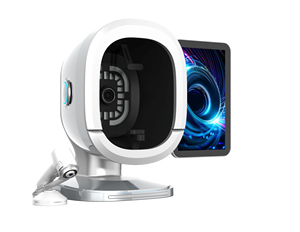
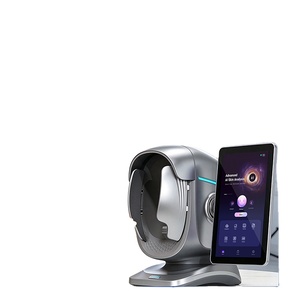
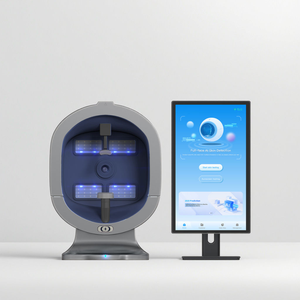
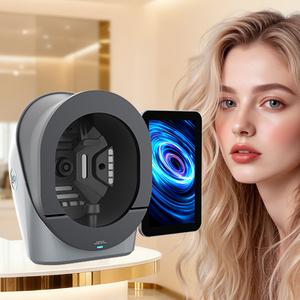
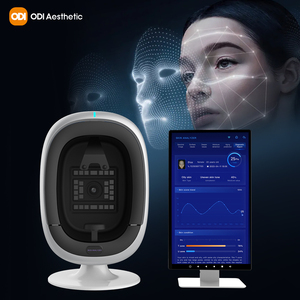
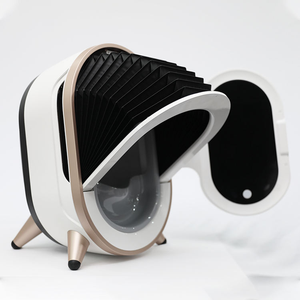
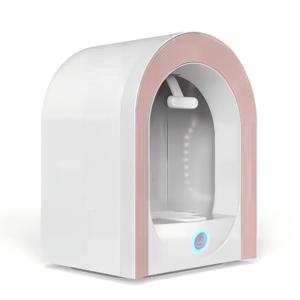
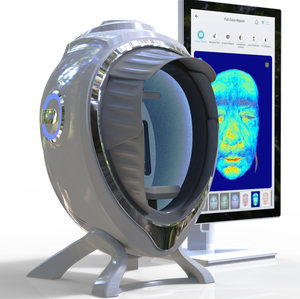
The Evolution of Non-Invasive Skin Diagnostic Technology
Non-invasive skin diagnostic equipment represents the critical bridge between subjective aesthetic consultations and objective dermatological science. Historically, skin assessments relied on qualitative visual inspection under standard room lighting or simple magnifying lamps. This traditional approach frequently failed to uncover early-stage sub-surface pathologies such as deep epidermal melasma, nascent vascular telangiectasia, porphyrin accumulation within sebaceous glands, and structural collagen degradation in the reticular dermis.
As global demand for evidence-based aesthetic medicine accelerates, leading Chinese manufacturers have revolutionized the diagnostic industry by integrating advanced optical physics, high-speed multi-spectral lighting matrices, and deep convolutional neural networks (CNNs). Modern 3D facial scanning devices provide dermatologists, plastic surgeons, and medical aestheticians with quantifiable, repeatable metrics that capture the skin in every facet.
Information Gain Insight: Modern multispectral imaging does not merely take high-resolution photos; it measures photon absorption and scatter across distinct light wavelengths. By isolating cross-polarized light from parallel-polarized reflections, diagnostic devices map epidermal texture independently of deep dermal chromophores like hemoglobin and melanin.
RGB Daylight Spectrum
Standardized daylight illumination calibrated to 5600K color temperature. Evaluates surface pore distribution, macro-wrinkles, fine lines, rough skin texture, and visible superficial blemishes under uniform luminosity.
Cross-Polarized Lighting
Eliminates specular glare reflected from the stratum corneum. Penetrates into the upper epidermal layers to reveal suppressed dyschromia, vascular congestion, rosacea, and subtle hyperpigmentation.
UV & Wood's Light (365nm)
Excites natural fluorophores within the skin. Triggers orange-red fluorescence from Propionibacterium acnes porphyrins, reveals concealed UV damage, and measures sub-clinical sunspots.
Future Procurement & Buying Trends for Medical Aesthetic Equipment
Strategic purchasing managers, clinic chain directors, and global distributors sourcing hardware from China must navigate a rapidly evolving technological landscape. Sourcing decision-makers are shifting away from standalone hardware units toward fully integrated diagnostic ecosystems. Below are the key industry trends defining procurement specifications through 2030:
1. AI-Powered Predictive Aging Models
Procurement mandates now prioritize systems equipped with deep learning algorithms trained on multi-ethnic clinical datasets. These AI engines project skin degradation over 3–5 year horizons and simulate post-treatment outcomes, significantly boosting patient conversion rates during consultations.
2. Cloud-Connected Multi-Clinic SaaS
Modern medical spas require central management of diagnostic data across multiple locations. Leading Chinese manufacturers are embedding HIPAA and GDPR compliant cloud infrastructure (such as Sylton Connect frameworks) that synchronizes patient files across iOS, Windows, and web interfaces.
3. 3D Morphometric Volumetric Analysis
Planar 2D imaging is rapidly being superseded by 3D optical surface profiling. 3D skin analyzers quantify facial volume loss, contour sagging, and vector changes, providing mandatory visual proof for dermal filler and thread-lift evaluations.
4. Seamless Treatment Software Integration
Buyers seek diagnostic hardware that directly interfaces with laser platforms, RF microneedling systems, and medical skincare lines. Automatic generation of customized product and procedure recommendations eliminates practitioner bias and standardizes clinic protocols.
Market Development Trends & Technical Specifications Comparison
When selecting non-invasive skin diagnostic machinery from Chinese OEM/ODM suppliers, understanding the exact technological tier is paramount. The table below outlines the core hardware and software differentiators between entry-level salon equipment and clinical-grade diagnostic platforms.
Why Partner with Leading Chinese Manufacturers
China's manufacturing ecosystem for medical aesthetics has undergone a profound transformation. By combining world-class optical engineering, rigorous ISO 13485 quality management systems, and competitive scale, premier manufacturers deliver unparalleled value to global distributors and OEM brand partners.
E-E-A-T Validated Engineering
Our manufacturing protocols draw upon peer-reviewed clinical research and collaboration with dermatological institutes. Optical sensors undergo rigorous radiometric calibration to ensure absolute consistency across baseline and post-treatment images.
Comprehensive OEM / ODM Customization
From custom industrial design, housing mold development, and optical spectrum tailoring to proprietary AI software branding, UI localization, and cloud architecture deployment, our OEM teams provide end-to-end solutions.
Stringent Quality Assurance
Every unit undergoes 72-hour continuous burn-in testing, light leak testing, spectral accuracy validation, and mechanical stress analysis before leaving the factory. Certified compliant with CE Medical, RoHS, and FDA registration standards.
Frequently Asked Questions (FAQ) for Equipment Procurement
Essential technical and commercial insights for B2B buyers, distributors, and clinic owners.
Q: What is the difference between 2D and 3D non-invasive skin diagnostic equipment?
2D skin analyzers capture flat planar images that measure color-based chromophores (pigmentation, redness, acne porphyrins). 3D diagnostic systems utilize structured light or multi-angle stereoscopic vision to generate volumetric topography, enabling precise measurement of wrinkle depth, pore volume, texture roughness, and facial contour changes.
Q: How does cross-polarized light reveal sub-surface skin conditions?
When light strikes the skin surface, a portion reflects off the stratum corneum, creating glare. Parallel polarization captures surface texture. Cross-polarized filters block specular surface reflection, allowing only photons that have scattered within the deeper skin layers to enter the lens. This exposes hidden vascular networks, erythema, and sub-epidermal melanin.
Q: What custom OEM branding options are available for distributors?
We offer turnkey OEM and ODM services including custom exterior paint colors, laser-engraved brand logos, custom booting screen animations, fully branded software interfaces, localized language translation (20+ languages), and custom-printed shipping packaging.
Q: How do you ensure optical calibration across multiple clinic branches?
Our clinical-grade analyzers feature automated internal ambient light compensation and constant-current LED illumination drivers. This guarantees that illumination intensity and color temperature remain stable over tens of thousands of cycles, enabling precise image comparison across different locations.
Q: Are your skin diagnostic devices compliant with global data privacy laws?
Yes. Diagnostic software platforms can be configured to comply with HIPAA (USA) and GDPR (Europe). Patient files, high-resolution images, and analysis records are encrypted using AES-256 standards, with role-based access control for clinic personnel.
Q: What warranty and technical support services are provided?
We offer up to 5-year hardware warranties on key components (including camera modules and optical filters), lifetime software updates, remote diagnostic support, and comprehensive online video training modules for staff certification.
Accelerate Your Aesthetic Practice & OEM Sourcing Today
Partner with China's leading non-invasive skin diagnostic equipment manufacturer. Request factory-direct pricing, detailed technical specifications, or schedule an online live demo with our optical engineering team.
Send an Inquiry