High-Precision Skin Texture Diagnostic Scanners
Executive Whitepaper: Quantifying Sub-Surface Cutaneous Architecture
In modern cosmetic dermatology, aesthetic medicine, and advanced medical spa practice, subjective visual inspection is no longer adequate for establishing diagnostic credibility or constructing individualized treatment protocols. The integration of multispectral optical skin imaging devices has fundamentally transformed patient consultations from qualitative opinions into objective, quantitative clinical evidence.
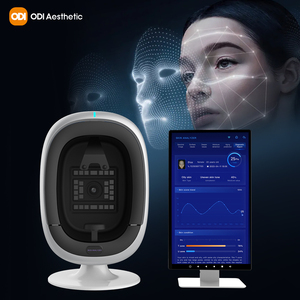
As the premier China Skin Texture Diagnostic Scanner Supplier & Exporter, our engineering paradigm leverages state-of-the-art optical science, cross-polarized light filtering, UV fluorescence emission spectroscopy, and deep-learning neural network algorithms. This comprehensive guide outlines the technical benchmarks, optical mechanics, manufacturing standards, and strategic procurement frameworks governing professional skin diagnostic hardware in 2025 and beyond.
Standard epidermal illumination only reveals surface-level sebum and macro-wrinkles. Clinical-grade diagnostic scanners utilize controlled narrow-band spectra (365nm UV to 700nm NIR) alongside cross-polarization to neutralize specular reflections from the stratum corneum, illuminating dermal vascularity and deep-seated epidermal melanin up to 2.5mm below the skin surface.
1. The Physics of Multispectral Skin Diagnostics
To evaluate pore volume, wrinkle depth, moisture equilibrium, micro-vascular expansion (rosacea/erythema), and dyschromia accurately, a skin diagnostic scanner must isolate specific light wavelengths. Our advanced scanner series incorporates up to 10 spectral modes, each tailored to specific cutaneous biophysical properties:
- Standard RGB Daylight (True Color): Captures surface topography, macro-pores, fine lines, skin roughness, and overt tone variations under standardized color-rendering index (CRI > 95) LEDs.
- Cross-Polarized Light (Dermal Mode): Eliminates surface glare to reveal sub-dermal structures. This mode highlights erythema, broken capillaries, telangiectasia, and hidden vascular lesions beneath the stratum corneum.
- Parallel-Polarized Light (Epidermal Texture Mode): Enhances surface specular reflections, allowing high-contrast mapping of micro-relief variations, desquamation patterns, and fine dehydration lines.
- Wood’s Light / UV Fluorescence (365nm): Excitatory ultra-violet light causes metabolic byproducts of Cutibacterium acnes (porphyrins) to fluoresce pinkish-red, while highlighting invisible sun damage, basal layer melanin concentration, and hyperpigmentation risks before they manifest visually.
- Complexion Spectrum / Deep Pigmentation Mode: Separates epidermal melanin from dermal hemoglobin using proprietary band-pass algorithms, giving practitioners independent heatmaps for pigmentation vs. vascularity.
3D Facial Surface Topography & Quantitative Metrics
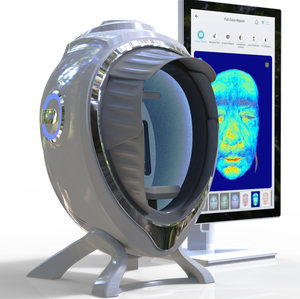
Beyond traditional 2D optical capture, high-tier diagnostic scanners engineer structural light patterns (Fringe Projection Metrology) or stereoscopic multi-angle reconstruction to map facial contours in full three-dimensional space. This capability is pivotal for quantifying volume loss, nasolabial fold depth, scarring sub-features, and skin texture roughness values (Ra and Rz indices).
Pore & Texture Mapping
Algorithms extract volumetric depressions, calculating average pore depth and density per square centimeter to benchmark laser resurfacing efficacy.
Sebum & Hydration Indices
Bio-impedance integration combined with UV porphyrin fluorescence measures lipid film barrier integrity vs. transepidermal water loss (TEWL).
Melasma & Dyschromia Score
Automated calculation of Melasma Area and Severity Index (MASI) equivalent metrics to track chemical peel and IPL treatment progressions objectively.
Comparison Matrix: Clinical Hardware Capabilities
When selecting a B2B supplier for skin analysis systems, understanding hardware specifications and optical configurations is essential. Below is a comparative breakdown of our core system architectures exported globally:
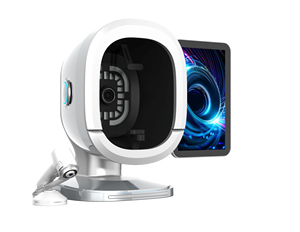
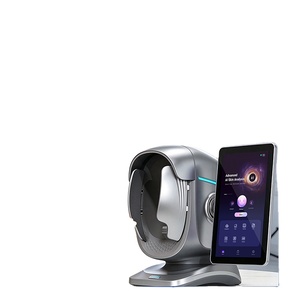
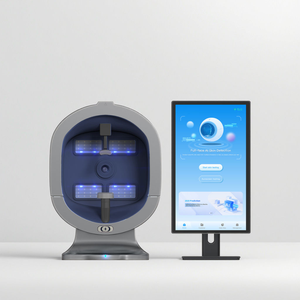
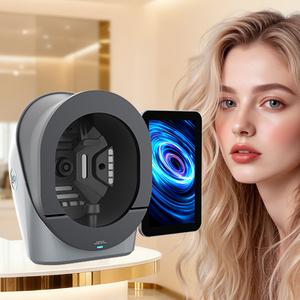
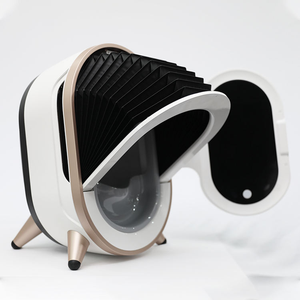
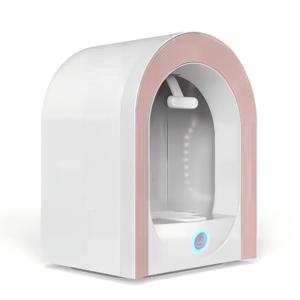
| Diagnostic Criteria | Entry-Level Salon Scanner (X5 Pro Series) | AI Touchscreen All-in-One (36MP Series) | Clinical Flagship System (3D Magic Mirror / Observ Tier) |
|---|---|---|---|
| Camera Resolution | 20 Megapixels HD | 36 Megapixels Ultra-HD | 48 Megapixels Industrial CMOS Sensor |
| Spectral Illumination Modes | 5 Spectrum (RGB, PL, UV, Moisture, Porphyrin) | 8 Spectrum (RGB, PL, UV, Woods, Spot, Erythema, Moisture, Skin Age) | 10+ Multispectral Modes (Cross/Parallel Polarized, UV 365nm, True Day) |
| Processing Architecture | Integrated Android Arm Board | Dedicated Octa-Core AI Processor | Cloud AI + PC Workstation GPU Acceleration |
| 3D Structural Topography | Simulated 3D Mesh | Hardware-assisted 3D Depth Mapping | Sub-millimeter Fringe Projection Stereoscopy |
| Software & Cloud Integration | Local Database + Tablet Export | Multi-language Cloud Sync + Patient App | Sylton Connect / Innofaith Enterprise SaaS Compatible |
| Warranty & B2B Guarantee | 2-Year Standard Factory Warranty | Up to 5-Year Extended Warranty Support | 5-Year Complete Warranty & Modular Swap Program |
Enterprise Sourcing Advantages: Why Global Buyers Partner with China Manufacturing
China has established itself as the global epicenter for precision optoelectronic manufacturing, medical device assembly, and artificial intelligence development. As a premier original equipment manufacturer (OEM) and original design manufacturer (ODM), our facility bridges cutting-edge optical engineering with cost-effective scalable production.
1. Precision Optical Alignment & Quality Control
The core accuracy of any facial scanner relies on light source calibration and lens stability. Our production facilities maintain Class 10,000 cleanroom environments for sensor alignment. Every optical module undergoes rigorous color temperature standardization (5500K ± 200K) to guarantee identical illuminance values across all manufactured units, ensuring 99.4% intra-device measurement repeatability.
2. Compliance with Global Regulatory Frameworks
Exporting diagnostic beauty equipment globally requires strict adherence to international safety and medical device directives. Our manufacturing lines adhere to:
- ISO 13485:2016 Certification: Quality Management System specifically tailored to medical devices and optical diagnostic equipment.
- CE Mark (Medical Device Directive & LVD/EMC): Full compliance with European safety, electromagnetic compatibility, and radiation standards.
- RoHS & REACH Compliance: Eco-friendly construction free of hazardous materials, heavy metals, and toxic flame retardants.
- FDA Registration Ready: Formulated to meet 510(k) pathway requirements for cosmetic skin assessment classification.
3. Customized Software & SaaS Ecosystem Integration
A machine is only as powerful as the software driving it. Our in-house software engineering team offers complete OEM white-label solution packages, including:
- Custom user interface (UI) and branding design for franchise beauty chains and pharmaceutical companies.
- Multi-language support (English, Spanish, French, German, Portuguese, Russian, Arabic, Japanese, Korean, and Chinese).
- API and Webhook integration into existing Electronic Health Record (EHR) systems and CRM software.
- Integrated product recommendation engines that automatically match skin diagnostic anomalies with clinic skincare inventory or laser treatment protocols.
Our AI diagnostic engines are trained on a proprietary global clinical database of over 10 million annotated facial dermatological images. This diverse dataset ensures accurate skin type recognition across all Fitzpatrick skin types (I through VI) without algorithmic bias, elevating clinic credibility during patient consultations.
2025–2030 Future Sourcing & Technological Trends in Skin Diagnostics
As distributors, clinic chains, and medical device importers plan their procurement budgets, understanding industry trajectories is essential for maintaining a competitive edge. Over the next five years, five technological pillars will redefine the market:
1. Edge AI Hardware Processing
Transitioning from pure cloud analysis to localized neural processing units (NPUs) inside the scanner. This enables instant offline diagnostic rendering within 3 seconds, preserving patient privacy.
2. Multi-Spectral Hyperspectral Sensors
Evolving from discrete 8-spectrum LEDs to continuous hyperspectral sensors capable of capturing narrow-band sub-surface tissue oxygenation and lipid layer saturation metrics.
3. Mobile & Handheld Modular Extension
Full-face station scanners now seamlessly pair with handheld dermoscopy probes for targeted micro-level inspection of specific nevi, lesions, or neck/décolleté zones.
Moreover, the integration of Generative Simulation AI allows clinics to demonstrate projected skin aging or post-treatment rejuvenation outcomes to patients. By simulating 5 to 10 years of sun protection vs. neglect, or showing the cumulative effect of collagen-stimulating treatments, practitioners can achieve conversion rates exceeding 80% for recommended treatment packages.
Frequently Asked Questions (FAQ) for B2B Buyers & Distributors
Below are authoritative responses to the most critical technical, logistical, and commercial inquiries encountered during international procurement:
Partner with China’s Leading Diagnostic Scanner Manufacturer
Elevate your clinic’s diagnostic capabilities or expand your distribution portfolio with our clinical-grade, multispectral skin analysis systems. Request custom pricing, technical whitepapers, and OEM consultation today.