Flagship Automated Skin Condition Scanners & Diagnostic Systems
As a pioneer in medical-grade optical imaging technology and automated facial diagnostics, our manufacturing infrastructure delivers precision-calibrated hardware paired with advanced AI deep-learning algorithms. Below is our curated portfolio of automated skin condition scanners engineered for aesthetic clinics, dermatology centers, and global B2B distributors.
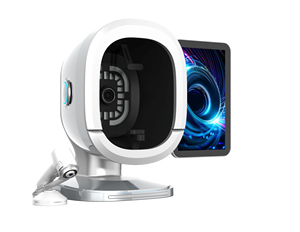
Portable 2025 Smart 3D Skin Analyzer Machine AI Face Skin Diagnostics Analyzer
Contact Us
AI Skin Analyzer 7-Inch Touchscreen Facial Scanner 36MP Camera System
Contact Us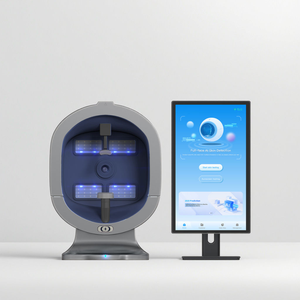
X5 Pro Skin Analyzer 8 Spectrum Detector for Moisture Wrinkles & Acne
Contact Us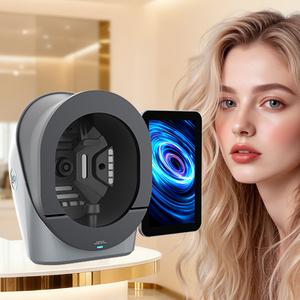
2025 Next-Gen Facial Scanning Skin Analysis Device for Deep Pigmentation
Contact Us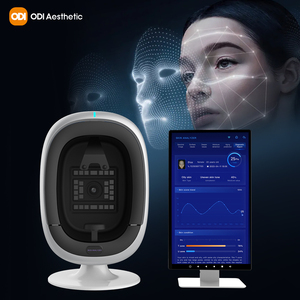
2025 Digital 3D Face Pigmentation Skin Tester & Diagnostic Machine
Contact Us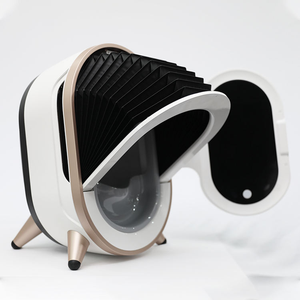
3D Smart Magic Mirror Skin Analyzer System for Clinical & Salon Use
Contact Us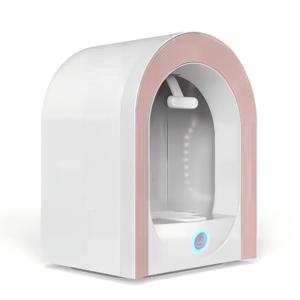
Professional AI Facial Skin Detector & Melasma Spectrum Analyzer
Contact Us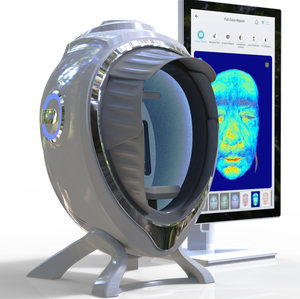
Wholesale Full Face Automated Skin Analyzer for Freckles & Sub-Surface Melanin
Contact UsIndustry Whitepaper: The Evolution of Automated Skin Condition Diagnostics
In modern cosmetic dermatology, medical aesthetics, and high-end professional skincare, visual consultation is undergoing a paradigm shift. Traditional tactile examination and standard RGB photography are no longer sufficient to justify complex therapeutic regimens or costly laser procedures. Today’s discerning patients demand objective, quantitative, and reproducible visual proof. As a premier OEM/ODM manufacturer and direct factory supplier of automated skin condition scanners, our organization bridges the gap between complex optical physics and seamless clinical workflows.
Inspired by pioneering multi-spectral imaging frameworks—such as the renowned Observ technologies by Sylton—our diagnostic scanners utilize targeted light spectrums (including RGB daylight, cross-polarization, parallel-polarization, and 365nm UV Wood's light fluorescence) to map skin conditions across both superficial epidermal layers and deeper dermal structures. By translating invisible cellular physiological changes into clear visual evidence, our systems empower practitioners worldwide to build unshakeable patient trust, elevate treatment compliance, and maximize return on investment (ROI).
Multispectral Illumination
Utilizes up to 10 distinct spectral illumination modes. From cross-polarized light isolating vascular structures to 365nm UV light revealing sub-surface porphyria and dormant melanin deposits.
Sylton-Inspired SDK & Cloud
Seamlessly connect hardware with iPadOS/Windows/Android platforms. Integrated patient database, baseline comparison engines, and automated multi-language report generation.
ISO13485 Factory Standard
Strict medical equipment manufacturing quality control. High-precision optical lens assembly, dust-free cleanroom production, and rigorous spectral calibration protocols.
Deep Optical Physics: How Multi-Mode Scanning Reveals Hidden Pathologies
To understand the competitive edge provided by an automated skin condition scanner, enterprise buyers must analyze the interaction between coherent/incoherent light sources and human tissue optical properties. Light traveling through skin tissue undergoes multiple scattering and absorption phenomena depending on wavelength and polarization states.
1. Cross-Polarized vs. Parallel-Polarized Optics
Specular reflection from the skin’s stratum corneum often blinds standard RGB cameras. By employing cross-polarization filters oriented perpendicular to the LED light source vector, specular backscatter is completely eliminated. This allows light that has undergone deep dermal Rayleigh scattering to enter the camera sensor, revealing underlying erythema, telangiectasia, rosacea, and vascular inflammation.
Conversely, parallel-polarization aligns the emission and detection filter planes, deliberately enhancing surface reflection to highlight micro-relief textures, pore expansion, fine lines, structural wrinkles, and desquamation patterns.
2. 365nm Wood's Light & UV Fluorescence
Ultraviolet light at a targeted 365nm peak wavelength induces auto-fluorescence in biochemical skin compounds. Fluorophores such as Porphyrins (produced by Propionibacterium acnes) fluoresce as vibrant orange/red spots under controlled UV illumination.
Furthermore, epidermal melanin absorbs UV light strongly, causing pigmented lesions (such as freckles, lentigines, and post-inflammatory hyperpigmentation) to appear high-contrast dark brown or black, even when dormant underneath the basal layer and invisible under white light.
Optical Spectrum & Diagnostic Capability Matrix
| Illumination Mode | Optical Mechanism | Primary Clinical Target | Diagnostic Insight (Information Gain) |
|---|---|---|---|
| Daylight (RGB) | Broad-spectrum 400-700nm natural color rendering | Surface features, skin tone, obvious spots | Baseline aesthetic evaluation & real-life color reproduction |
| Cross-Polarized | Blocks surface specular glare via orthogonal polarizers | Sub-surface vascularity & dermal melanin | Detects early rosacea, micro-inflammation, and deep melasma |
| Parallel-Polarized | Enhances surface specular reflection | Epidermal texture, pores, fine lines | Quantifies micro-relief roughness and skin barrier smoothness |
| UV Fluorescence (365nm) | Excites fluorophores; deep absorption by melanin | Porphyrin (Acne), sebum distribution, dyschromia | Identifies hidden acne risk, clogged pores, and future sun damage |
| True Wood's Light | Filtered UV spectrum for specific dermatological check | Epidermal vs. Dermal pigmentation depth | Determines whether melasma is treatable via superficial peels or laser |
Future Procurement Trends in Automated Skin Diagnostics
As medical aesthetic chains, skincare franchises, and distributor networks plan their equipment procurement strategies for 2025 and beyond, several macro-technological trends are reshaping factory specifications and hardware selections:
1. AI Generative Aging & Treatment Simulation
Procurement mandates are shifting from passive imaging to predictive generative engines. Future scanners must simulate 3 to 5 years of aging, as well as post-treatment recovery outcomes for anti-wrinkle injections, RF microneedling, and picosecond lasers.
2. Beyond the Face: Multi-Zone Imaging
Leading aesthetic centers require modular extension kits for hands, neck, and décolleté examination. Equipment featuring ergonomic rotation, mobile stand compatibility, and wireless secondary probes commands higher market adoption.
3. Cloud Synchronization & Multi-Store Management
Enterprise medspas with multi-location operations demand centralized database architectures. Scanners must feature secure cloud connectivity (Sylton Connect style), enabling cross-clinic patient record retrieval and synchronized consultation analytics.
Key Industry & Factory Manufacturing Trends
3D Volumetric Topological Surface Mapping
Standard 2D surface imagery is quickly giving way to 3D facial mesh reconstruction. By projecting structured light patterns alongside multispectral flashes, advanced factory scanners generate a millimeter-precise 3D map of face contours. This allows aesthetic doctors to calculate volume loss in the midface, track dermal filler displacement, and visually measure pore depth and scar volume over time.
Convolutional Neural Networks (CNN) for Automated Grading
Next-generation diagnostic software utilizes CNNs trained on millions of clinically annotated dermatological images. The software automatically segments skin pathologies, scores severity levels relative to demographic baseline data (age, skin type, gender), and auto-suggests targeted clinical treatment programs without practitioner bias.
Why Partner With Our Factory: OEM/ODM Manufacturing Excellence
As an authoritative manufacturer specializing in automated skin condition scanners, our facility provides comprehensive OEM/ODM solutions tailored for global brands, medical device distributors, and chain aesthetic franchises. We combine industrial engineering precision with agile software development.
Custom Industrial Design
Tailored mold manufacturing, custom chassis colors, brand logo silk-screening, and custom packaging boxes.
Optical Calibration
Every camera unit undergoes rigorous spectral color calibration to ensure 100% color fidelity and optical uniformity.
SDK & Software Rebranding
White-label application UI, custom report headers, multi-language UI localization (20+ languages), and API access.
Global Warranty & Support
Dedicated technical response within 24 hours, long-term spare parts availability, and modular assembly for quick repairs.
Automated Skin Scanner Procurement FAQ
Answers to common questions asked by medical aesthetic distributors, salon equipment buyers, and dermatologists during the procurement process.
Request Factory Pricing & B2B Distribution Catalog
Partner with a top-trusted automated skin condition scanner manufacturer. Whether you require OEM custom engineering, sample evaluation, or direct wholesale pricing, our specialist engineering team is ready to assist.