Executive Whitepaper: The Evolution of Multispectral Diagnostic Imaging in Clinical Aesthetics
An authoritative analysis of user intent, AI deep-learning integration, optical engineering standards, and procurement strategies for smart facial skin analysis hardware.
1. The Clinical Imperative: Bridging Sub-Surface Diagnostics & Aesthetic Consultations
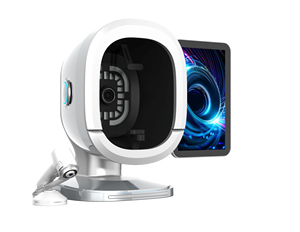
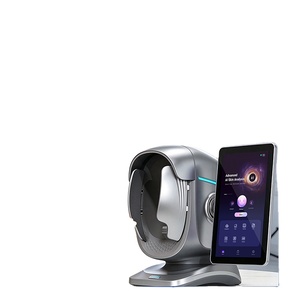
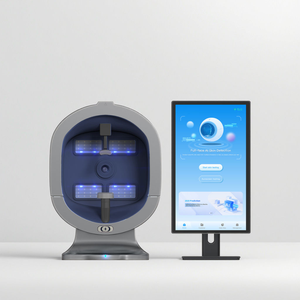
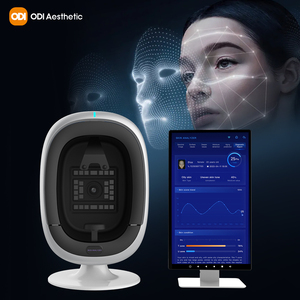
In modern cosmetic dermatology and aesthetic medicine, visual observation using the naked eye captures less than 30% of dermal and epidermal pathologies. Sub-surface dyschromia, nascent melasma, vascular congestion, porphyrin bacterial concentrations, and structural elastic degradation remain invisible until they manifest as advanced surface flaws. As a pioneer original equipment manufacturer (OEM) and leading global supplier, our smart facial skin diagnostic platforms utilize advanced multispectral light engine technologies to illuminate the physiological reality beneath the stratum corneum.
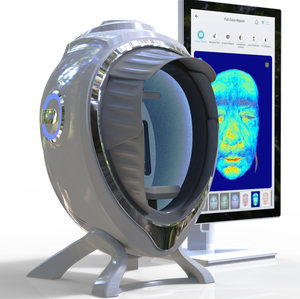
By capturing facial topography under cross-polarized light, parallel-polarized light, UV 365nm fluorescence, Wood’s light simulation, and calibrated true daylight, our skin imaging devices generate unambiguous visual evidence. This scientific clarity builds absolute patient trust, accelerates treatment acceptance rates by up to 68%, and provides quantifiable baseline metrics for longitudinal patient tracking.
2. Future B2B Procurement Trends in Facial Skin Analyzer Technology (2025–2030)
The global market for professional diagnostic beauty equipment is undergoing a massive paradigm shift. Buyers, clinic owners, and medical distributors are transitioning away from rudimentary optical magnifiers toward intelligent, cloud-connected multispectral diagnostic workstations. B2B procurement decision-makers must evaluate manufacturers based on four critical technological vectors:
1. Multi-Spectrum Array Calibration
Transition from standard 3-spectrum cameras to 8 to 10+ illumination modes. Precise light band filtering (365nm UV excitation, cross-polarization for micro-vascular mapping, parallel polarization for surface texture) is now mandatory for clinical diagnostic credibility.
2. Deep Learning AI Scoring
Modern procurement demands algorithmic diagnostic engines capable of comparing patient facial scans against vast clinical databases (100,000+ annotated skin samples) to quantify sebum density, pore enlargement, collagen age, and deep melasma risk automatically.
3. SaaS & Cloud Ecosystems
Enterprise buyers prioritize equipment supported by centralized cloud management software. Seamless client profile syncing, multi-location database sharing, and iPad/tablet companion apps enhance operational efficiency across multi-room clinics.
Furthermore, hardware sustainability and long-term ROI are taking center stage. Clinicians favor modular designs with 5-year warranty protection, zero consumable costs, high-resolution sensors (36MP to 40MP), and instant multi-language report generation capability.
3. Core Technical Pillars & OEM Enterprise Manufacturing Advantages
As a specialized manufacturer, our production facility adheres strictly to ISO13485 medical device quality systems and CE certification protocols. We solve the key technical pain points common in low-tier facial scanners: light distortion, uneven shadow distribution, camera drift, and inconsistent color temperature.
Optical Precision & Illumination Uniformity
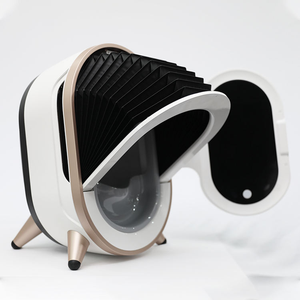
Our proprietary lighting hoods utilize medical-grade diffuse LEDs paired with high-efficiency optical polarizers. This guarantees 100% shadow-free facial illumination, delivering perfect color rendering and reproducible optical scans over years of continuous clinical use.
Algorithm Architecture & Diagnostic Accuracy
Our proprietary AI algorithms analyze 10 key facial skin indicators within seconds:
- RGB Epidermal Moisture & Sebum Distribution: Quantitative indexing of lipid layer integrity.
- Cross-Polarized Vascular Mapping: Detection of telangiectasia, erythema, and sub-surface inflammatory rosacea.
- Parallel-Polarized Texture & Wrinkle Profiling: Micro-relief analysis measuring fine lines and pore volume.
- UV 365nm Porphyrin & Acne Bacterial Detection: Fluorescence tagging of Propionibacterium acnes colonization.
- Dermal Melanin & Deep Pigmentation Indexing: Segmentation of basal layer dyschromia versus epidermal hyperpigmentation.
- Biological Skin Age vs. Chronological Age Index: Predictive scoring model driving targeted treatment regimens.
4. Comparative Diagnostic Matrix: Conventional Scanners vs. Next-Gen Smart Analyzers
To assist global procurement officers and distributors in evaluating technical specifications, the following comparison matrix details the architectural differences between entry-level cameras and our advanced multispectral diagnostic systems:
| Specification / Feature | Basic Magnifier Camera | Standard 3-Spectrum Mirror | Our Professional AI 3D Analyzer |
|---|---|---|---|
| Camera Sensor Resolution | 2MP - 5MP Standard CMOS | 12MP - 16MP Standard | 36MP Ultra-HD Industrial HD Optical Sensor |
| Light Spectrum Modes | 1 (RGB Daylight Only) | 3 (RGB, UV, Polarized) | 8 to 10+ Modes (Cross/Parallel PL, UV 365nm, Wood's, RGB) |
| Diagnostic Deep Learning | None (Manual Visual Only) | Basic Pattern Comparison | CNN Deep Neural Network Trained on 100k+ Clinical Cases |
| Sub-Surface Pigment & Vascular Isolation | Unobtainable | Partial / Blurry Differentiation | Complete Layered Spectral Isolation & Quantitative Indexing |
| Data Connectivity & Management | Local USB Flash Storage | Single Local PC Software | Cloud Sync, Multi-Tablet Companion App, CRM/SaaS Support |
| OEM / ODM Customization Options | Not Available | Basic Logo Sticker | Full Hardware OEM, Software Interface UI, Custom Algorithms |
5. Our Global OEM/ODM Manufacturing Workflow
We provide turnkey manufacturing services for medical device distributors, cosmetic brand chains, and equipment suppliers globally. Our manufacturing pipeline guarantees rapid prototyping, strict quality control, and robust global compliance.
Optical Design & Customization
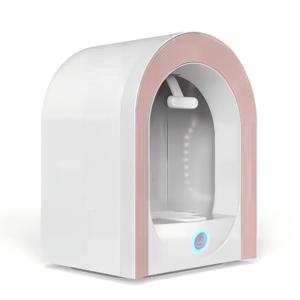
Tailored outer casing aesthetics, ergonomic stand designs, and custom camera sensor integrations.
Software UI & Brand Integration
Multi-language localization, custom report templates, and proprietary diagnostic branding.
Spectral Calibration & QC
Rigorous 100% individual spectral output calibration and optical modulation transfer function (MTF) testing.
Global Logistics & Warranty
CE/ISO certified packaging, worldwide drop-shipping capability, and 5-year hardware warranty support.
6. Frequently Asked Questions (FAQ) for B2B Buyers & Distributors
Comprehensive answers addressing technical specifications, ordering logistics, warranty terms, and clinic profitability.
Q: What is the primary difference between standard RGB skin analyzers and multispectral 3D analyzers?
Standard RGB analyzers only capture surface-level color and gross skin features under ambient lighting. Multispectral 3D analyzers utilize dedicated light frequencies—including cross-polarized light to filter out surface reflection and expose dermal blood vessels, parallel-polarized light to amplify fine skin texture, and 365nm UV light to stimulate porphyrin fluorescence. This provides a accurate, quantitative diagnostic assessment of subsurface skin health.
Q: How does integrating a smart skin analyzer improve clinic revenue and treatment conversions?
Clinical data shows that visual consultation tools dramatically elevate patient comprehension. When patients observe objective, color-coded visual proof of sub-surface sun damage, clogged pores, or emerging melasma, treatment conversion rates increase by over 60%. Furthermore, before-and-after spectral comparisons validate treatment efficacy, boosting patient retention and repeat appointments.
Q: What custom OEM/ODM services do you offer for high-volume distributors?
We provide full-spectrum OEM/ODM solutions. Hardware customizations include private-label outer housing colors, custom logo printing, modified hood dimensions, and specialized mounting stands. Software customizations include custom app branding, multi-language UI translation, localized diagnostic parameters, and integration with third-party clinic management systems.
Q: How is software updated, and are there recurring licensing fees for clinics?
Our systems feature seamless OTA (Over-The-Air) automated software updates, ensuring your diagnostic algorithms and security protocols remain current. Unlike traditional SaaS-only models that charge prohibitive monthly fees, we offer flexible licensing structures—including zero-monthly-fee factory packages—to maximize return on investment for our global partners.
Q: What warranty and technical support coverage is included with wholesale orders?
All flagship diagnostic hardware comes standard with up to a 5-Year Factory Warranty covering optical modules, sensor units, and internal circuit boards. We maintain a dedicated 24/7 technical support desk for global distributors, providing spare parts replacement, remote diagnostic assistance, and comprehensive video training resources.
Q: What is the Minimum Order Quantity (MOQ) and lead time for wholesale shipments?
We maintain ready-to-ship inventory for standard factory units with an MOQ of just 1 unit for sample evaluation. For custom OEM/ODM branding orders, our standard MOQ starts at 10 to 50 units depending on the depth of software/hardware customization, with average production lead times ranging from 7 to 15 business days.