Featured Spectral Light Skin Scanners & Diagnostic Systems
Explore our flagship series engineered with clinical-grade multispectral optics, high-resolution sensors, and automated AI diagnostic engines.
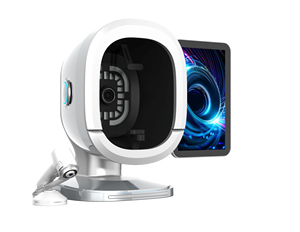
Portable 2025 Smart 3D Skin Analyzer Machine AI Face Diagnostics Scanner Device
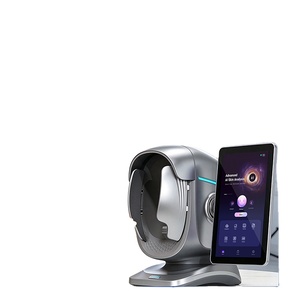
AI Skin Analyzer 7-Inch Touchscreen Facial Scanner 36MP Camera with Multi-Language Support
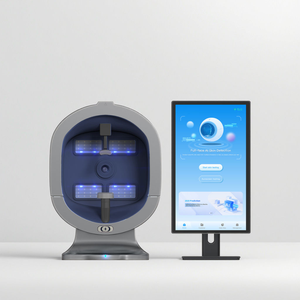
X5 Pro Skin Analyzer for Beauty Salon Moisture Wrinkles Acne & 8 Spectrum Pigmentation Detector
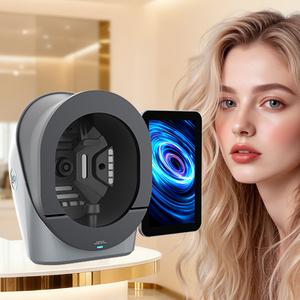
2025 New Arrivals Skin Analyzer Facial Scanning Beauty Device for Pigmentation & Acne Analysis
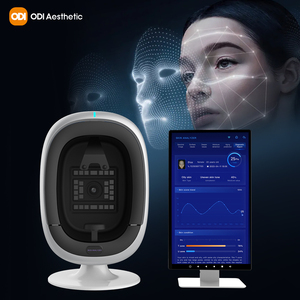
2025 New Digital Skin Analysis 3D Face Pigmentation & Sub-Surface Skin Tester Machine
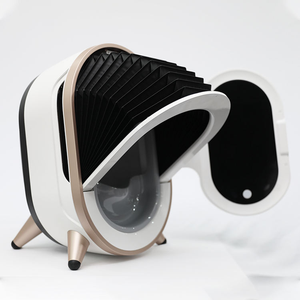
Beauty Salon Equipment Supplies Moisture & Acne 3D Smart Magic Mirror Skin Analyzer
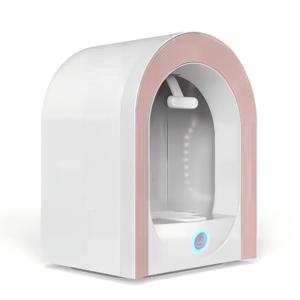
Professional AI Facial Skin Analyzer 3D Melasma & Deep Spectrum Detector Machine
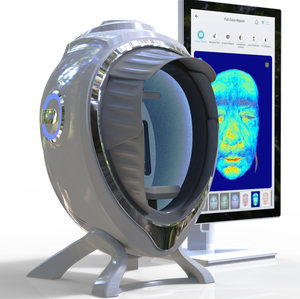
Wholesale Full Face Skin Analyzer Machine Professional Freckle & Deep Pigmentation Scanner
Executive Summary: The Evolution of Multispectral Optical Skin Analysis
In modern cosmetic dermatology, medical aesthetics, and advanced clinical skincare, objective diagnostic visualization has transitioned from a luxury to an absolute imperative. As a premier spectral light skin scanner manufacturer and factory, our engineering mandate centers on solving a fundamental clinical challenge: revealing sub-surface cutaneous pathology that remains invisible to the unassisted human eye under standard ambient light.
Epidermal and dermal structures interact dynamically with light across distinct wavelengths. White daylight (RGB) reflects primarily off the stratum corneum, capturing surface texture, overt desquamation, and macro-wrinkles. However, early-stage vascular dysregulation, deep-seated dermal melasma, porphyrin accumulation within pilosebaceous units, and subclinical UV damage reside within deeper anatomical layers. Without calibrated multispectral illumination, these conditions escape detection during initial consultations, leading to suboptimal treatment selection and missed clinical opportunities.
✓ Key Spectral Modalities and Biophysical Mechanisms
To provide true clinical accuracy, our manufacturing facility integrates up to 10 distinct optical illumination spectrums within our full-face skin scanning chambers. Each spectrum isolates specific physiological markers:
Cross-Polarized Light
Eliminates surface specular glare to expose underlying dermal pigmentation, erythema, capillary telangiectasia, and hidden rosacea pathways beneath the epidermis.
Parallel-Polarized Light
Enhances surface micro-relief topography, magnifying fine lines, pore structure dilation, pore blockage, smooth vs rough keratinization, and skin smoothness metrics.
Wood's Light & UV Fluorescence
Utilizes narrow-band 365nm ultraviolet excitation to stimulate autofluorescence. Highlights active Cutibacterium acnes porphyrin emissions, dyschromia, and deep lipid distribution.
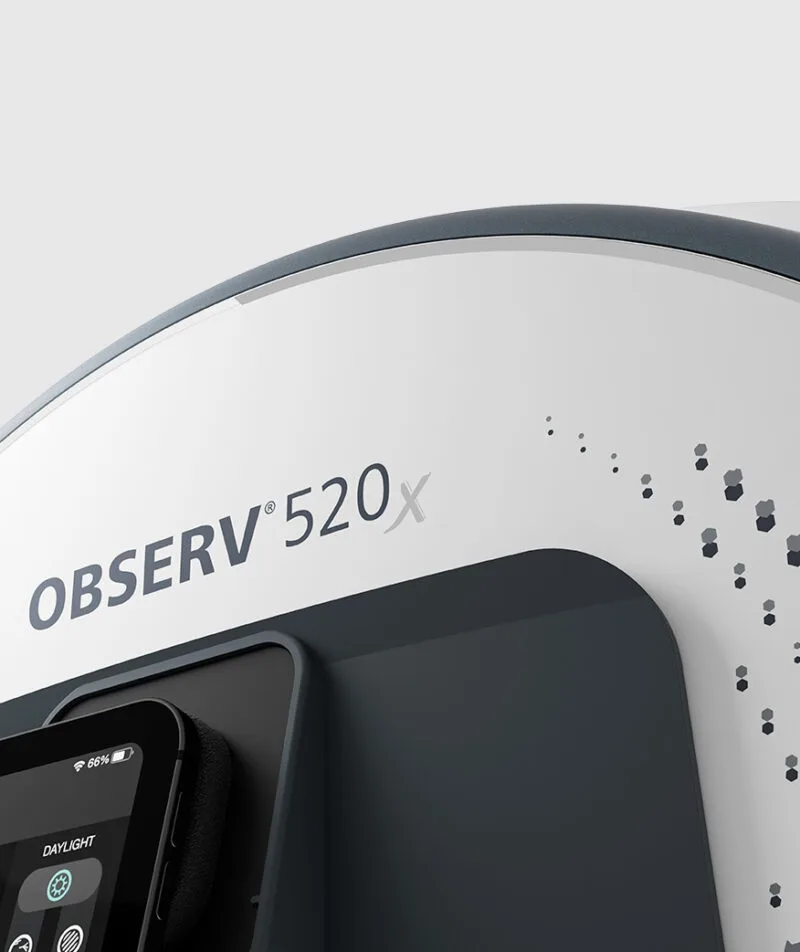
Industrial-Grade Precision Optics & Hardware Assembly
Unlike entry-level consumer skin analyzers, our medical-grade factory manufacturing processes strictly enforce optical alignment tolerances under ±0.05 mm. Each device undergoes rigorous spectral calibration to guarantee that light intensity, chromaticity, and polarization angles remain identical over thousands of clinical diagnostic cycles.
By combining high-resolution industrial CMOS sensors (up to 36 megapixels) with custom-coated optical glass lenses, our machines capture crisp, uncompressed facial diagnostics. This provides aesthetic practitioners with reproducible before-and-after treatment verification, dramatically elevating consultation conversion rates and patient retention.
Why Leading Global Brands Partner with Our OEM/ODM Factory
Operating as a specialized manufacturer, our factory combines advanced optical engineering, mechanical design, embedded software development, and deep learning AI integration under one roof. We empower international distributors, aesthetic equipment brands, and healthcare chains with customizable white-label solutions engineered to international standards (ISO 13485, CE, FDA compliance readiness).
Full OEM/ODM Customization
From custom industrial chassis design, colorways, and silk-screened brand logos to custom software UI skins, diagnostic algorithm parameters, and report header localization.
Strict Quality Assurance & Testing
Every skin scanner undergoes 72 hours of continuous aging tests, flash lamp endurance testing (>100,000 flashes), thermal dissipation validation, and darkroom optical drift checks.
Global Cloud & Multi-Language Support
Integrated cloud database system supporting multi-clinic patient data synchronization, GDPR compliance encryption, and native software translations across 15+ languages.
Future Procurement Trends in Spectral Light Skin Diagnostics (2025–2030)
As global buyer behavior shifts toward evidence-based aesthetic consultations, procurement directors for medspas, dermatology networks, and distributor groups must align their hardware investments with emerging technological paradigms. Below are the key industry trends shaping the future of skin diagnostics:
1 Transition from 2D Photography to 3D Volumetric Mapping
Legacy skin analyzers provided flat 2D images that struggled with subtle facial curvature distortion. Next-generation systems incorporate 3D facial mesh reconstruction, allowing practitioners to quantify volume loss, wrinkle depth in millimeters, and exact structural changes over time during injectable or energy-based device (EBD) treatment regimens.
2 Deep Learning AI & Quantitative Sub-Surface Scoring
Modern diagnostic engines no longer rely solely on subjective visual inspection. Machine learning models trained on millions of dermatological images categorize skin health across quantitative index metrics: Pore Dilations, Sebum Concentration, Vascular Reactivity, Melanin Density, Wrinkle Depth Index, and Predictive Biological Skin Age.
3 All-In-One Touchscreen Standalone Architectures
Clinic space efficiency and workflow speed are paramount. The market is rapidly favoring compact, integrated systems featuring high-definition touchscreens, eliminating the hassle of external tablet mounts, tangled cables, or third-party computer connectivity issues.
📊 Technology Benchmark: Legacy Scanners vs. Next-Gen Factory Standards
| Evaluation Parameter | Legacy RGB Skin Analyzers | Next-Gen Multispectral AI Scanners (Our Factory) |
|---|---|---|
| Illumination Spectrum Modes | 1 to 3 basic modes (RGB Daylight only) | 8 to 10+ Spectral Modes (Cross/Parallel Polarized, Wood's UV, RGB, Deep Red) |
| Camera Sensor Resolution | 12 MP to 16 MP Standard CMOS | 24 MP to 36 MP Industrial HD Optical Array |
| Sub-surface Vascular / Melanin Separation | Poor / High Glare Distortions | High Precision Chromophore Decoupling |
| 3D Face Contour Analysis | Not Supported (Flat 2D static) | 3D Spatial Mapping & Volumetric Simulation |
| AI Predictive Aging & Simulation | Basic linear filter overlay | Deep Neural Network Cutaneous Aging Algorithm |
| Software & Cloud Integration | Local PC installation only | Cloud Sync, Multi-Device Access & GDPR Compliant EMR |
Integrating Diagnostics into Clinic Revenue Workflows
Leading aesthetic practices recognize that a multispectral skin analyzer is not merely an assessment tool—it is a powerful consultation engine. By revealing hidden pigmentation, UV damage, and vascular inflammation, practitioners can clearly demonstrate treatment necessity to clients.
Clinics utilizing our spectral skin scanners report up to a 45% increase in skincare product package sales and a 60% higher conversion rate for advanced laser, microneedling, and chemical peel procedures. Objective before-and-after reports foster trust and secure long-term patient loyalty.

Frequently Asked Questions for B2B Buyers & Importers
Answers to critical questions regarding hardware sourcing, optical parameters, software licensing, and factory manufacturing protocols.
Q1 What makes spectral light scanning superior to standard camera photography?
Standard camera photography only records surface reflection under ambient light, missing deep cutaneous anomalies. Spectral light scanning utilizes calibrated cross-polarized, parallel-polarized, and narrow-band UV illumination to filter out surface glare. This allows sub-surface melanin clusters, deeper vascular networks, clogged porphyrins, and hidden UV damage to be isolated and quantitatively measured.
Q2 Are your skin scanners compliant with international quality and safety standards?
Yes. As a dedicated OEM/ODM manufacturer, our production facility operates under ISO 9001 and ISO 13485 medical device quality management systems. Our skin scanners comply with international CE (EMC & LVD), RoHS, and FCC regulatory requirements, ensuring smooth customs clearance and market entry across North America, Europe, Asia-Pacific, and the Middle East.
Q3 What customization options are available for OEM / ODM bulk orders?
We offer comprehensive white-labeling solutions, including: 1) Custom industrial chassis colors and silkscreen logo printing; 2) Software UI customization with personalized brand logos, custom color schemes, and clinic report headers; 3) Multi-language software localization (English, Spanish, French, German, Portuguese, Russian, Arabic, Japanese, Korean, etc.); 4) Custom packaging boxes and user manuals.
Q4 How does the AI diagnostic engine calculate skin age and skin health scores?
Our AI diagnostic algorithms are trained on a vast clinical database of validated facial skin scans across diverse ethnicities, age groups, and skin types. The software analyzes key parameters—including pore density, wrinkle depth index, UV spot count, red area vascularity, and brown spot concentration—comparing patient data against benchmark age groups to generate objective, reproducible diagnostic scores.
Q5 What warranty and technical support services are provided by the factory?
We provide up to a 5-year hardware warranty on flagship components, along with lifetime software updates. Our technical support team offers 24/7 assistance for global distributors, including remote software diagnostics, replacement module dispatch, and video training materials for clinic staff onboarding.
Q6 What is the typical lead time for wholesale and OEM manufacturing orders?
Standard inventory units are typically dispatched within 3 to 5 business days. Customized OEM orders involving branded software integration and chassis customization generally take 15 to 25 business days, depending on batch quantity and certification requirements.
Ready to Elevate Your Diagnostic Capabilities?
Partner directly with a trusted spectral light skin scanner manufacturer. Contact our OEM/ODM procurement engineering team today for factory-direct pricing, custom software demonstrations, and product catalogs.