Commercial Skin Diagnostic Machines & Facial Scanners
Explore our flagship series of professional multispectral skin analysis systems. Designed for clinical precision, sub-surface pigmentation detection, moisture evaluation, and 3D facial morphometry.
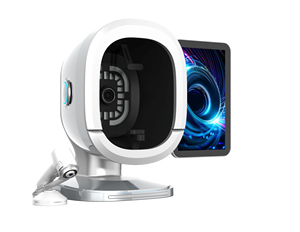
Portable 2025 Smart 3d Skin Analyzer Machine logo Ai Face Skin Diagnostics Analyzer Facial Scanner Skin Analyzer Device
Contact Us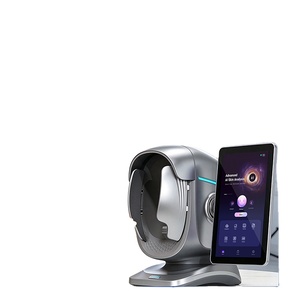
AI Skin Analyzer 7-Inch Touchscreen Facial Scanner 36MP Camera 5-Year Warranty Multi-Language Support for Skin Type Pigmentation
Contact Us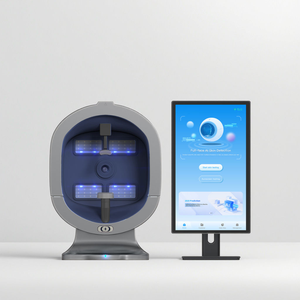
X5 Pro Skin Analyzer for Beauty Salon Moisture Wrinkles Acne Pores Detector 8 Spectrum Pigmentation Device Skin Analysis Machine
Contact Us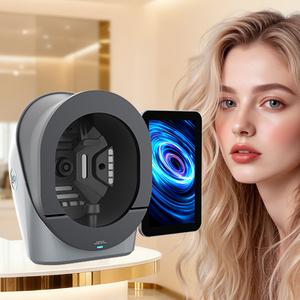
2025 New Arrivals Skin Analyzer Facial Scanning Skin Analysis Beauty Device for Pigmentation Acne Analysis
Contact Us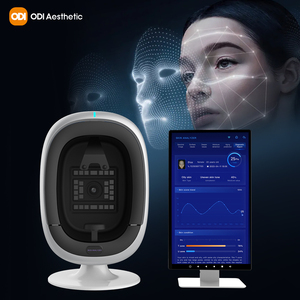
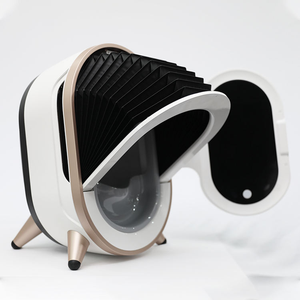
Beauty Salon Equipment Supplies Acne Pigmentation Mouisture test Facial Scanner Analysis 3d Smart Magic Mirror Skin Analyzer
Contact Us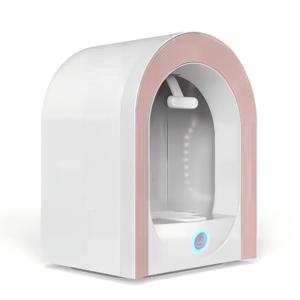
Professional AI Facial Skin Analyzer 3D Digital Skin Detector Machine Pigmentation Melasma Spectrum Analyzer for Salon
Contact Us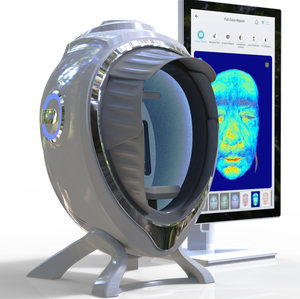
Wholesale Full Face Skin Analyzer Machine Professional Skin Deterctor for Freckles & Deep Pigmentation
Contact UsIndustry Whitepaper: The Evolution of Professional Skin Diagnostics
In modern cosmetic dermatology and aesthetic medicine, clinical consultation is no longer reliant on superficial visual inspections. The global market for professional skin diagnostic machines has undergone a paradigm shift, transitioning from simple magnifying lamps to multi-spectral, AI-driven facial scanning ecosystems. As an ISO 13485-certified OEM/ODM manufacturer, our facility engineers state-of-the-art 3D digital skin analyzers designed to make invisible sub-surface pathologies visible to practitioners and patients alike.
By leveraging proprietary multispectral optical matrix algorithms—including standard RGB daylight, cross-polarized light, parallel-polarized light, UV fluorescence, and Wood’s light simulation—our diagnostic hardware captures microscopic cutaneous transformations across all skin layers. From epidermal pore structures and sebum accumulation to deep dermal melasma, vascular telangiectasia, and photo-aging damage, our optical diagnostic platforms provide quantitative baseline data that transforms patient consultation conversion rates by over 45%.
Enterprise Advantage & Original Brand Manufacturing Heritage
Building upon the rigorous technical legacy of industry leaders such as Sylton and Innofaith, our manufacturing ecosystem combines European precision optical standards with agile high-tech electronics manufacturing. We specialize in comprehensive B2B supply chain solutions, empowering medical equipment distributors, aesthetic clinic chains, and cosmetic brands with white-label OEM and ODM hardware customization.
Multispectral Optical Engineering
Our cleanroom assembly lines integrate ultra-high-definition CMOS image sensors (up to 36 Megapixels) paired with custom optical lenses. Combined with multi-wavelength LED illumination modules (365nm UV, cross-polarized, and diffuse daylight), our devices achieve sub-micron spatial resolution for skin texture, pore depth, and vascular mapping.
Proprietary AI & Cloud Integration
Our devices run advanced deep-learning algorithms trained on database models encompassing millions of clinical facial images. The software suite (compatible with Sylton Connect, iPad OS, and Windows) provides automated skin-age scoring, pigmentation classification, and predictive aging simulation.
Global Compliance & Certifications
Every skin diagnostic system manufactured at our factory undergoes rigorous optical calibration, EMC testing, and photobiological safety evaluations. Our products comply with CE, RoHS, ISO13485, and FDA registration guidelines for non-invasive aesthetic assessment equipment.
Custom OEM / ODM & White Labeling
We provide global distributors with end-to-end customization services: custom chassis industrial design, silk-screened brand logos, tailored user interface (UI) software skins, multi-language localization (supports 15+ languages), and bespoke marketing material packages.
Key Hardware & Software Technologies
Cross-Polarized Light Imaging
Eliminates surface specular reflections to reveal dermal vascular structures, rosacea, inflammatory acne sub-surface erythema, and deep hyperpigmentation.
365nm UV Fluorescence Mode
Excites fluorophores in P. acnes bacteria to pinpoint active porphyrin distributions within hair follicles, hyper-seborrhea, and hidden sun damage.
3D Facial Morphometry
Reconstructs full-face 3D topological meshes to objectively measure wrinkle depth, pore volume, nasolabial folds, and volumetric changes over time.
Automated Consultation Reports
Generates instantaneous PDF/digital reports customized with clinic branding, product recommendations, and targeted treatment regimen pathways.
Bio-Impedance Moisture Sensing
Integrates precision skin contact sensors to evaluate stratum corneum hydration index, transepidermal water loss (TEWL), and skin barrier integrity.
Multi-Terminal Cloud Sync
Allows seamless patient data management across multiple consultation rooms, iPads, PC workstations, and centralized aesthetic group networks.
Industry Development Trends: What Drives Next-Gen Skin Diagnostics?
As the medical aesthetics market expands worldwide, skin diagnostic equipment is evolving from an optional sales aid into a mandatory clinical diagnostic requirement. Based on key market research and engineering data, five primary technological trends will shape the skin analyzer landscape through 2030:
1. AI-Powered Predictive Aging & Treatment Simulation
Modern patients demand visual proof before committing to high-value aesthetic procedures (such as picosecond lasers, RF microneedling, or anti-wrinkle injections). Advanced diagnostic algorithms now synthesize 3D topographical data to project 3-year, 5-year, and 10-year skin aging trajectories, while simulating post-treatment clinical outcomes with realistic fidelity.
2. Narrow-Band Multispectral Hyperspectral Imaging
Conventional RGB scanners capture basic surface colors. Next-generation systems integrate narrow-band LED arrays that isolate specific absorption wavelengths of melanin (530nm–570nm) and oxyhemoglobin (540nm–580nm). This wavelength isolation enables clinical dermatologists to differentiate between epidermal melasma, post-inflammatory hyperpigmentation (PIH), and deep dermal melanocytosis.
3. Integration with Skincare Customization & EMR Systems
Skin analyzers are no longer standalone islands of data. Global medspas require seamless integration with Electronic Medical Record (EMR) software, clinic CRM systems, and automated product dispensation units. Diagnostic parameters directly trigger personalized skincare formulation recipes and targeted treatment packages.
4. Portable & Touchscreen All-in-One Form Factors
While heavy desktop units remain popular in dedicated hospital dermatology suites, commercial beauty salons and mobile aesthetic practitioners are driving demand for compact, all-in-one touchscreen scanners. Systems featuring built-in high-capacity batteries, 7-to-15-inch HD displays, and lightweight ergonomics are growing at a CAGR of 18.5% globally.
B2B Sourcing & Procurement Strategy Trends for Distributors
For international medical device distributors, brand owners, and wholesale procurement managers, selecting the right skin analyzer factory requires evaluating long-term Total Cost of Ownership (TCO) rather than just initial unit price. Key procurement shifts observed in the global market include:
- Demand for Subscription-Free Software Architecture: Traditional diagnostic equipment vendors often lock clinics into expensive recurring monthly cloud or software licensing fees. Forward-thinking wholesale buyers are prioritizing manufacturers offering lifetime software updates without mandatory monthly subscriptions.
- Multi-Ethnic Skin Calibration Capabilities: Skin analyzers trained exclusively on single-demographic data sets struggle with diagnostic bias across darker Fitzpatrick skin types (Types IV–VI). Leading procurement managers strictly mandate algorithms validated across diverse global populations.
- Modular Hardware Repairability & Component Sourcing: To minimize downtime, clinic owners prefer modular devices equipped with plug-and-play LED light boards, detachable cameras, and easily swappable power supply units.
Technical Specification Benchmark: Factory OEM Model Comparison
| Feature / Parameter | Standard Salon Model | Pro AI 3D Analyzer | Clinical Multispectral Station |
|---|---|---|---|
| Camera Resolution | 16 – 24 Megapixels | 28 – 36 Megapixels | 36+ Megapixels Industrial CMOS |
| Illumination Spectrums | 3 Spectrums (RGB, UV, PL) | 8 Spectrums (RGB, PL, UV, Wood) | 10+ Narrow-Band Multispectral |
| 3D Surface Mapping | Basic Topological Depth | Full 3D Facial Reconstruction | Sub-micron Volumetric Depth Analysis |
| Software OS Compatibility | Android / Windows | iPad OS / Windows / Cloud | Multi-Terminal Cloud / EMR API |
| OEM / Branding Support | Logo Printing | Custom UI & Chassis Color | Full ODM Custom Firmware & Software |
| Target Application | Beauty Salons & Skincare Counters | Aesthetic Clinics & Medspas | Cosmetic Dermatology Research |
Commercial Sourcing FAQ: Common Procurement Questions
To assist global equipment buyers, salon managers, and medical equipment importers, our engineering and sales teams have compiled clear answers to the most frequently asked procurement questions:
Q1: What optical spectrums are essential for clinical-grade facial skin diagnostics?
A professional skin analyzer requires at least 4 fundamental lighting modes: Standard RGB Daylight (for visible texture and pore inspection), Cross-Polarized Light (to remove surface glare and highlight sub-surface dermal vascularity/erythema), Parallel-Polarized Light (for epidermal fine lines and stratum corneum smoothness), and 365nm UV Light / Wood's Light (to excite porphyrins in P. acnes, identify deep UV spots, and measure sebum secretions).
Q2: How does AI integration improve diagnostic accuracy compared to traditional Wood’s lamps?
Traditional Wood’s lamps rely entirely on subjective visual evaluation by an aesthetician under dark room conditions. AI-integrated skin analyzers digitize the image using calibrated CMOS sensors, compare the pixel data against vast clinical databases, and quantify skin conditions into numerical scores (e.g., exact pore counts, spot surface area in mm², and vascular depth index). This objective data eliminates diagnostic guesswork and provides reliable baseline metrics for long-term patient tracking.
Q3: What are the minimum order quantities (MOQ) and lead times for OEM custom branding?
For standard wholesale orders without customization, our factory MOQ starts at just 1 unit. For custom OEM logo screen-printing and software startup screen branding, the typical MOQ is 5 to 10 units with a lead time of 7–10 working days. Full ODM projects involving custom chassis molding, specialized optical filters, or custom hardware dimensions require dedicated project timelines (typically 30–45 days).
Q4: How do your skin analyzers handle multi-skin tone accuracy across Fitzpatrick skin types I–VI?
Our diagnostic algorithms incorporate dynamic exposure compensation and white-balance calibration routines specifically tuned for diverse global complexions. Whether analyzing Fitzpatrick Skin Types I–II or darker Skin Types V–VI, the multispectral flash array automatically adjusts light intensity and spectral polarization to prevent false pigment readings caused by high baseline melanin levels.
Q5: What warranty, calibration, and after-sales support do you provide for wholesale buyers?
All diagnostic equipment manufactured in our facility includes a comprehensive 2-to-5-year hardware warranty (depending on the specific series). We provide global distributors with lifetime free software updates, spare parts support, online video technical assistance, and modular replacement components to ensure zero operational downtime for end-user clinics.
Q6: Can the diagnostic interface and report software support multiple languages?
Yes, our diagnostic software natively supports over 15 major languages, including English, Spanish, French, German, Italian, Portuguese, Russian, Arabic, Vietnamese, Thai, Chinese, Japanese, and Korean. Additional languages can be rapidly translated and integrated into custom firmware upon request.