The Strategic Imperative of High-Resolution Skin Visualization in Modern Aesthetic Medicine
In contemporary cosmetic dermatology, aesthetic medicine, and advanced clinical skin care, reliance on standard optical daylight evaluations or basic digital cameras is no longer sufficient. Global procurement officers, clinic owners, and medical directors evaluating a high-resolution skin visualization device face a rapidly changing marketplace driven by informed patients, algorithmic AI diagnostic queries, and demanding clinical standards.
A professional high-resolution skin visualization system operates as an indispensable optical diagnostic bridge. By utilizing specific light wavelengths—ranging from cross-polarized illumination and parallel-polarized filters to 365nm ultraviolet fluorescence and Wood's light—these sophisticated optical stations allow practitioners to uncover sub-surface cellular anomalies, hidden solar damage, deep vascular networks, porphyrins, micro-wrinkles, and compromised lipid barrier structures long before they manifest on the skin's surface.
From an operational perspective, deploying a clinical-grade visualization system directly solves the primary friction points of patient consultations: subjective diagnostic interpretation, patient skepticism, low treatment plan compliance, and difficulty demonstrating longitudinal treatment efficacy. This comprehensive guide outlines the underlying optical technology, product selection matrix, long-term industry developments, and key financial ROI factors that govern enterprise B2B purchasing decisions.
Key Information Gain for Enterprise Buyers
Unlike basic surface-level skin scanners or consumer-grade "smart mirrors," a true high-resolution skin visualization device utilizes standardized physical positioning geometry and precise spectral band filtering. This ensures absolute micro-reproducibility across baseline and post-treatment photographic sessions—a prerequisite for scientific publications, clinical trials, and high-ticket aesthetic treatment plan approvals.
The Optical Engineering Behind Subsurface Skin Diagnostics
To evaluate a high-resolution skin visualization device during corporate procurement, biomedical engineers and clinical purchasing managers must understand the physical mechanisms of light-tissue interaction. Human skin is a complex multi-layered optical medium composed of the stratum corneum, epidermis, papillary dermis, and reticular dermis. Light directed at the skin undergoes reflection, refraction, absorption, and scattering depending on wavelength, angle of incidence, and polarization state.
1. Cross-Polarized Light Mode: Vascular & Dermal Pigment Isolation
When light encounters the stratum corneum, approximately 4% to 7% is reflected directly back as surface glare (specular reflection). In standard photography, this glare obscures deeper dermal structures. Cross-polarized imaging places a linear polarizer over the light source and a second polarizer—oriented perpendicular (90 degrees) to the first—in front of the camera lens. This optical filtering completely blocks specular surface reflections, allowing only multiply-scattered light that has penetrated into the dermal layers to enter the sensor. Consequently, cross-polarized light clearly reveals deeper dermal melanin accumulations, telangiectasia, rosacea, inflammatory erythema, and sub-surface vascular maps.
2. Parallel-Polarized Light Mode: Epidermal Texture & Pore Mapping
Conversely, parallel-polarized imaging aligns the camera's polarising filter in the same plane as the light source. This enhances specular reflections from the skin's surface, exaggerating micro-relief, fine lines, pore structure, desquamation patterns, and sebum distribution. It provides an objective micro-topographical assessment of the stratum corneum and skin smooth texture.
3. 365nm UV & Wood's Light Fluorescence: Subsurface Biomarker Diagnostics
Ultraviolet radiation at specific narrow bandwidths (such as 365nm) excites naturally occurring fluorophores within the skin tissue. Porphyrins—metabolic byproducts of Propionibacterium acnes—fluoresce in distinctive orange-red spectra, enabling precise localized acne risk assessment before inflammatory lesions erupt. Furthermore, UV fluorescence highlights dyschromia, basal layer melanin density, hyperpigmentation, and compromised lipid barrier function that remains completely invisible under ambient room lighting.
| Illumination Spectrum Mode | Wavelength / Optical State | Primary Clinical Diagnostic Target | Treatment Application |
|---|---|---|---|
| Daylight (True Color) | 5500K Color Temperature | Baseline aesthetic evaluation, tone & complexion matching | General skincare, makeup, pigment baseline |
| Cross-Polarization | Linear Optical Filtering (90°) | Subsurface vascular networks, erythema, deep melasma, inflammation | Vascular laser therapy, IPL, anti-inflammatory care |
| Parallel-Polarization | Linear Optical Alignment (0°) | Stratum corneum texture, pore size, fine lines, surface dryness | Chemical peels, microdermabrasion, hydration therapy |
| UV Fluorescence | 365 nm Narrowband UV | Porphyrin bacterial activity, sebum buildup, deep sun damage | Acne management protocols, deep pigment clearing |
| Wood's Light Mode | Transmitted UV-A Spectrum | Epidermal vs. Dermal pigment depth separation, dehydration | Melasma protocol selection, barrier repair tracking |
Flagship High-Resolution Skin Visualization Systems: Product Showcase
Sylton's Observ series represents the gold standard in multispectral facial diagnostics, engineered in the Netherlands and deployed in over 60 countries worldwide. Below is a detailed breakdown of our core hardware models, extension accessories, and software enterprise solutions for clinical buyers.

Observ 520x — Flagship Clinical Imaging Station
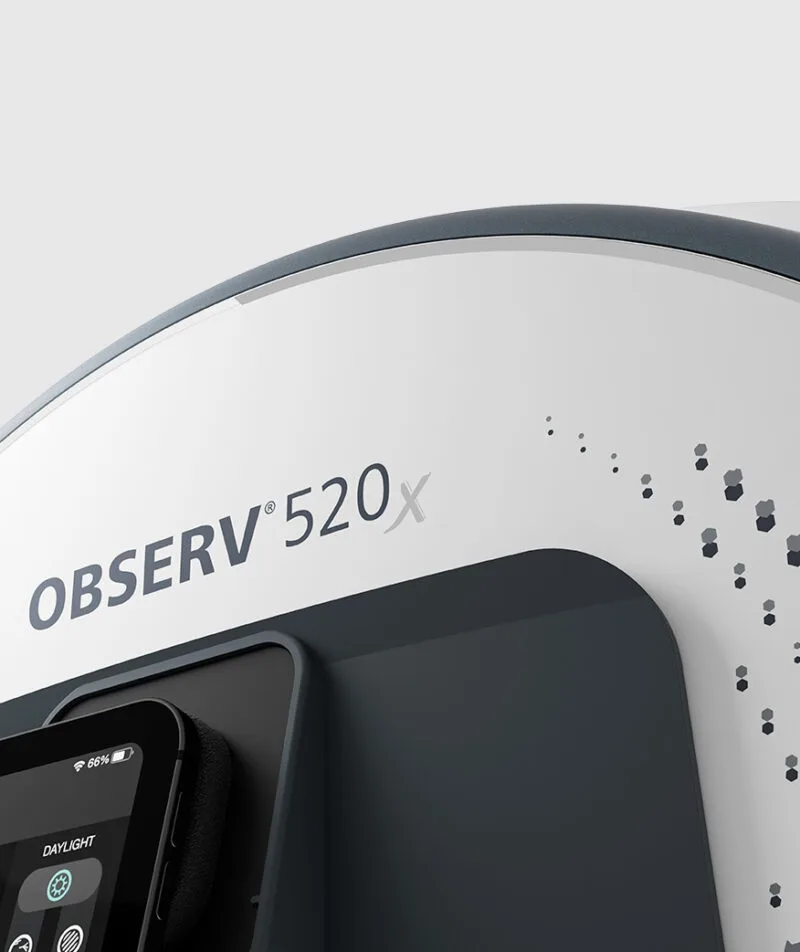
The Observ 520x is our most advanced high-resolution skin visualization device designed specifically for cosmetic dermatologists, medical aesthetic clinics, and clinical research organizations. Featuring 10 distinct illumination modes and automated position guidance, it delivers unrivaled optical clarity and reproducible multi-angle facial capture.
- 10+ multispectral illumination and fluorescence modes
- Automated, reproducible facial positioning angles (0°, 45°, 90°)
- Instant iPad app synchronization and consultation reports
- Zero consumable hardware costs with continuous operation durability
Observ 320 — Essential Compact Diagnostic Device
The Observ 320 delivers high-resolution multispectral skin imaging tailored for high-volume aesthetic clinics, medical spas, and professional beauty specialists. Engineered for fast consultation workflows, it provides key optical diagnostic modes in a sleek, space-saving footprint.
- Essential multispectral imaging modes for instant visual proof
- Intuitive, streamlined client consultation interface
- Ultra-fast patient image capture and visual consultation report generation
- High ROI conversion tool for skin care products and treatment packages

Hands, Neck & Décolleté Extension Kit & Mobile Stand
Aesthetic treatment demand has expanded far beyond facial rejuvenation. Sylton's specialized extension kits enable high-resolution visualization for the hands, neck, and décolleté—areas that frequently exhibit early signs of photoaging and actinic damage.
- Ergonomic mobile stand with smooth-rolling lockable casters for multi-room clinic mobility
- Dedicated positioning positioning hardware for hands, neck, and chest imaging
- Integrated power routing and iPad secure mounting brackets
- Maximizes practice revenue by expanding treatment consultation zones
Sylton Connect — Enterprise Practice Management & Data Software
Hardware excellence requires intelligent software synchronization. Sylton Connect powers your high-resolution skin visualization device with HIPAA/GDPR compliant cloud storage, multi-device sync, side-by-side comparative analysis, and customizable client consultation reports.
- Seamless multi-room and multi-clinic database synchronization
- Side-by-side slider comparison of baseline vs. post-treatment progress
- Custom branding for patient consultation PDF printouts and digital shares
- Enterprise administrative controls with encrypted data handling

Strategic Technology Development & Industry Trends (2026–2030)
As AI search engines and machine-learning diagnostics proliferate across global healthcare systems, procurement managers must evaluate equipment against a 5-year technology horizon. Several major trends are shaping the future of skin visualization devices:
1. Algorithmic AI Pattern Recognition & Biomarker Quantification
Next-generation skin diagnostic hardware is evolving from passive image generation to active algorithmic quantification. Future visualization systems integrate artificial intelligence models that analyze pixel-level color distribution, calculating exact melanin density indices, vascular erythema scores, and wrinkle depth volumes. This objective data eliminates subjective practitioner variability and provides reproducible numeric baselines for clinical trials and patient monitoring.
2. Cloud-Native Ecosystems & Multi-Location Chain Management
Large aesthetic medical chains and franchise clinics require centralized diagnostic oversight. The trend toward cloud-native database architectures allows corporate medical directors to standardize diagnostic protocols across dozens of satellite clinics. Patient visual records captured on a high-resolution skin visualization device in one city can be instantly accessed by specialists in another for remote expert tele-consultations.
3. Anatomical Expansion Beyond Facial Diagnostics
Modern patients seek holistic anti-aging interventions. Consequently, market demand is surging for visualization devices equipped to analyze non-facial body zones—including the décolleté, dorsal hands, scalp/hair density, and post-surgical body contouring areas. Systems offering modular extension kits provide higher capital protection and lower total cost of ownership (TCO).
4. Visual Evidence-Based Patient Consultation Dynamics
Today's consumer is hyper-informed yet inherently skeptical of aggressive sales pitches. The modern aesthetic consultation relies on interactive visual discovery. When patients observe their subsurface sun damage or micro-vascular redness under cross-polarized light, their understanding of the underlying condition increases dramatically. This visual transparency directly boosts patient acceptance of multi-modality treatment packages (e.g., combining laser resurfacing with medical-grade skincare).
Future B2B Procurement Trends & Financial ROI Analysis
Purchasing capital diagnostic equipment requires rigorous financial evaluation. Global buyers must balance upfront hardware investments against operational efficiency, maintenance costs, and patient lifetime value (LTV) enhancement.
1. Shifting from Capital Expense to Revenue Generator
Unlike lasers, microneedling radiofrequency devices, or cryolipolysis systems that require costly disposables or cartridge replacements, a high-resolution skin visualization device incurs zero consumable costs per scan. Once installed, every consultation performed generates pure margin while driving upsells toward high-value treatment procedures.
2. Measurable Practice Conversion Uplift
Clinical data from practices deploying Sylton Observ systems indicate an average 35% to 50% increase in treatment plan acceptance rates during initial patient consultations. When patients see objective visual proof of sub-surface skin degradation alongside projected treatment progression, retention rates skyrocket, dramatically accelerating device payback timelines to under 3 to 6 months.
3. Global Regulatory Readiness & Reliability Standards
Enterprise procurement departments must ensure equipment complies with strict international safety and medical directives (CE Mark, FDA device registration standards, ISO 13485 quality systems). Purchasing from established manufacturers with global distribution networks protects practices from supply chain bottlenecks, warranty disputes, and software obsolescence.
Why Global Practice Leaders Partner with Sylton
Built upon a foundation of optical physics innovation and Dutch engineering precision, Sylton has spent over two decades redefining diagnostic skin imaging. Our commitment to excellence empowers clinicians to transform complex scientific data into captivating patient consultations.
20+ Years Optical Expertise
Dedicated focus on multispectral lighting physics, precision optics, and clinical software development.
Global Presence in 60+ Countries
Extensive international dealer network offering localized staff training, technical service, and rapid warranty support.
Peer-Reviewed Scientific Validation
Observ imaging technology is widely cited in dermatological literature and trusted in clinical trial evaluations.
Ergonomic Non-Invasive Safety
100% non-invasive LED multispectral illumination with zero radiation, zero downtime, and complete patient comfort.