Advanced Facial Skin Diagnostic Equipment
Precision 3D Multispectral Analyzers & Mobile Imaging Stands for Vietnam Aesthetic Clinics
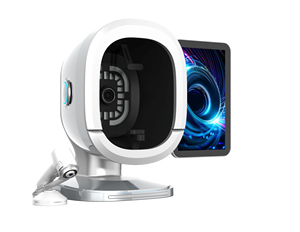
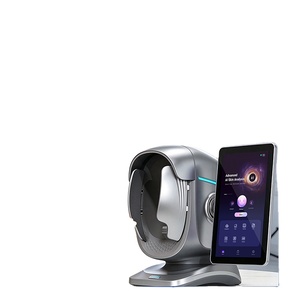
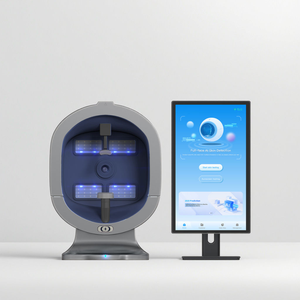

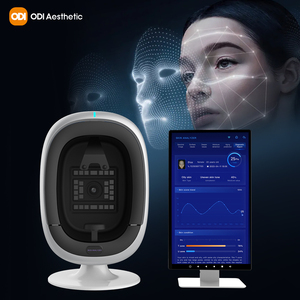
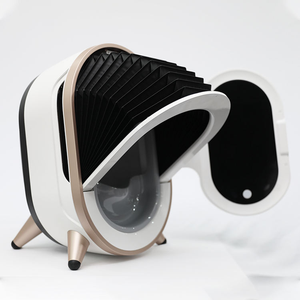

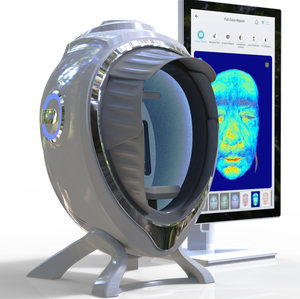
1. Clinical Evolution of Skin Imaging Hardware in Vietnam’s Aesthetic Sector
The medical aesthetics and cosmetic dermatology market across Vietnam—anchored by rapidly growing clinical hubs in Ho Chi Minh City (District 1, District 3, Binh Thanh), Hanoi (Hoan Kiem, Ba Dinh), and Da Nang—is undergoing a paradigm shift from subjective visual evaluation to objective, high-resolution multispectral skin imaging. As Vietnamese consumers become increasingly discerning regarding treatment efficacy, cosmetic dermatologists and aesthetic clinic directors require medical-grade skin analyzer hardware mounted on mobile clinical stands to standardize consultation workflows, increase patient treatment acceptance, and mitigate medico-legal disputes.
Traditional diagnostic modalities reliant on standard ambient room lighting or hand-held dermatoscopes fail to capture sub-surface epidermal and dermal pathologies characteristic of Southeast Asian skin phototypes. Specifically, Fitzpatrick Phototypes III, IV, and V, which represent the overwhelming majority of the Vietnamese population, exhibit high epidermal melanin density, an elevated tendency for post-inflammatory hyperpigmentation (PIH), and complex dermal vascularity masked by superficial pigmentation. A specialized aesthetic clinic skin imaging stand provides stable optical alignment, uniform spatial distance, and controlled light isolation, allowing practitioners to observe underlying melasma, deep vascular inflammation, damaged skin barrier structure, and latent porphyria with clinical precision.
Localized Clinical Demands in Ho Chi Minh City & Hanoi
Operating an aesthetic clinic in Vietnam presents environmental and biological diagnostic challenges unique to tropical monsoonal regions. High relative humidity (often exceeding 85%), combined with severe urban air pollution ($PM_{2.5}$ particles) in major metropolises, accelerates sebum oxidation, follicular clogging, and chronic sub-clinical inflammation. Furthermore, intense year-round ultraviolet radiation (UV Index frequently scaling above 11+) drives high incidence rates of dermal melasma, solar lentigines, and premature photoaging.
Exporting skin diagnostic devices to Vietnam requires rigorous hardware adaptation: optical camera enclosures must feature anti-fog sealants, LED driver boards require heat-dissipation engineering to survive tropical ambient room temperatures, and mobile stands must maintain seamless ergonomic height adjustability to fit compact consultation suites typical of Vietnamese private dermatology centers.
Anti-Glare Polarized Optics
Dual cross-polarized and parallel-polarized optical filtration separates specular glare from deep dermal reflectance, revealing micro-vascular networks without surface reflection.
Deep UV Fluorescence (365nm)
Controlled narrow-band UV illumination excites porphyrin metabolic byproducts produced by Cutibacterium acnes, illuminating latent acne acneogenesis before papules surface.
Ergonomic Mobile Stands
Heavy-duty aluminum alloy floor stands featuring silent medical casters, internal cable management, pneumatic height adjustment, and compact footprints tailored for Vietnamese clinics.
2. Optical Physics & Multispectral Analysis for Fitzpatrick Types III-V
Precision skin diagnosis in Asian skin demands optical separation of chromophores—primarily oxyhemoglobin, deoxyhemoglobin, and melanin. When light hits human skin, it undergoes surface reflection, refraction, absorption, and diffuse sub-surface scattering. Standard skin cameras produce over-exposed images where specular reflectance hides crucial epidermal degradation. Our clinical skin imaging stands integrate advanced multispectral illumination arrays (ranging from 365nm Wood's light to 700nm deep red cross-polarized light) synchronized with ultra-high resolution CMOS sensors (up to 36 Megapixels).
Through spatial light isolation and high-CRI (Color Rendering Index > 95) LEDs, the system performs optical biopsy without invasive tissue sampling. For example, Wood’s Light (365nm) induces fluorescence in epidermal keratin and follicular lipids, clearly revealing hyper-pigmented macules that are invisible under daylight. Cross-polarized light blocks surface reflection, granting dermatologists a clear view of the papillary dermis to evaluate telangiectasia, rosacea, and post-laser erythema commonly observed after fractional $CO_2$ or picosecond laser treatments in Vietnamese clinics.
Comparative Matrix: Diagnostic Capabilities Across Imaging Technologies
| Diagnostic Parameter | Standard Dermatoscope | Basic 2D Skin Camera | Clinical 3D Stand Analyzer (Sylton/Observ Series) |
|---|---|---|---|
| Illumination Modes | White Light Only | 2 - 3 Spectrum Modes | 10+ Multispectral Modes (RGB, UV, Polarized, Wood's) |
| Melasma Depth Differentiation | Poor (Surface level) | Moderate (Epidermal only) | Superior (Epidermal vs. Dermal vs. Mixed Melasma) |
| Positioning Consistency | Handheld (High variance) | Desktop (Variable angle) | Fixed Ergonomic Stand (3D Chin/Forehead Rest Alignment) |
| Porphyrin & Sebum Mapping | None | Basic RGB Color Detection | Quantitative 365nm UV Fluorescence Pixel Density |
| PIH Risk Prediction | Incapable | Low Accuracy | High (Sub-dermal Vascular & Melanin Concentration Index) |
| Software Integration | Manual Notes | Local Storage Only | Sylton Connect Cloud, EMR Sync & AI Comparative Tracking |
3. Exporter & Supply Chain Engineering for Vietnam Procurement
As a leading international supplier and exporter of aesthetic clinic skin imaging devices, we maintain strict adherence to global medical manufacturing standards, including ISO 13485 quality management certification, CE medical compliance, and RoHS environmental directives. We recognize that importing high-value diagnostic capital equipment into Vietnam requires seamless coordination with local regulatory bodies, such as the Ministry of Health (MoH Vietnam) and General Department of Customs.
Our export infrastructure guarantees direct shipping corridors to key entry ports, including Cat Lai Port (Ho Chi Minh City), Da Nang Port, and Haiphong Port, alongside expedited air cargo routes to Tan Son Nhat (SGN) and Noi Bai (HAN) international airports. All equipment is shipped in custom-engineered, reinforced flight cases containing shock-absorbent EVA foam lining to withstand maritime or transit vibrations.
Full Customization & OEM/ODM
We provide localized software GUI translation into Vietnamese (Tiếng Việt), customized brand logo silk-screening, custom chassis color schemes, and tailored diagnostic report branding for clinic chains.
Regulatory Support & MoH Documents
Every shipment is accompanied by complete Technical Files, Certificate of Origin (Form E or Form D for ASEAN tariff preferences), Certificate of Free Sale (CFS), and CE compliance documentation.
Technical Training & Spare Parts
We guarantee a 5-year warranty on structural stands and optical sensors, supported by modular spare part kits (swap-and-replace LED boards, power supplies) for zero clinic downtime.
4. Vietnamese Aesthetic Market Trends & Revenue ROI
The rapid expansion of the middle class in urban Vietnam has triggered exponential demand for non-invasive medical aesthetic treatments, specifically picosecond laser pigment toning, RF microneedling, exosome skin boosters, chemical peels, and HIFU skin tightening. However, customer skepticism regarding counterfeit cosmetics and unqualified spa practices has made visual proof a non-negotiable component of patient acquisition.
Integrating a high-end aesthetic clinic skin imaging stand delivers quantifiable business returns for clinic owners in Vietnam:
- Eliminating Consultation Guesswork: Clinicians can quantitatively demonstrate sub-surface pigment fragmentation across multi-week laser treatment packages.
- Cross-Selling Synergistic Protocols: By revealing hidden vascular inflammation alongside melasma, dermatologists can seamlessly prescribe combined vascular laser + soothing topical regimens.
- Building High Trust & Patient Retention: Before-and-after image overlay software allows patients to see true structural skin improvements despite gradual change, preventing premature package cancellations.
5. Frequently Asked Questions (FAQ) for Vietnamese Clinic Procurement
Partner with a Premier Skin Imaging Stand Supplier for Vietnam
Elevate your clinic's diagnostic standard, increase patient retention, and secure competitive pricing on factory-direct exports. Speak with our medical aesthetics engineering team today.