Explore our flagship lineup of AI-driven facial scanners, multispectral spectrum analyzers, and 3D skin diagnostic devices engineered for cosmetic dermatology clinics, MedSpas, and wholesale distributors in Greece.


1. Executive Overview: Facial Pigmentation Challenges in Mediterranean & Hellenic Demographics
Greece presents a unique dermatological landscape within the European Union. Located in the Southern Mediterranean region, the Hellenic peninsula experiences high cumulative annual ultraviolet radiation (UV Index peaks exceeding 9–11 throughout Attica, the Peloponnese, and the Aegean Islands from May through October). Consequently, the local population exhibits a elevated prevalence of hyperpigmentary disorders, predominantly characterized by epidermal melasma, solar lentigines, actinic damage, and post-inflammatory hyperpigmentation (PIH).
For medical aestheticians, cosmetic dermatologists, and plastic surgeons operating in major urban hubs like Athens, Thessaloniki, Patras, and Heraklion—as well as high-end resort destinations in Mykonos, Santorini, and Rhodes—evaluating dyschromia with the naked eye under standard ambient light is inherently insufficient. Visual inspection fails to differentiate between epidermal melanin accumulation and deep dermal pigment deposits. Attempting invasive laser therapies or chemical peels without sub-surface optical mapping risks inducing severe rebound hyperpigmentation.
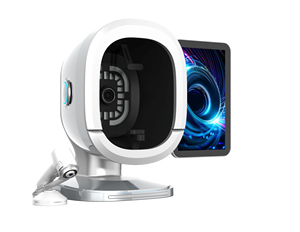
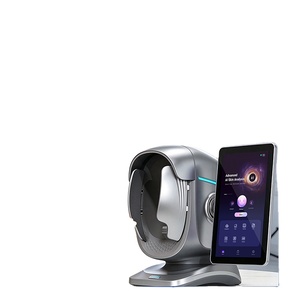
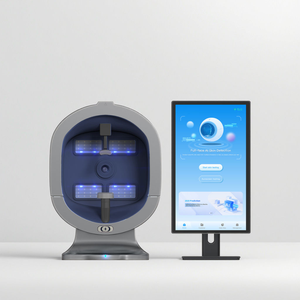
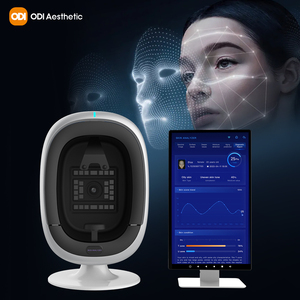
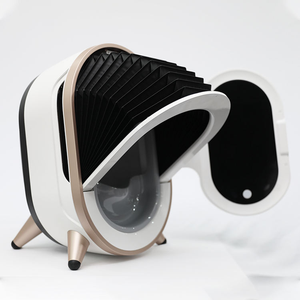
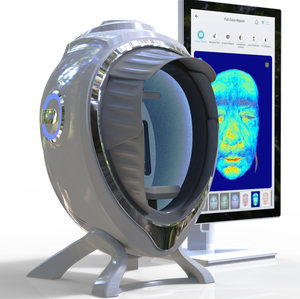
As a premier facial pigmentation diagnostic device manufacturer and direct factory supplier for Greece, our medical-grade imaging systems bridge this clinical gap. By deploying advanced multispectral light technologies—including UV 365nm fluorescence, cross-polarized light, and parallel-polarized light—our analyzers enable Hellenic practitioners to visualize sub-clinical melanocyte activity before it manifests on the skin surface.
2. Optical Physics & Multispectral Diagnostic Engineering
Achieving clinical accuracy in skin analysis requires precise light spectrum manipulation. Our facial diagnostic systems utilize a synchronized, solid-state LED illumination matrix combined with high-resolution digital sensors (up to 36 Megapixels) to capture six to ten distinct visual modalities in under two seconds.
Key Illumination Modalities & Biological Diagnostics
- Standard Daylight (RGB 450–700nm): Establishes baseline visual records under standardized color temperature (5500K CRI>95), capturing surface macules, visible freckles, and gross skin tone unevenness.
- Parallel-Polarized Light: Enhances specular reflections from the stratum corneum, emphasizing surface topography, pore architecture, fine lines, and fine textural roughness.
- Cross-Polarized Light: Suppresses surface reflections to isolate sub-surface light scattering. This mode reveals epidermal melanin distributions, vascular networks, telangiectasia, and hidden erythema.
- Wood’s Light / UV Fluorescence (365nm Peak): Excites endogenous fluorophores within skin tissue. It causes porphyrins produced by Propionibacterium acnes to fluoresce reddish-orange, while epidermal melanin absorbs UV light to appear sharply delineated against surrounding tissue.
- Deep Sub-Surface Melanin Spectrum: Utilizes narrow-band spatial optics to quantify pigment depth, enabling clear differentiation between superficial epidermal melasma and deeper dermal melanocytosis.
Optical Diagnostic Capabilities: Conventional Devices vs. Direct Factory Multispectral Analyzers
| Diagnostic Parameter | Traditional Wood’s Lamp / Standard Magnifier | Conventional Single-Spectrum Scanners | Direct Factory AI Multispectral Analyzers (2025 Series) |
|---|---|---|---|
| Melanin Depth Delineation | Qualitative observation only; subjective. | Surface-level assessment; misses dermal pigment. | Quantitative 3D depth isolation (Epidermal, Dermal, Mixed). |
| Sub-Clinical Spot Detection | Not visible. | Limited sub-surface contrast. | Identifies hyperactive melanocytes 3–5 years before surface appearance. |
| Camera Resolution & Sensor | No image capture. | 12MP–16MP standard sensor. | Up to 36MP HD Ultra-Clear Lens with zero-distortion matrix. |
| Clinical Data & Reporting | Manual written notes. | Basic 2D image save. | Instant AI diagnostic report, patient progress tracking, PDF export. |
| EU Medical CE / MDR Readiness | Varies / Often non-compliant. | Basic CE EMC. | Full EU MDR 2017/745 & ISO 13485 Manufacturing Compliance. |
3. Differential Diagnosis Algorithms for Greek Skin Phototypes
In Greece, patient skin types predominantly fall into Fitzpatrick Types III, IV, and V. These phototypes possess melanocytes that respond aggressively to actinic stress, thermal injury, and hormonal fluctuations. Misdiagnosing the underlying trigger or physiological depth of hyperpigmentation often leads to therapeutic failures.
Epidermal Melasma Identification
Characterized by well-demarcated brown macules confined to the basal layer. Under 365nm UV excitation, epidermal melasma exhibits heightened optical contrast due to strong UV absorption by dense superficial melanin.
Dermal & Vascular Overlay
Dermal melanophages reflect light differently across cross-polarized spectra. Our system isolates vascular telangiectasia from pigment deposits, preventing misdiagnosis of vascular-driven melasma.
Post-Inflammatory Hyperpigmentation (PIH)
Common after aggressive aesthetic procedures or acne vulgaris in Greek phototypes. Real-time spectrum analysis tracks baseline erythema alongside pigment clearance over multiple clinic visits.
4. Hellenic Market Dynamics: B2B Procurement for Clinics, MedSpas & Distributors
The Greek medical aesthetic sector is undergoing rapid modernization driven by two powerful economic factors: rising domestic demand for non-invasive cosmetic procedures and the expansion of high-end international medical tourism. From premium dermatology practices in Kolonaki, Athens, to wellness clinics across the Cyclades islands, medical directors are upgrading their diagnostic capabilities.
Key Drivers for Purchasing Directly from OEM/ODM Manufacturers
Navigating device procurement in Greece requires balancing regulatory compliance, technical longevity, and localized customer support. Purchasing directly from our factory offers Greek aesthetic enterprises distinct strategic advantages:
EU CE & MDR Compliance
Our manufacturing facilities comply strictly with ISO 13485 quality management systems and EU MDR 2017/745 directive standards, ensuring smooth customs clearance through Greek ports (Piraeus, Thessaloniki) and full legality for medical practice use under EOF (National Organization for Medicines) guidelines.
Direct Factory Pricing & No Middlemen
By eliminating third-party European trading intermediaries, Greek distributors and large medical clinic chains can achieve 30% to 50% cost reductions per unit, maximizing return on investment (ROI) within 3 to 6 months of clinic deployment.
Localized Greek Software Integration
Our proprietary diagnostic software supports multi-language interfaces, including localized Greek consultation reports, custom clinic logo branding on client printouts, and cloud database synchronization for multi-location clinic chains in Greece.
5. OEM/ODM Direct Manufacturing & Global Supply Chain Capabilities
As a primary equipment manufacturer (OEM/ODM) specializing in skin analysis hardware and optical engineering, we provide comprehensive customization services tailored for international skincare brands, medical device distributors, and private-label clinic franchises looking to establish a dominant market presence in Greece and southeastern Europe.
Factory Customization Capabilities (OEM / ODM Services)
6. Frequently Asked Questions (FAQ) for Greek Clinics & Importers
Address common procurement, clinical, and technical questions regarding the import and operation of facial pigmentation diagnostic systems in Greece.
7. Manufacturer Superiority & Quality Assurance Standards
Drawing upon proven clinical engineering standards (comparable to top global benchmark systems like Sylton Observ 520x and Observ 320), our production lines adhere to stringent precision manufacturing metrics. Every device undergoes 72 hours of continuous optical sensor calibration, thermal endurance testing, and spectral alignment prior to export packaging.
Optical Lens Precision
Crafted with medical-grade multi-coated glass optical assemblies that eliminate chromatic aberration and deliver edge-to-edge focal clarity across the entire human face.
AI Deep Learning Engine
Trained on millions of clinical facial images spanning diverse ethnicities and phototypes, enabling automated categorization of pigmentation, pore congestion, wrinkle depth, and vascular damage.
Long-Term Reliability
Constructed with aircraft-grade aluminum internal frames and solid-state LED light engines rated for over 50,000 operational hours without spectral degradation.
Partner with a Leading Diagnostic Device Factory
Elevate your clinic's diagnostic standard in Greece or expand your equipment distribution portfolio with direct factory support, competitive wholesale pricing, and 2025 AI diagnostic technology.
Get Catalog